Save
Share
Keep reading
authenticated by

Save
Share
Keep reading
Vietnamese ethnic groups
Join iGuide to explore the culture, customs and life of the Xo-Dang people in the Central Highlands, from their distinctive language to unique traditional festivals.
The Xo-dang people have long lived in the Central Highlands. During the process of formation and development, the Xo-dang people have preserved many unique traditional cultural values. Let's find out information about the Xo-dang ethnic group in Vietnam with iGuide.ai!
The Xo-dang people have a very long history of living in the Northern Central Highlands. Around 1855-1885, when the French tried to consolidate their government in Indochina and when chaos broke out among the mountain tribes, the Xo-dang people expanded their territory to neighboring tribes. The Xo-dang people are also known as Xo Deng, Ca Dong, Ca Dong, To-dra, Hdang, Mo-nam, Ha Lang, Ka Rang, Bri La Teng, and Con Lan.
The Xo-dang people are one of 12 indigenous ethnic minorities in the Central Highlands, residing mainly in Kon Tum province and partly in the provinces of Quang Nam, Quang Ngai, Dak Lak and Gia Lai...
Population: According to the survey of 53 ethnic minorities on April 1, 2019, the total population of the Xo Dang people: 212,277 people; male population: 104,513 people; female population: 107,764 people; household size: 4.3 people/household; proportion of population living in rural areas: 93.7%. Language: The Xo Dang people use the Xo Dang language - a language belonging to the Mon - Khmer group (South Asian language family), close to the Hre, Ba Na, and Gie Trieng languages. The Xo Dang people also have a writing system based on the Latin alphabet, which is a new writing system formed several decades ago.
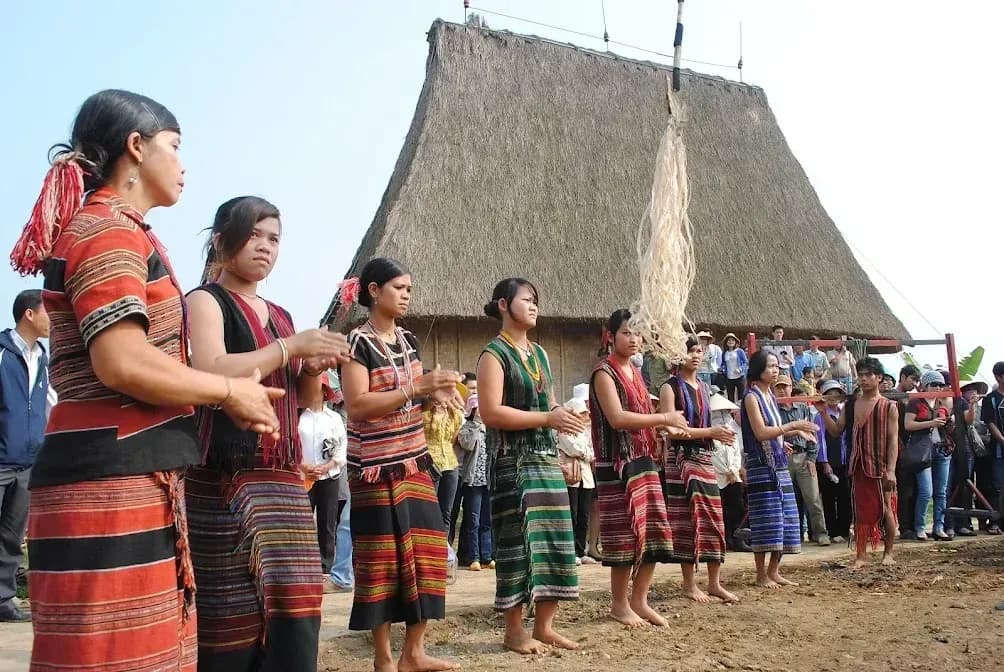
Traditional social institutions: The Xo-dang live together in villages (plơi). Each traditional village consists of many long houses where many generations of Xo-dang families live together. The village head is the village elder - the person who manages all communal activities in the village and represents the villagers.
People in a village always support and help each other, so in a Xo-dang village, it is rare to see a person starving while another person's granary is full. In terms of family, the Xo-dang are divided into extended families (On vêă): usually consisting of many couples and their descendants living together under one long roof, and small families (Kla on vêă): consisting of 2-3 generations living together.
Religion and beliefs: The Xo-dang follow polytheism because they believe that all things have animism, meaning that everything has a soul. In addition to the spirit world, the Xo-dang also believe that each person has three types of souls: The soul of the Xoang or Lung always stays with the body, when alive as well as when dead; the soul of the Plo often wanders here and there, so it is often bullied by ghosts, causing people to become sick; the third soul is the Mngo Mnghieng soul that often lives in termite nests, from which there are many related rituals.
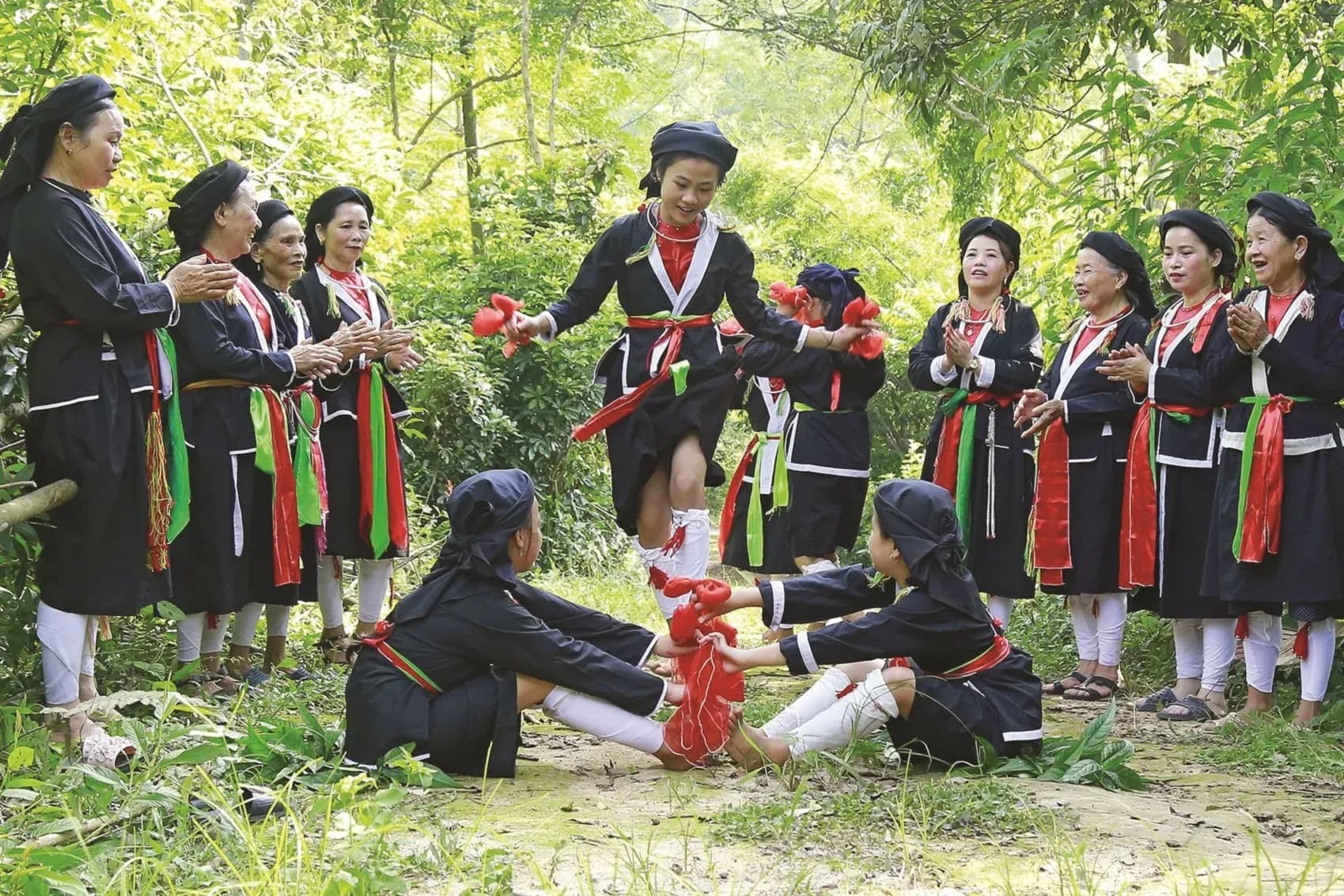
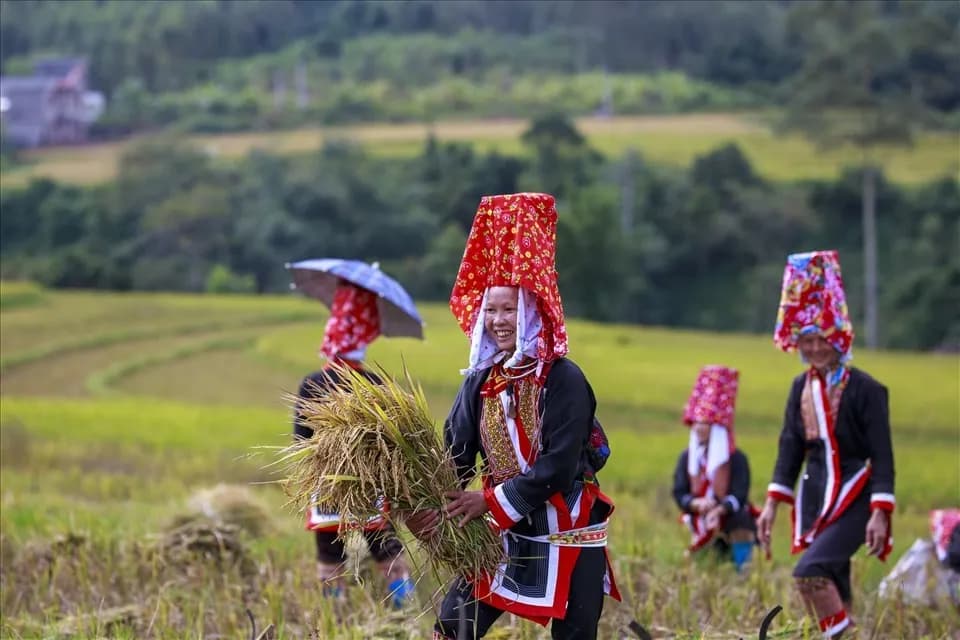
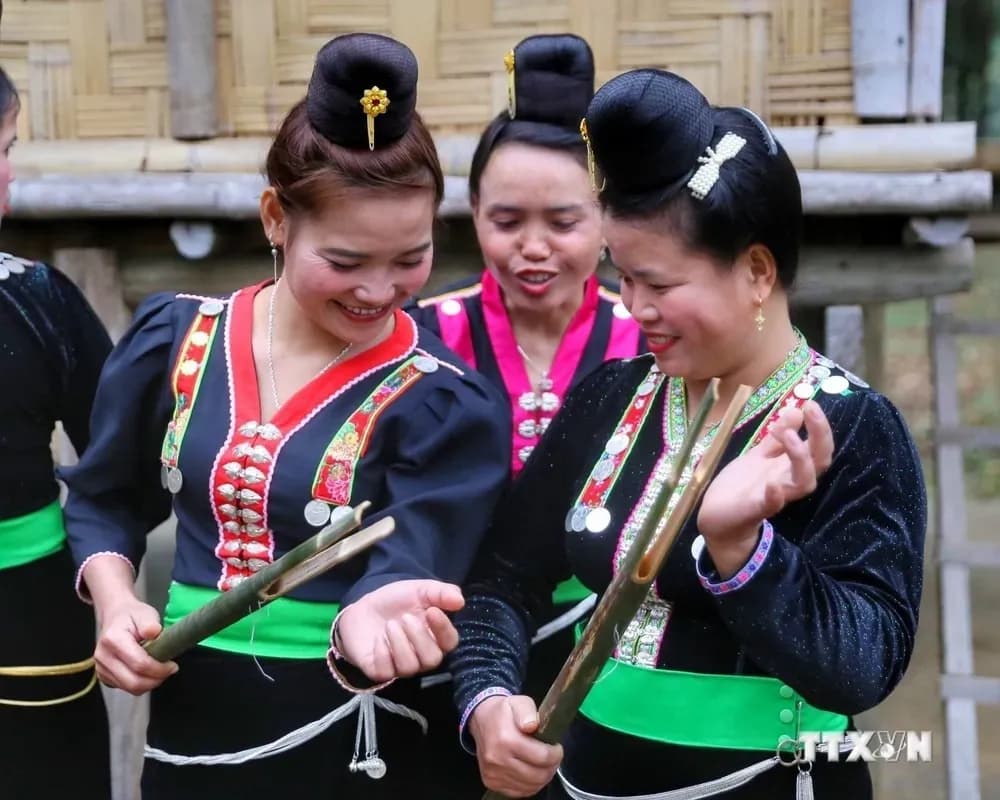
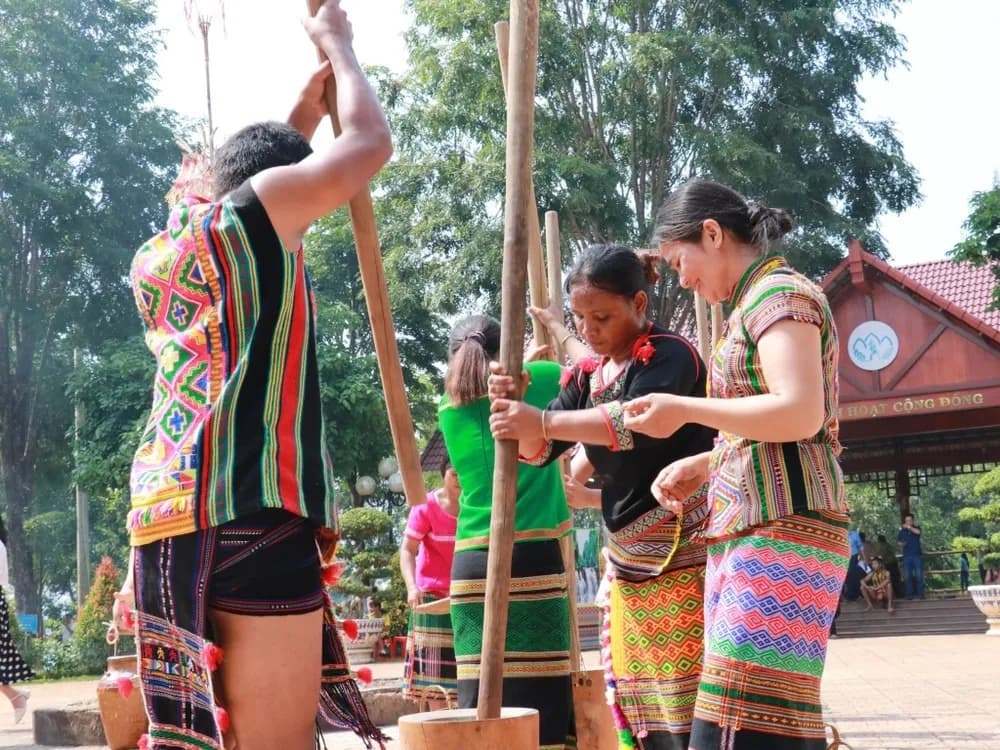
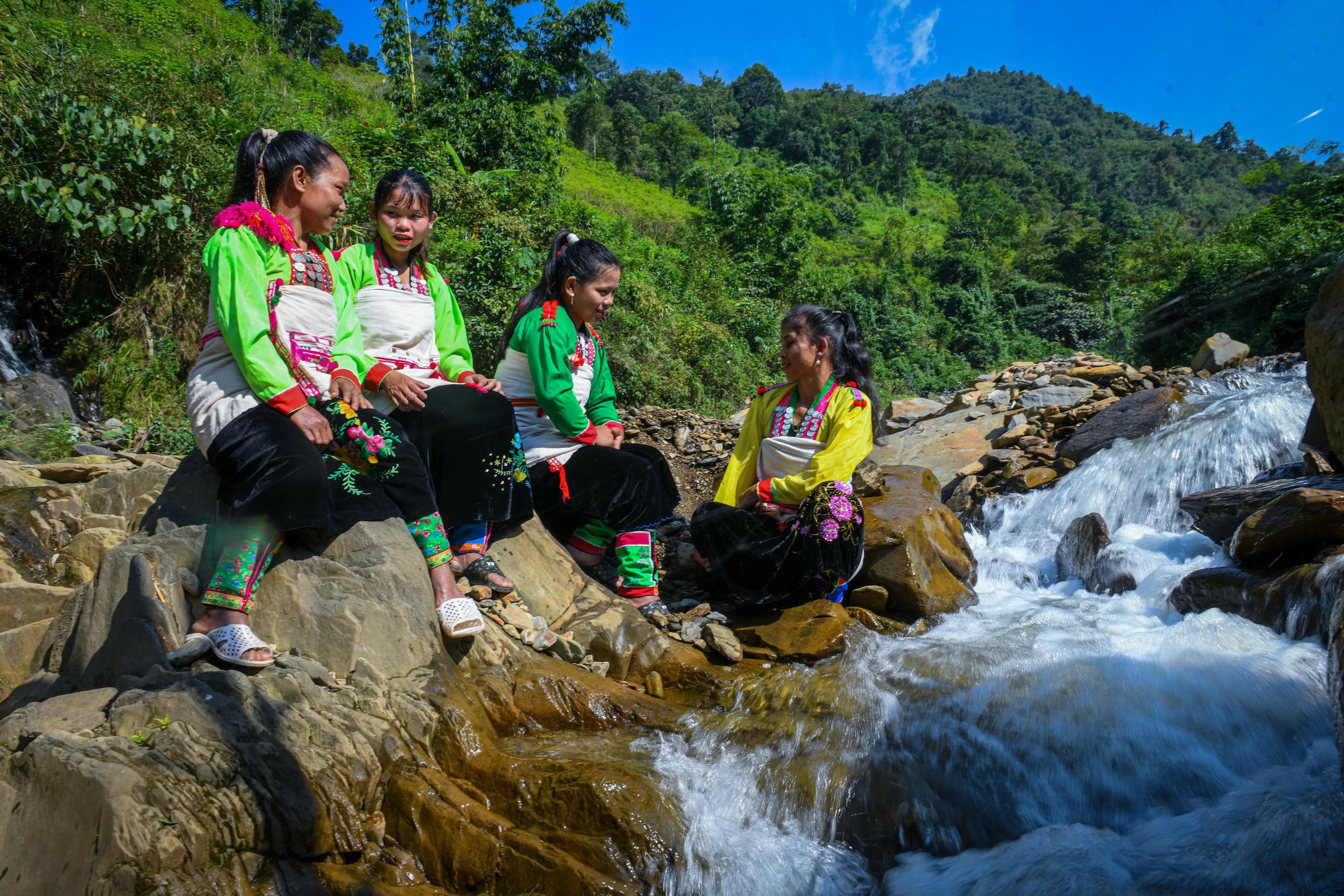
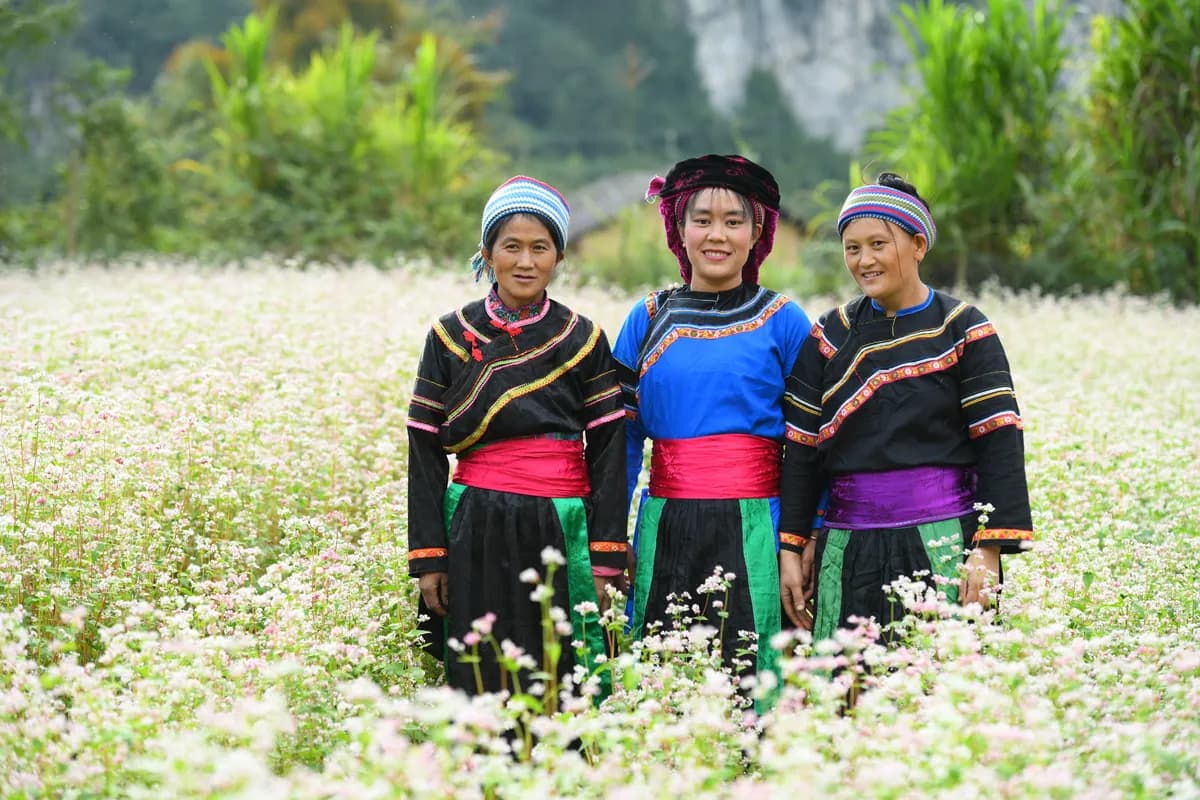
Costume: Xo-dang women wear a shirt (ao goh), a skirt (ktac), and a shawl (khàn vai). Men wear a scarf (trang) or a loincloth (kpen tích).
Cuisine: The main food source of the Xo-dang people is rice, including regular rice, sticky rice and glutinous rice. At the beginning of the year, when worshiping water troughs, worshiping the communal house or when hunting large animals, the Xo-dang people gather at the communal house to eat a meal together. The food at this time is mainly rice and meat.
Education: According to the survey data of 53 ethnic minorities on April 1, 2019: the rate of people aged 15 and over who can read and write is 76.9%, the rate of people attending primary school is 100.7%, the rate of people attending lower secondary school is 85.1%, the rate of people attending upper secondary school is 35.7%, the rate of out-of-school children is 19.1%.
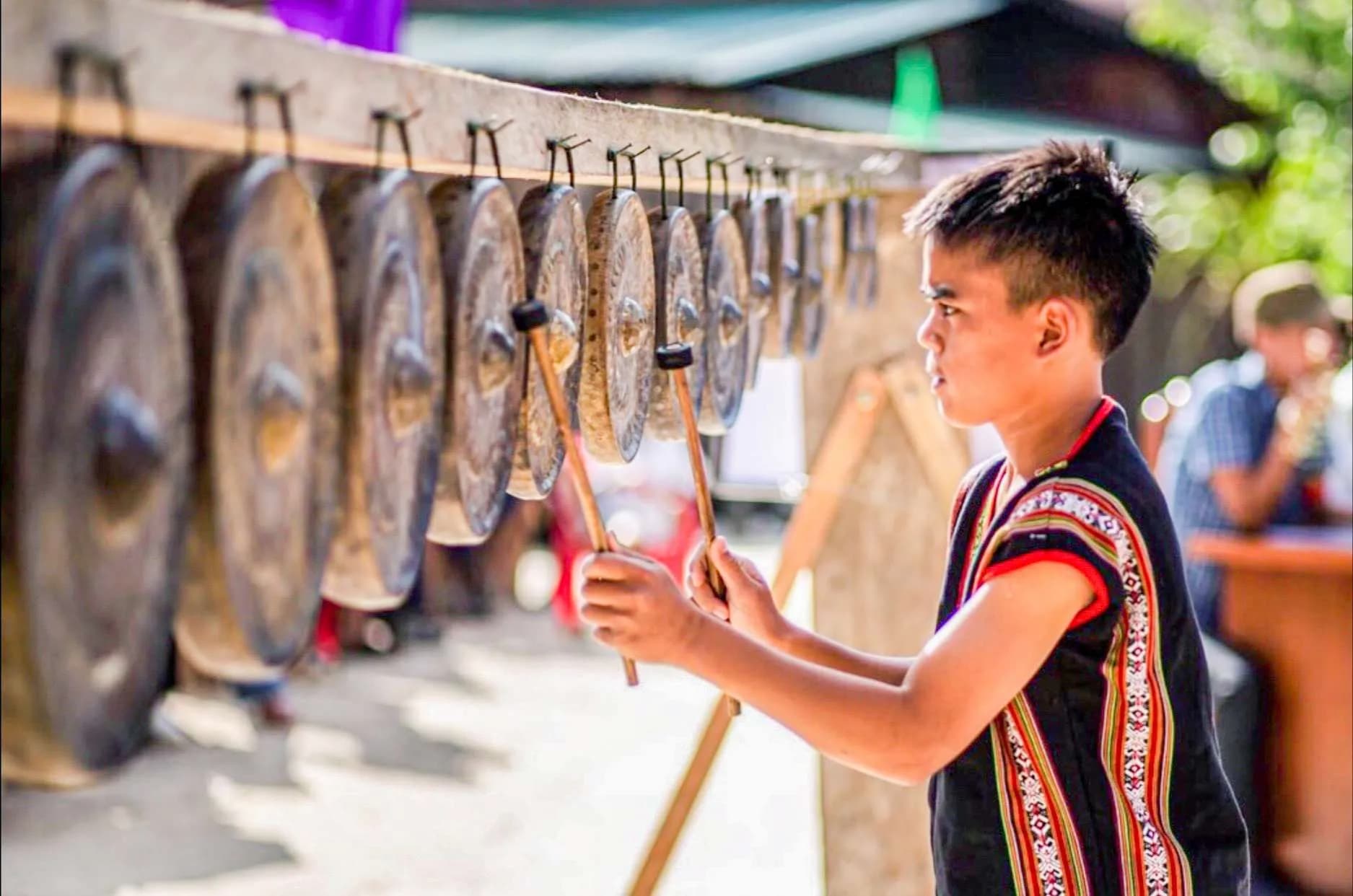
Musical instruments: The musical instruments of the Xo-dang people are very rich, including many different types such as the t'rung, the lo le or ga vo flute, the clapper, the monochord (brung), or the brooc tru...
Festivals: The Xo-dang people have many festivals during the year, such as: Buffalo stabbing ceremony (Ka Po); New rice ceremony; Water trough worship ceremony;... In which, the New Year festival is the biggest festival of the year for the Xo-dang people to summarize the harvest after a season of farming, and also to thank the Giàng (gods) for giving a bountiful harvest.
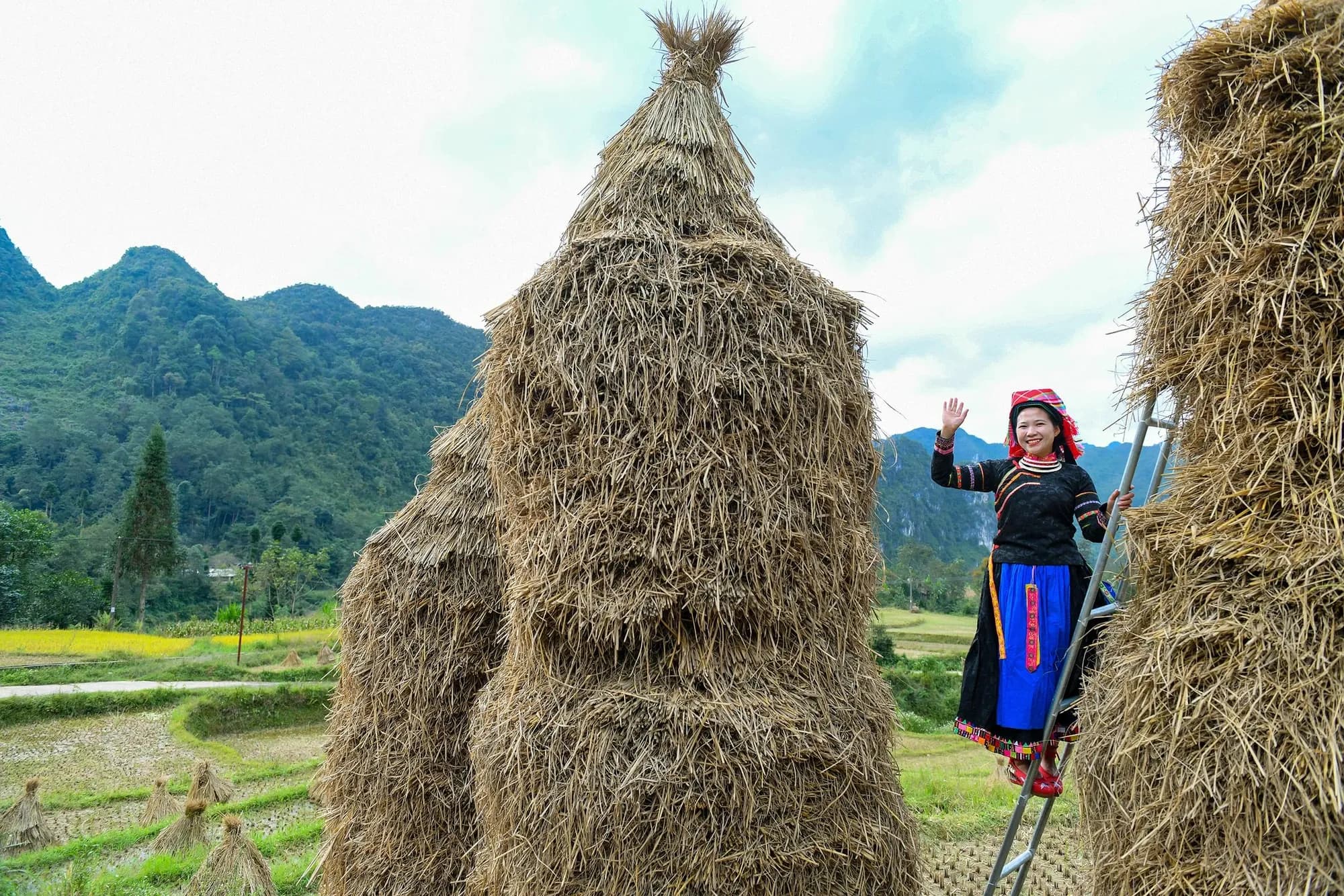
A part of the Xo-dang people know how to grow wet rice, typically the Mnâm group, but in primitive ways such as tilling the land by driving buffaloes to trample... Slash-and-burn cultivation still plays a key role in the economic activities of the Xo-dang people, with rudimentary farming methods such as: poking holes to sow seeds using a sharpened stick or a stick with an iron blade; weeding with a small hoe with a handle taken from a tree fork and a scraper with a blade bent to one side; harvesting by threshing the rice by hand.
In addition to rice, the Xo Dang also grow millet, corn, cassava, gourds, squash, tobacco, melons, pineapples, bananas, sugarcane, etc. The Xo Dang also know how to weave and forge (developed in the To Dra group). In some places, the Xo Dang already know how to pan for alluvial gold. The weaving craft also develops in the Xo Dang community. Nowadays, the people also know how to use money as a medium of exchange.
According to the survey data of 53 ethnic minorities on April 1, 2019: The Xo-dang ethnic group has: Unemployment rate of 0.66%; Rate of trained workers with degrees and certificates: 4.3%; Rate of workers working in the non-agricultural sector: 4.8%; Rate of workers working in management or high and middle-level technical and vocational training: 1.7%; Rate of poor households: 44.9%; Rate of near-poor households: 9.8%; Rate of households using clean water sources: 66.5%; Rate of households using grid electricity for lighting: 93.4%.
Above is some interesting information about the Xo-dang ethnic group, Vietnam. Let's plan to explore, meet and experience the culture of the Xo-dang people with iGuide.ai in the near future!
Source:
- Ethnic groups in Vietnam (National Political Publishing House Truth)
- Basic characteristics of 54 ethnic minorities in 2019 (Committee on Ethnic Minorities and General Statistics Office)
- Website of the Ethnic Committee, Website of Nhan Dan Newspaper
- Survey results collect information on the socio-economic status of 54 ethnic groups in Vietnam)
Log in to leave a comment. Log in
Be the first to comment.
React to this story
Curate
Sign in to curate