Vietnamese ethnic groups
Discover the Co Lao ethnic group
Co Lao people in Ha Giang: a unique cultural and traditional journey. Discover indigenous life, language and typical cuisine.
The Co Lao ethnic group is one of 16 ethnic groups with very few people in Vietnam. Currently, thanks to the comprehensive support policies of the Party and the State to each household, it has contributed to helping the Co Lao people develop all aspects of life and society. Let's find out information about the Co Lao ethnic group, Vietnam with iGuide.ai!
1. Origin
Self-name: Co Lao. Other names: Tu Du, Ho Ki, Voa De. Local groups: Green Co Lao, White Co Lao, Red Co Lao. The Co Lao ethnic group is one of the ethnic groups with small populations in Vietnam. The Co Lao people in Vietnam originally migrated from China. Over historical periods, the Co Lao groups gradually migrated south and then into Vietnam. The first Co Lao people arrived in Vietnam as early as 150 to 200 years ago. Their last migration ended about 60 to 80 years ago.
2. Population
According to the 2019 Census of 53 Ethnic Minorities, the Co Lao ethnic population is 4,003 people, of which 2,005 are male and 1,998 are female.
3. Geographic distribution
The Co Lao ethnic group only resides in Ha Giang province, including the highland areas of rocky mountains and dirt mountains (Dong Van, Meo Vac, Hoang Su Phi districts), the middle area (Yen Minh district) and the lowland areas (Vi Xuyen and Bac Quang districts).
4. Language and education
The language belongs to the Ka Dai language group, the same group as La Ha, La Chi, Pu Péo (Thai - Ka Dai language family). In the past, local groups had different dialects, but now the majority of Red Co Lao and Green Co Lao people can no longer speak their mother tongue. Depending on the process of contact and cohabitation, they are used to using Quan Hoa, Nung, Pu Péo, and Hmong.
According to the 2019 Survey of 53 Ethnic Minorities, the proportion of people aged 15 and over who can read and write in common script is 58.2%. The general school attendance rate of children in primary school is 103.4%, in lower secondary school is 83.1%, and in upper secondary school is 37.4%, the proportion of out-of-school children is 17.6%.
5. Main characteristics of social culture
Social institutions: Under the French colonial period, landowners - those who had contributed to the establishment of villages, and clan leaders were appointed by the government to hold the position of ma to govern 1-2 villages or mu lao to govern several families. Today, the grassroots administrative management system has been implemented at all levels, in which the Co Lao village is the basic level of the commune-level administrative organization.
6. Religion, belief
It can be said that compared to the material cultural elements, religion and beliefs of the Co Lao people have changed very little. They still maintain the concept of three components that make up the world (heaven, earth and water), polytheism, and animism.
7. Housing and clothing
Housing: The Co Lao people live in earthen houses, commonly with three rooms and two wings. Most Co Lao houses are made of rammed earth and roofed with tiles.
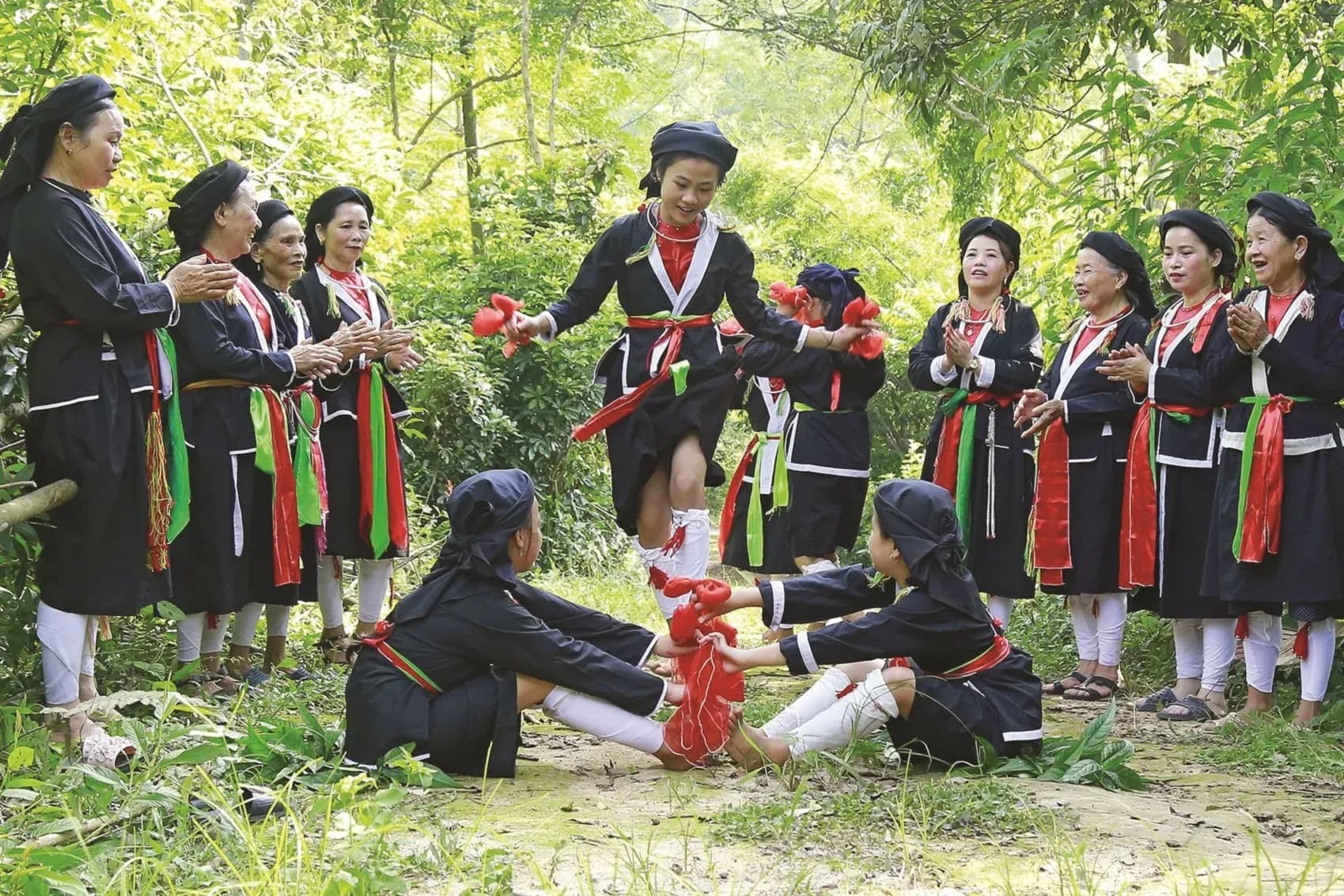
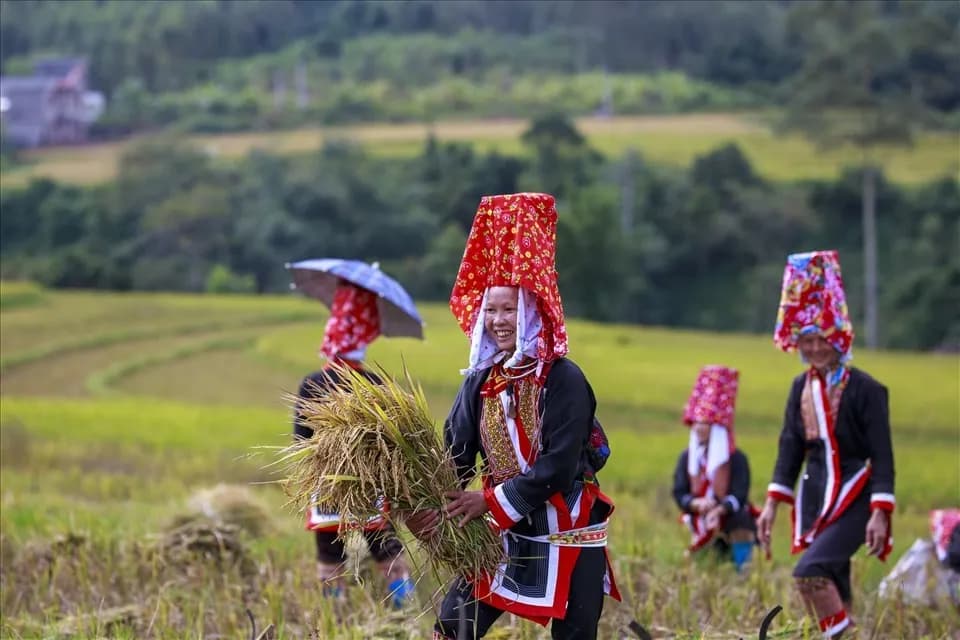
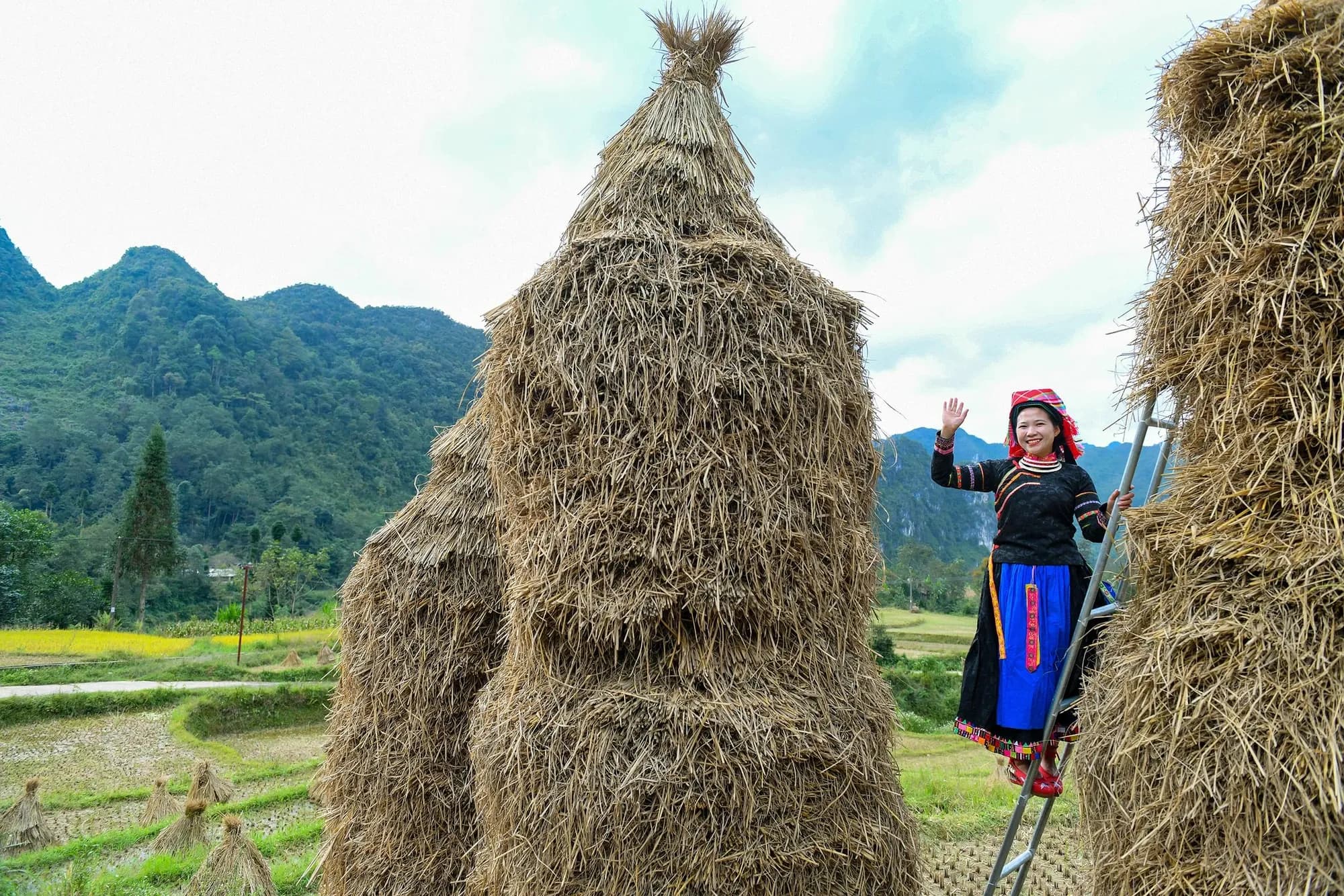
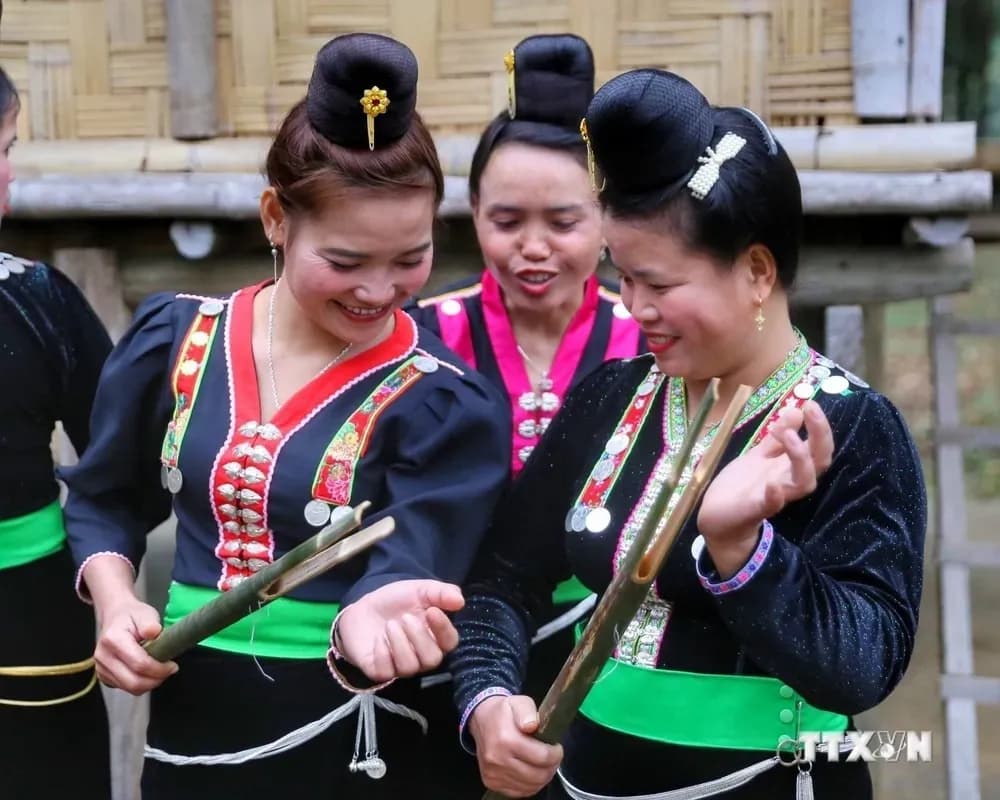
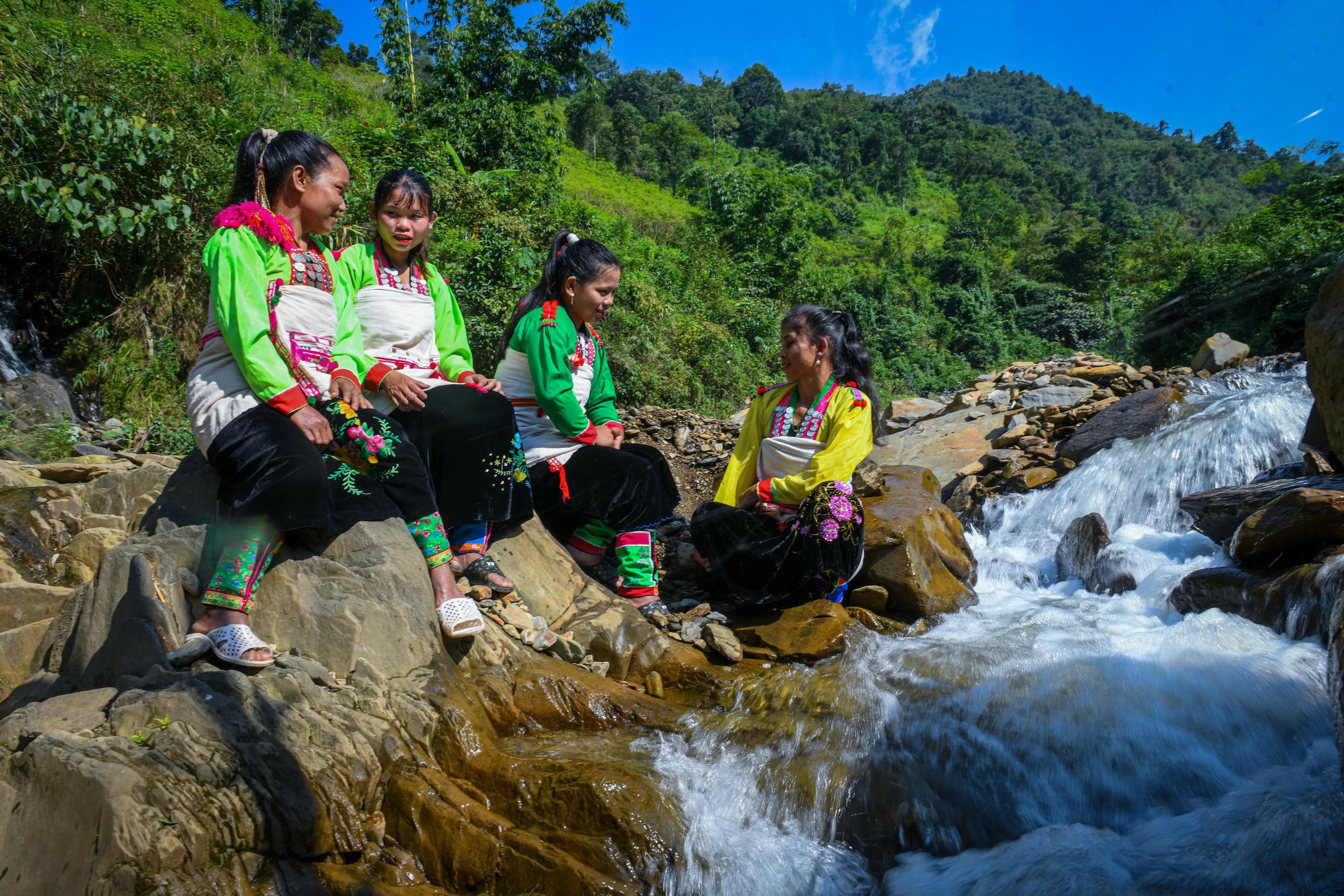
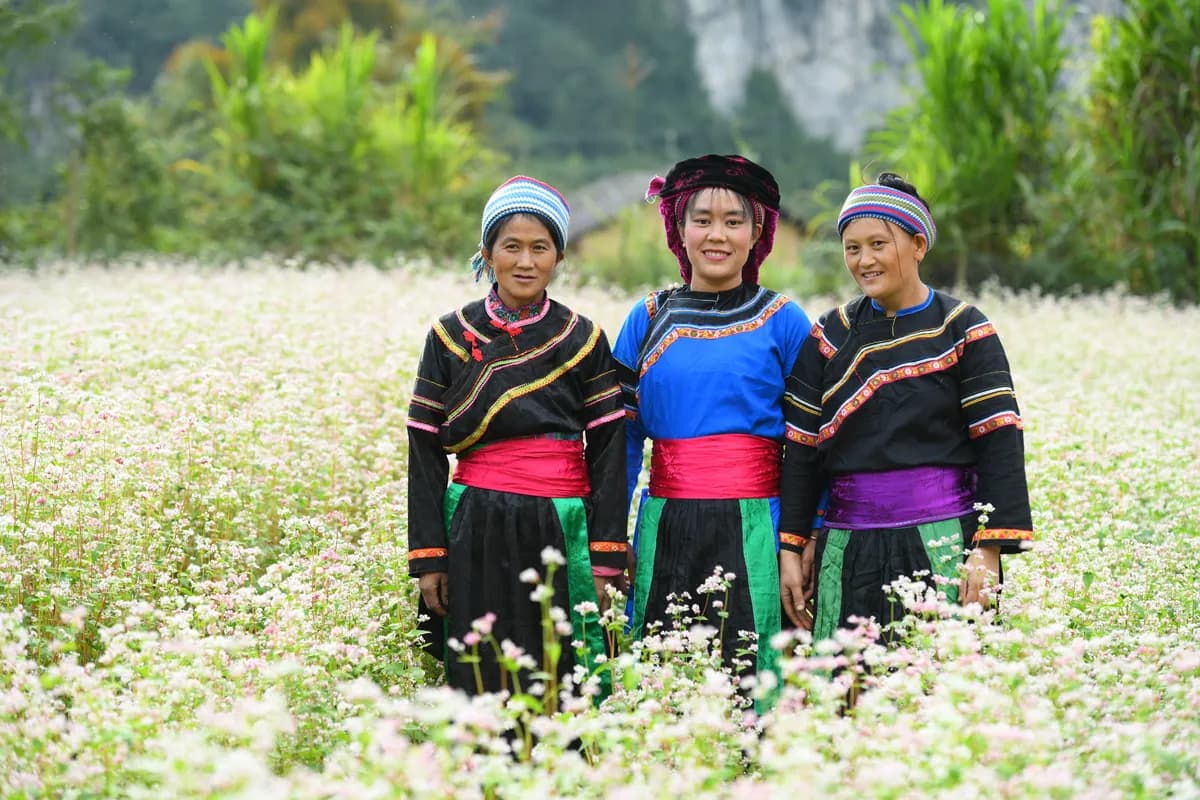
Costume: Men's clothing consists of a hat, shirt and pants. Indigo or black pants, wide-legged, ankle-length, without pockets. Indigo or black shirts have a standing collar, are slit at the chest, and have fabric buttons. The shirts are slit at the sides, and usually have four flapless pockets. Women's clothing mainly consists of pants, scarves, shirts, belts, leggings, and in some localities, people also use aprons like the H'Mong.
8. Cuisine and art
Cuisine: Regarding food, the food of the Co Lao people is mainly processed from agricultural and livestock products. Food is processed from livestock products including chicken, pig and goat. Art: The Co Lao people still pass on to their descendants stories about the history of migration, the origin of the traditional dress, past marriages, and the story of having their teeth knocked out.
9. Economic conditions
The Green Co Lao and White Co Lao groups are distributed in Dong Van and Meo Vac districts and mainly rely on sedentary farming, growing corn in rocky mountain crevices. The Red Co Lao group is distributed in Hoang Su Phi and Yen Minh districts, where there are many mountains and valleys, cultivating wet rice and swidden mountains, mainly growing rice. In addition to the main food crops, the Co Lao people also grow many types of beans, green vegetables and other crops. For every Co Lao family, this is an indispensable economic activity. Animal husbandry not only mainly provides traction and fertilizer for production, but also food for activities related to funerals, weddings and festivals.
Like animal husbandry, family crafts are only a secondary occupation. Carpentry is a family craft activity that has existed for a long time and is quite developed in Co Lao families. Corn wine brewing is not a prominent traditional occupation in the Co Lao community, but corn wine has become a well-known commodity.
Gathering, like hunting and fishing, instead of being one of the main livelihood activities as before, gathering is only a supplementary activity to agricultural activities of the Co Lao people.
Source:
- Ethnic groups in Vietnam (National Political Publishing House Truth);
- Basic characteristics of 54 ethnic minorities in 2019 (Committee on Ethnic Minorities and General Statistics Office);
- Website of the Ethnic Committee, Website of Nhan Dan Newspaper;
- The survey results collect information on the socio-economic status of 54 ethnic groups in Vietnam.