Save
Share
Keep reading
authenticated by

Save
Share
Keep reading
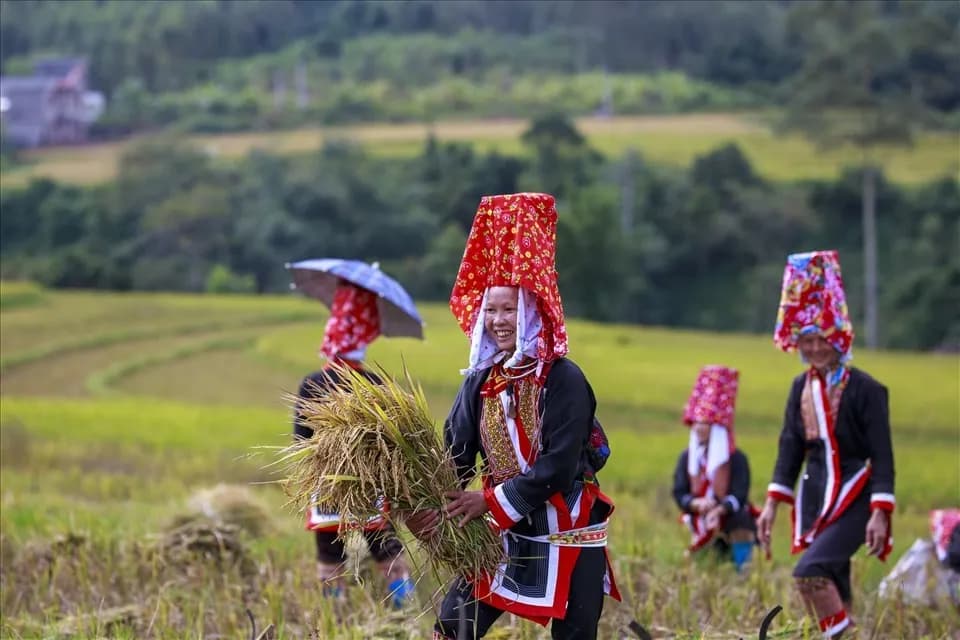
Vietnamese ethnic groups
Discover the unique features of the Dao people in Vietnam, from history to festivals and customs.
The Dao people have many ethnic groups, living in most of the northern mountainous provinces, the Northern midlands, the Central Highlands and some southeastern provinces. The Dao ethnic groups currently maintain their traditional cultural identities. Let's find out information about the Dao ethnic group, Vietnam with iGuide.ai!
The Dao people originated from China, and their migration to Vietnam lasted from the 12th and 13th centuries until the first half of the 20th century. Dao ethnic groups: Red Dao (Coc Ngang Dao, Horn Dao, Du Bow Dao, Dai Ban Dao), Quan Chet Dao (Son Dau Dao, Tam Dao Dao, Nga Hoang Dao, Du Cun), Lo Gang Dao (Thanh Phan Dao, Coc Mun Dao), Tien Dao (Deo Tien Dao, Tieu Ban Dao), White Pants Dao (Ho Dao), Thanh Y Dao, Lan Ten Dao (Tuyen Dao, Ao Dai Dao). About ethnic names: Kem Mien, Kiem Mien, Kim Mun, Kim Man, Bieu Mun, Liao Man, Du Mien, Diu Mien, Yiu Mien... In addition, in the past, they were also called Dong, Xa, Man...
According to the results of the survey on collecting information on the socio-economic status of 54 ethnic minorities in 2019 by the Vietnam Ethnic Minorities Committee - General Statistics Office, the Dao population as of April 1, 2019 was 891,151 people, of which 450,089 were men and 441,062 were women.
The Dao people belong to the Hmong-Dao language family.
The Dao people mainly live in the northern mountainous provinces, the northern midlands, the Central Highlands and some southeastern provinces.
Dao houses come in many different shapes, including ground-level houses, stilt houses, or half-stilt, half-ground houses. The Dao family structure follows a patriarchal system.
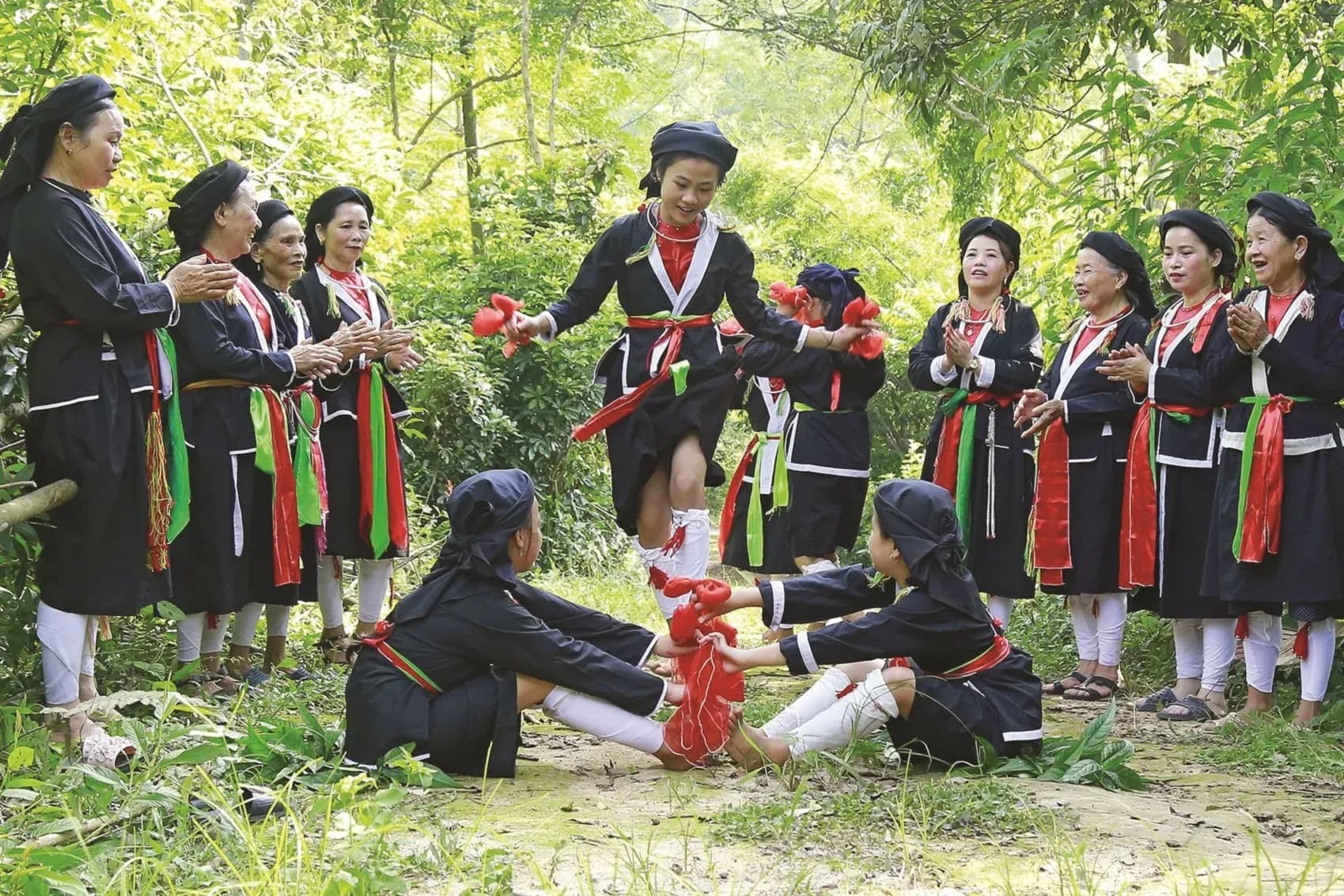
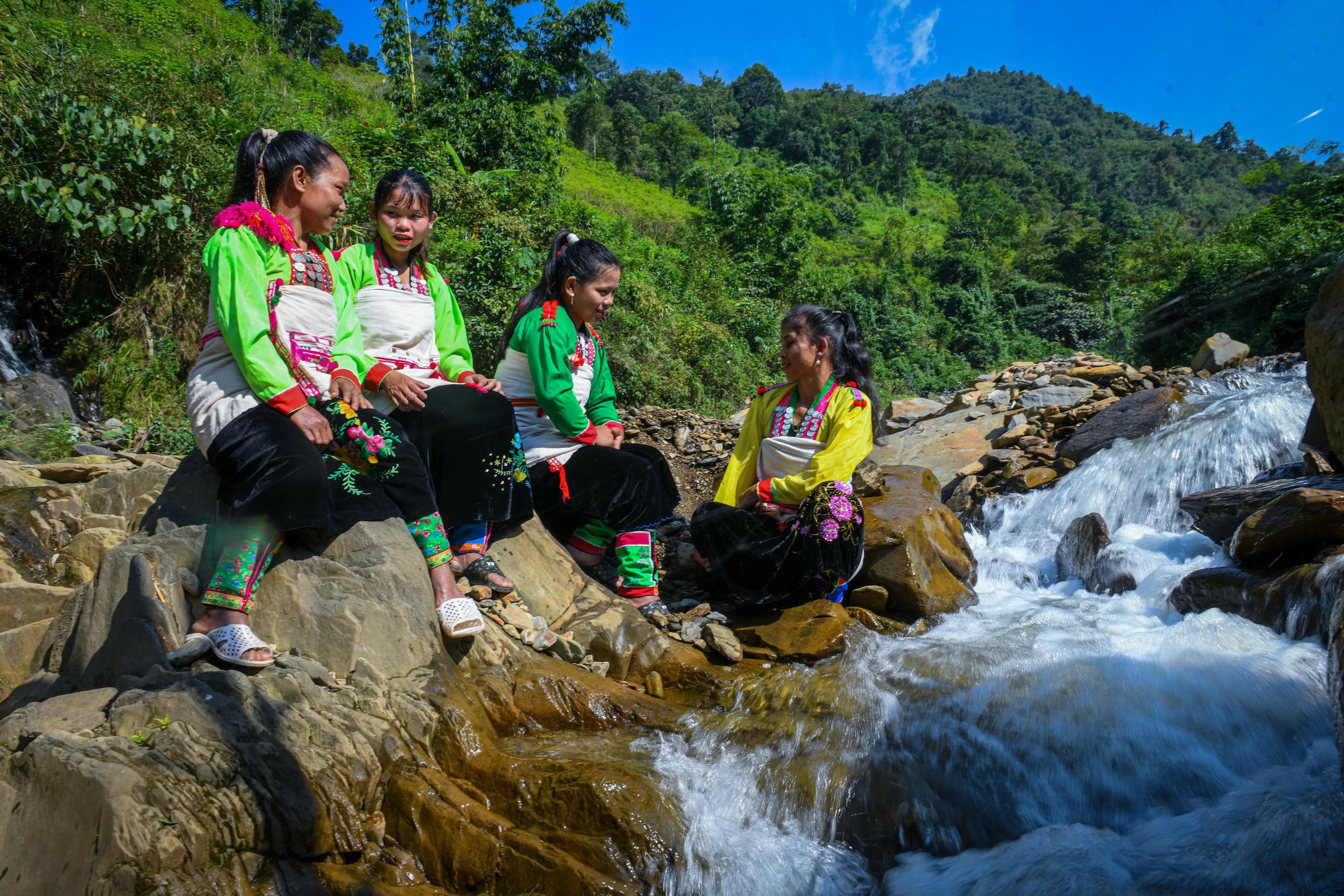
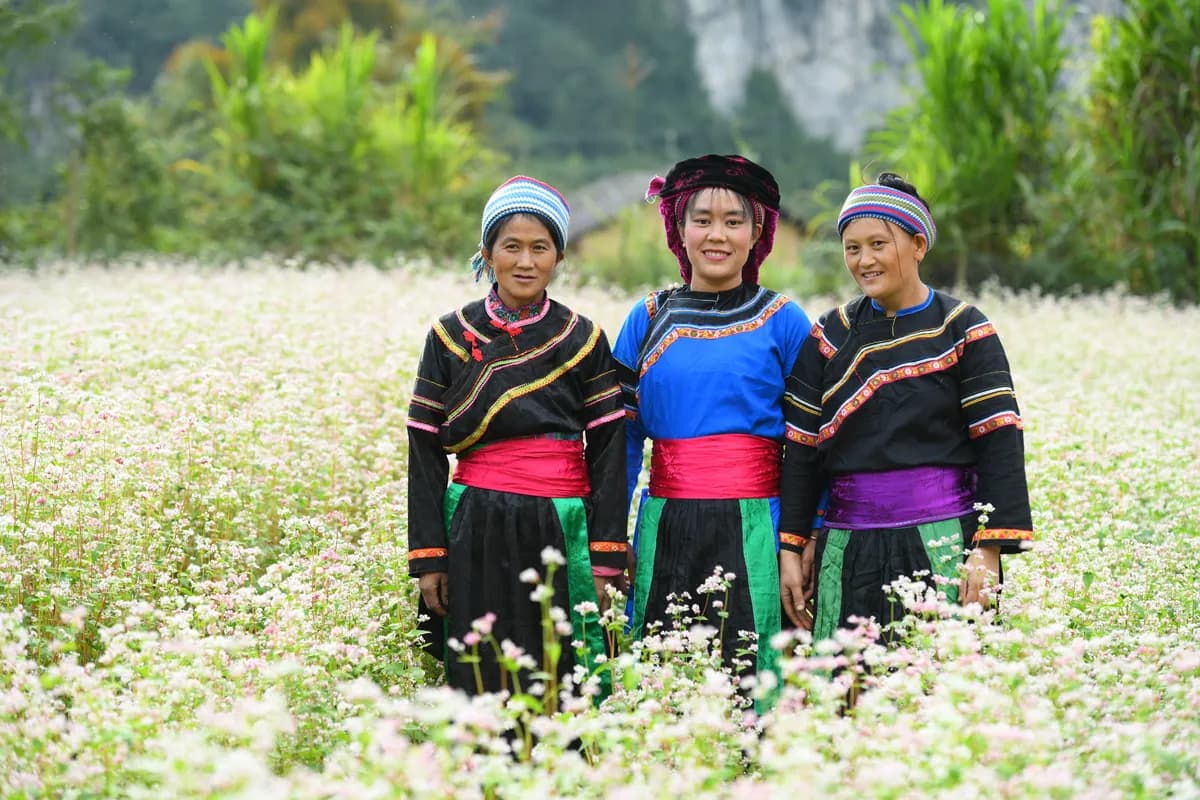
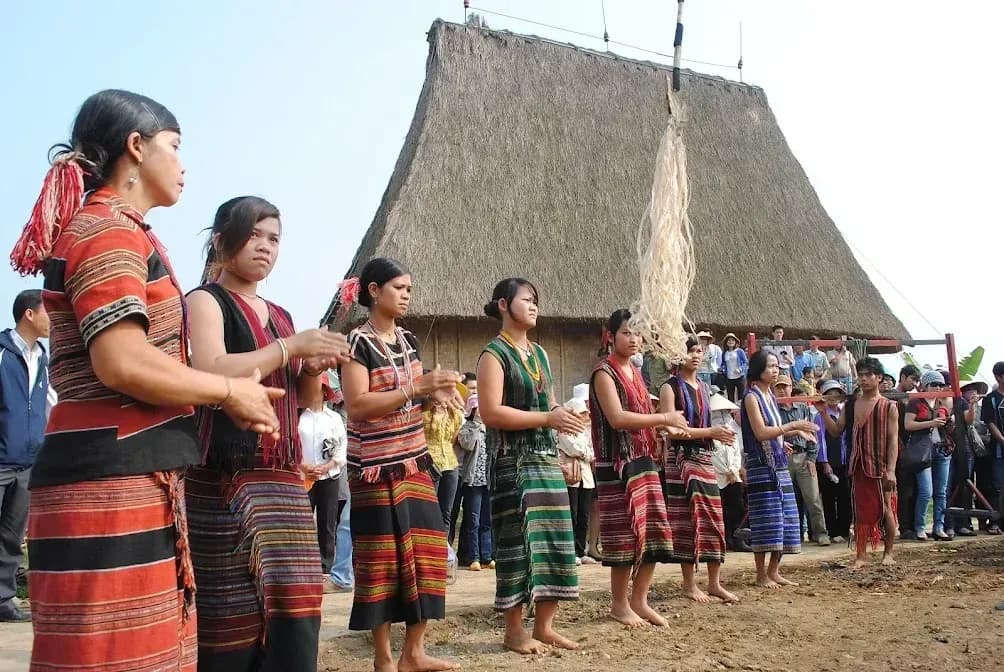
In the past, men had long hair, tied in a bun at the nape of the neck or left a tuft of long hair on top of the head, shaved all around. Dao groups often have different ways of wearing scarves. There are two types of shirts, long and short. Dao women wear a variety of clothes, usually long shirts with bibs, skirts or pants. Their clothes are very colorful. They embroider entirely from memory on the back of the fabric so that the pattern appears on the right side. There are many types of patterns such as swastikas, pine trees, birds, people, animals, leaves. Dao people print patterns on fabric with beeswax, using a drawing pen or dipping the printing mold into molten beeswax and then printing on the fabric. After being dyed with indigo, the fabric will show a light blue pattern because the beeswax layer is not absorbed by the indigo.
The Dao people mainly eat rice, in some places corn is more popular than rice or porridge. They like boiled meat, dried meat, pickled meat and sour bamboo shoot soup.
The Dao celebrate Tet in January and worship their ancestors in January, July and December. Depending on the Dao group, the day of worshiping ancestors will be different. In addition, there are life cycle rituals such as coming-of-age ceremony, wedding, funeral, praying for health and worshiping ghosts...
The Dao people believe in primitive beliefs and agricultural rituals, but are also deeply influenced by Confucianism, Buddhism and especially Taoism. Ban Vuong is considered the ancestor of the Dao people, so he is worshiped together with the ancestors of each family. According to tradition, all men who have reached adulthood must go through the Cap Sac ceremony, a ritual that is both Taoist in nature and bears traces of the ancient coming-of-age ceremony.
With the characteristics of polytheistic beliefs, Dao families often worship the ghosts of grandparents, parents, stove ghosts, land ghosts... In the family line, branch or clan, they worship the family ghosts. In the village community, they worship the village ghosts including the guardian gods and the village's land god, pray for rain or sunshine, pray to kill insects... In addition, in the past, Dao people also worshiped the field ghosts, mother ghosts, water source ghosts...
Cultivation on swidden fields, rocky soil, and rice fields, depending on each group and each region. The main food crops are rice, corn, and vegetables. They raise buffalo, cows, pigs, and chickens in the mid-mountainous areas and in the highlands, they also raise horses and goats. The Dao also have a number of occupations such as growing cotton, weaving, repairing agricultural tools, making matchlock guns, flintlock guns, casting cast iron bullets, making silver, making paper, pressing oil for lighting or cooking, making molasses, etc.
According to the "Basic characteristics of 54 ethnic minorities in 2019" of the Ethnic Committee and the General Statistics Office, the poverty rate: 31.0%; the near-poor household rate: 15.7%; the unemployment rate: 1.21%; the rate of trained workers with degrees and certificates: 5.4%; the rate of workers working in the non-agricultural sector: 13.6%; the rate of workers working in management or high and medium-level technical and vocational training: 1.6%; the rate of households working in traditional handicrafts: 0.27%.
According to the "Basic characteristics of 54 ethnic minorities in 2019" conducted by the Ethnic Committee and the General Statistics Office, the rate of people aged 15 and over who can read and write in common script among the Dao people is 73.8%; the rate of people attending primary school is 101.4%; the rate of people attending lower secondary school is 89.3%; the rate of people attending upper secondary school is 38.9%; and the rate of out-of-school children is 16.5%.
Above is some interesting information about the Dao ethnic group, Vietnam. Let's plan to explore, meet and experience the culture with the Dao people in the near future with iGuide.ai!
Source:
- Ethnic groups in Vietnam (National Political Publishing House Truth)
- Basic characteristics of 54 ethnic minorities in 2019 (Committee on Ethnic Minorities and General Statistics Office)
- Website of the Ethnic Committee, Website of Nhan Dan Newspaper
- Survey results collect information on the socio-economic status of 54 ethnic groups in Vietnam)
Log in to leave a comment. Log in
Be the first to comment.
React to this story
Curate
Sign in to curate