Save
Share
Keep reading
Save
Share
Keep reading
Vietnamese ethnic groups
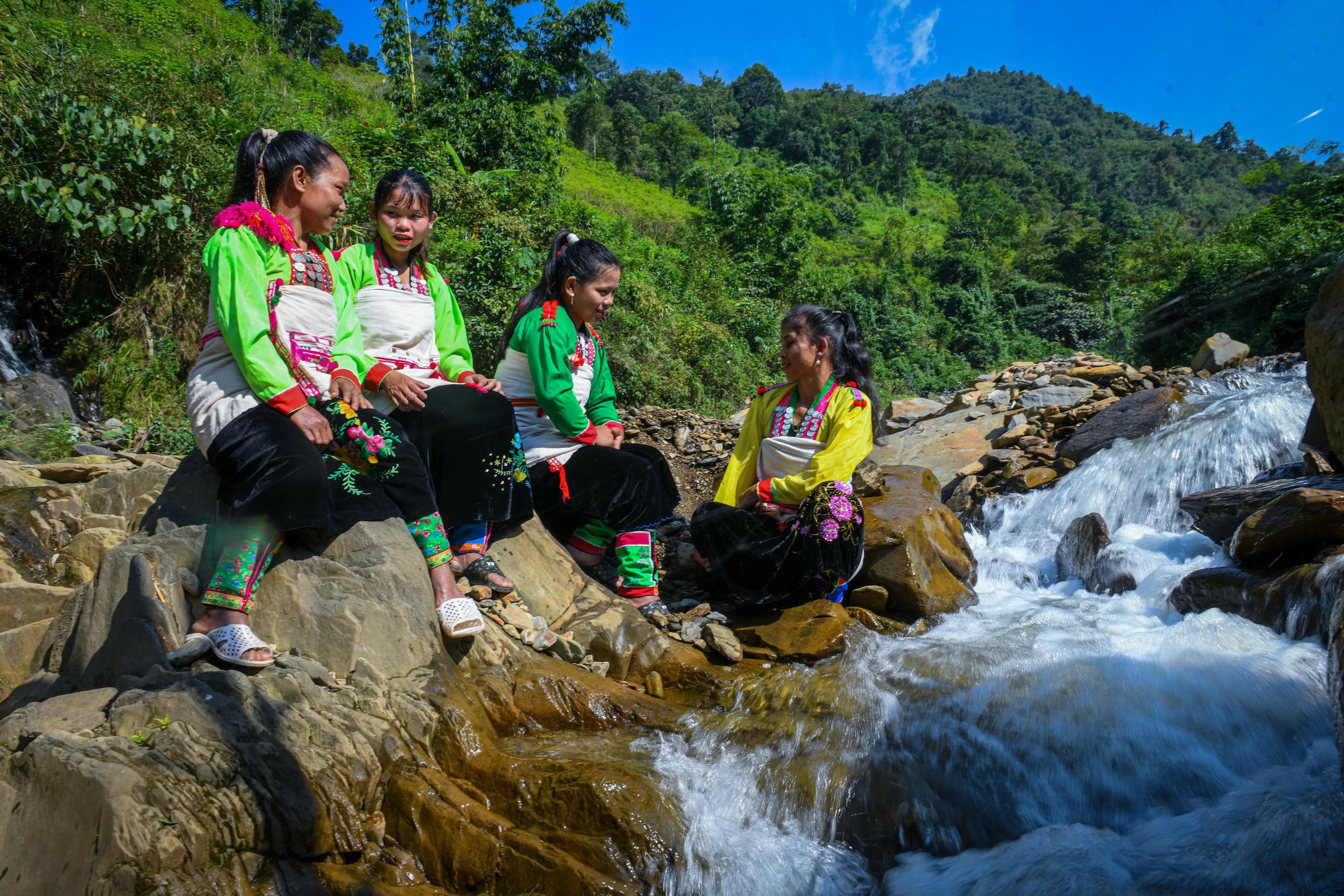
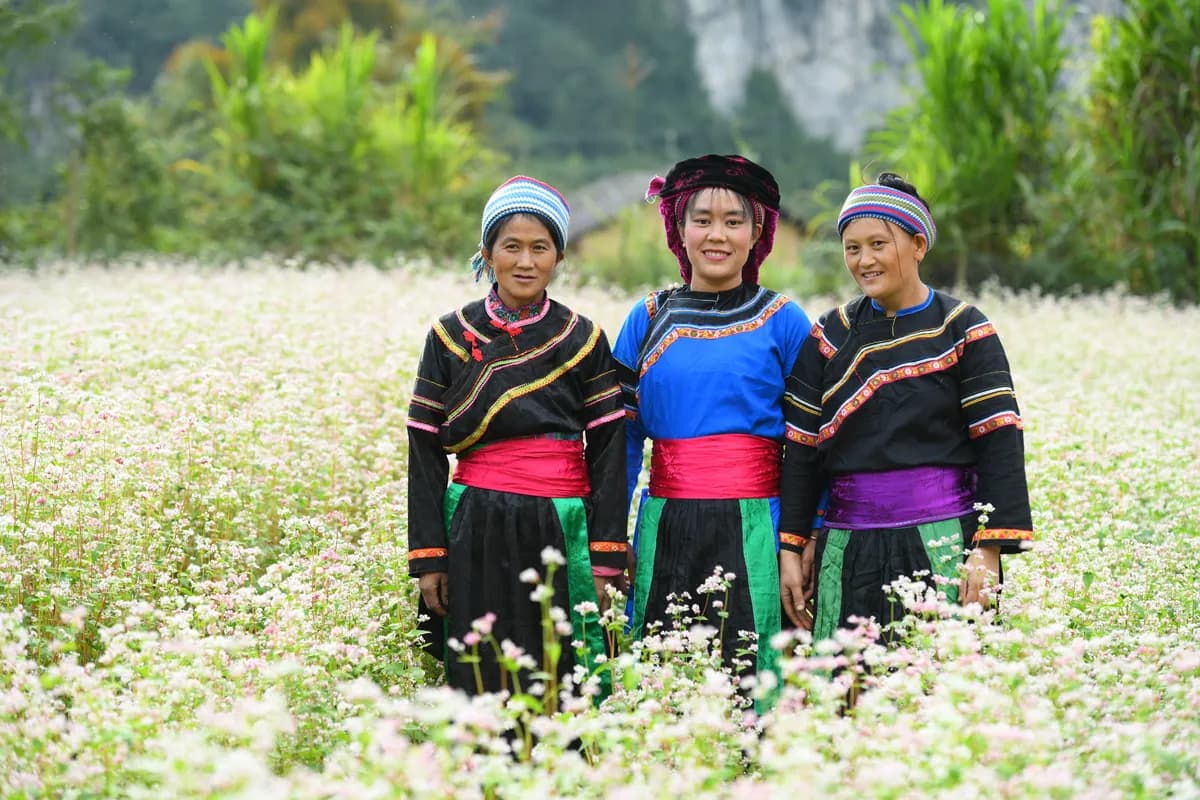
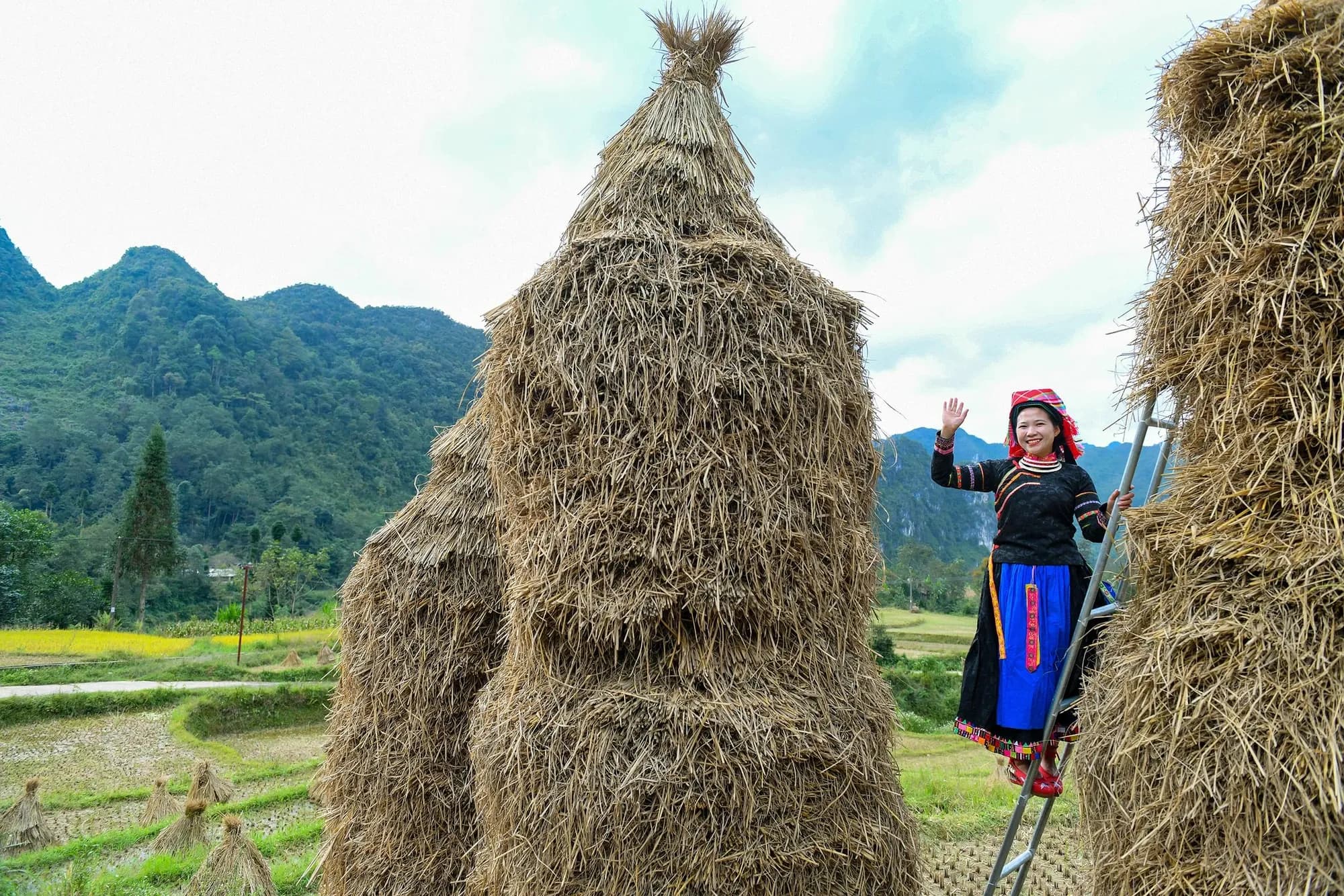
Discover the cultural beauty and traditions of the Pu Péo people in Vietnam, where impressive traditional values are preserved.
The Pu Peo ethnic group has only 903 people, the third smallest ethnic group among 54 ethnic groups in Vietnam, and has long lived in the far north of Vietnam (Ha Giang province). Let's find out information about the Pu Peo ethnic group in Vietnam with iGuide.ai!
Historical origin The Raglai people have lived for a long time in the South Central region. Local groups: Rai (in Ham Tan-Binh Thuan), Hoang, La Oang (Duc Trong-Lam Dong)...
- Population: According to the 53 Ethnic Minority Census on April 1, 2019, the total population of the Ra-glai people is 146,613 people. Of which, there are 71,628 men and 74,985 women. - Language: The language belongs to the Malayo-Polynesian language group (Austronesian language family). Due to contact with other ethnic groups in the region, the Ra-glai people have developed bilingualism and multilingualism. The common language currently plays an important role as the language of communication between the people here and other neighboring ethnic groups.
They mainly reside in the mountainous areas of Ninh Thuan and Khanh Hoa provinces. In addition, a small number of them reside scattered in localities of Binh Thuan and Lam Dong provinces.
Morning and afternoon are the two main meals. Lunch is usually taken to the fields. Soup with meat, fish and vegetables is a favorite dish. Drinks include water in a dried gourd shell and rice wine. Home-cut tobacco wrapped in corn husks is commonly used in households.
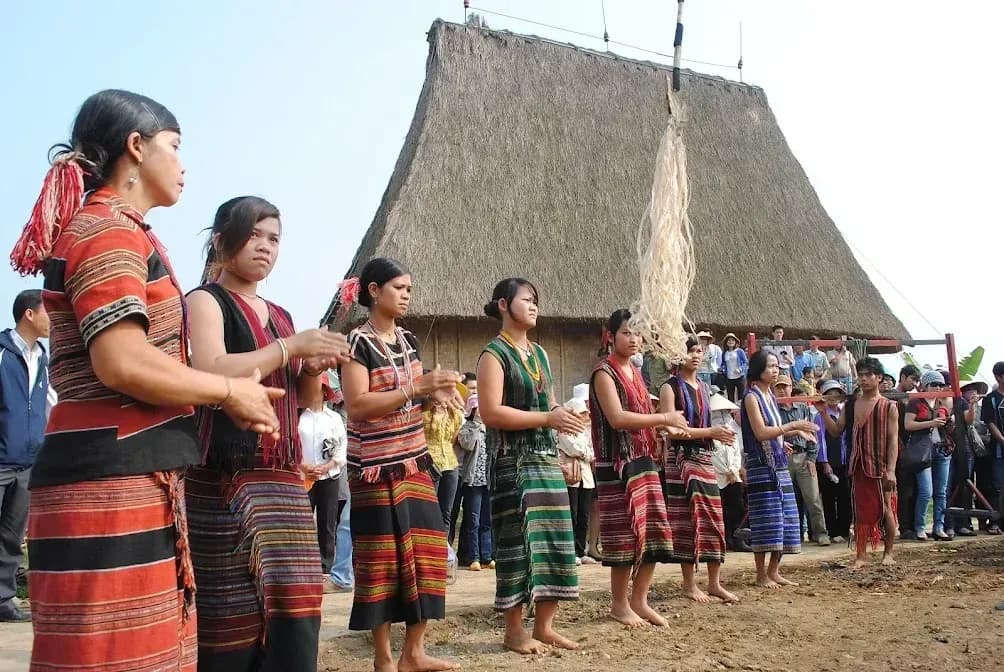
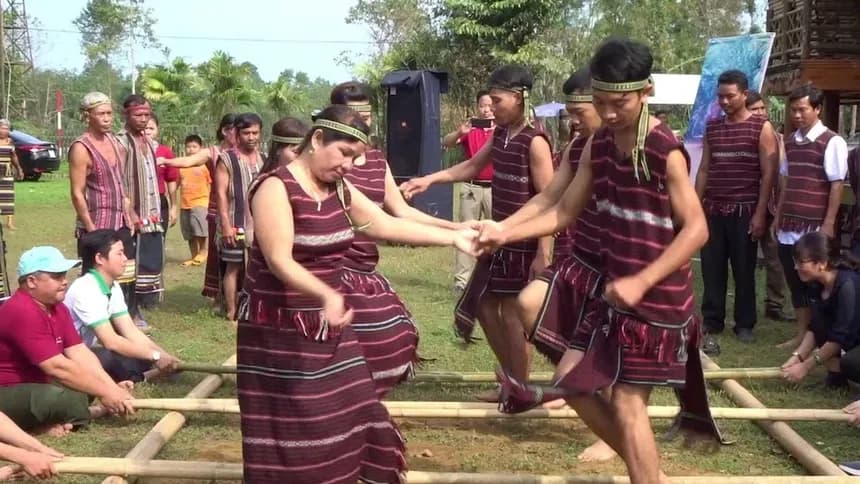
It is difficult to find traditional Raglai clothing. Nowadays, men wear trousers and shirts, women wear skirts or pants with Ao Ba Ba. In ancient times, men here went shirtless, wearing a simple loincloth without any decorative patterns. During traditional festivals, women wear Ao Dai, the upper part of which is made of alternating red and white squares.
The Raglai live in mountainous areas and valleys at an altitude of 500-1,000m, concentrated in Ninh Son district (Ninh Thuan), Bac Binh district (Binh Thuan) and some places in Phu Yen, Khanh Hoa, Lam Dong. In the past, they lived in stilt houses. Nowadays, earthen houses are quite common. The houses are usually square, only about 12 to 14m2 wide. Some larger houses are rectangular. The assembly technique is very simple, mainly using tree forks and ropes. The roof is covered with thatch or rattan leaves. The walls are covered with woven bamboo or plastered earth.
The wedding process has to go through many steps and quite complicated procedures. The wedding ceremony is held by both families: the bride's family first, the groom's family later. The most important part of the wedding ceremony is the ritual of spreading out a mat for the bride and groom. The bride and groom sit on this mat so that the two uncles of both sides can present the marriage to their ancestors and gods. It is also on this mat that they eat their first meal together in front of both families.
The deceased is wrapped in cloth or old clothes and placed in a coffin made of hollow tree trunks or bark, depending on the family's wealth. The deceased is buried in the fields or in the forest, with their heads facing west. When they have enough economic conditions, people hold a grave abandonment ceremony and build a mausoleum for the deceased. Around the mausoleum, plants such as bananas, sugarcane, pineapples and taro are planted. On top of the mausoleum, there is a boat and birds. The deceased's belongings are destroyed and placed around the house and in the mausoleum.
The Raglai believe that there is a world of spirits surrounding them and beyond their understanding. The gods can reduce disasters or help them if they are worshiped and prayed to. The spirits of the dead are the supernatural forces that cause them the most fear. Residents also believe in the spiritual transformation of animals... Therefore, every year, worship rituals with sacrifices are regularly held to ask for help from the gods. This worship has the participation of the shaman class, who are gradually separating themselves from labor and considering worship as an official profession.
Fairy tales, myths, folk songs, proverbs, folk songs... express the thoughts and feelings of the residents. The common instrument is a complete set of 12 bronze gongs. However, 4, 6, 7 or 9 can be used. Gourd pipes, lip pipes, and bamboo pipes are quite popular. The Raglai people are also residents who know how to use sounding stone bars, combined into a set commonly called a lithophone, played instead of gongs, quite unique and interesting.
The farming profession always dominates other economic activities. On the fields, people grow rice, corn, beans, squash and fruit trees. Blacksmithing and weaving are two fairly developed handicrafts... Animal husbandry is popular with herds of cattle and poultry including buffalo, pigs, chickens, ducks... Nowadays, people know how to grow wet rice.
Above is some interesting information about the Pu Péo ethnic group in Vietnam. Let's join iGuide.ai to plan to explore, meet and experience the culture of the Pu Péo people in the near future!
Source:
- Ethnic groups in Vietnam (National Political Publishing House Truth)
- Basic characteristics of 54 ethnic minorities in 2019 (Committee on Ethnic Minorities and General Statistics Office)
- Website of the Ethnic Committee, Website of Nhan Dan Newspaper
- Survey results collect information on the socio-economic status of 54 ethnic groups in Vietnam)
Log in to leave a comment. Log in
Be the first to comment.
Curate
Sign in to curate
React to this story