Save
Share
Keep reading
authenticated by

Save
Share
Keep reading
Vietnamese ethnic groups
Discover the San Chay people with their rich culture, distinctive architecture and unique cuisine. Experience the traditional cultural space and profound beliefs.
Although scattered and mixed with other ethnic minorities, the San Chay ethnic group still forms its own cultural identity. They have many unique folk songs and musical instruments. Let's find out information about the San Chay ethnic group in Vietnam with iGuide.ai!
Historical origin: The San Chay people came to Vietnam from China around the end of the Ming Dynasty and the beginning of the Qing Dynasty, 300-500 years ago.
The San Chay people live scattered, mixed with other ethnic minorities, in some localities in the provinces located in the southeastern part of the Northeast region of Vietnam, such as: Tuyen Quang (in the districts of Son Duong, Yen Son, Ham Yen), Thai Nguyen (Dong Hy, Phu Luong, Dai Tu...), Bac Giang (Luc Ngan, Son Dong, Luc Nam, Yen The), Quang Ninh (Binh Lieu, Ba Che, Tien Yen, Hoanh Bo), Cao Bang (Bao Lam, Bao Lac), Lang Son (Loc Binh, Huu Lung), Phu Tho (Doan Hung), Vinh Phuc (Song Lo).
Population: According to the survey data of 53 ethnic minorities on April 1, 2019, the total population of San Chay people: 201,398 people; male population: 102,750 people; female population: 98,648 people; household size: 3.9 people/household; proportion of population living in rural areas: 94.7%. Language: San Chay people form two local groups: Cao Lan and San Chi. Cao Lan language belongs to the Tay-Thai language group (Thai-Kadai language family) and San Chi language belongs to the Han language group (Sino-Tibetan language family).
Religion and beliefs: In San Chay houses, there are many altars. In addition to worshiping their ancestors, they also worship heaven and earth, the local god, the midwife, the god of agriculture, the god of livestock... The San Chay altar is quite simple, often just a bamboo tube to hold incense. But every year, before Tet, the altars are cleaned and a piece of red paper is pasted on them.
The traditional houses of the San Chay people are usually stilt houses and half-stilt, half-ground houses (this type of house is very rare today). The living space in the stilt house is divided into many different areas. The front half of the house, from left to right, first is the daughter's room with stairs leading down to the floor, the middle part has the stove and the place for the elderly to sleep in the cold season, and finally on the right is the daughter-in-law's room. The back half of the house, on the left side, is about 30cm higher than the common floor, where the ancestral altar is located, next is the place for the elderly to sleep in the hot season and the place to receive male guests; on the right side, in a lower place, is the place to receive guests, eat and sleep overnight for the younger male members of the house. Under the floor is the place to put the rice pounding mortar and formerly was the place to keep livestock and poultry.
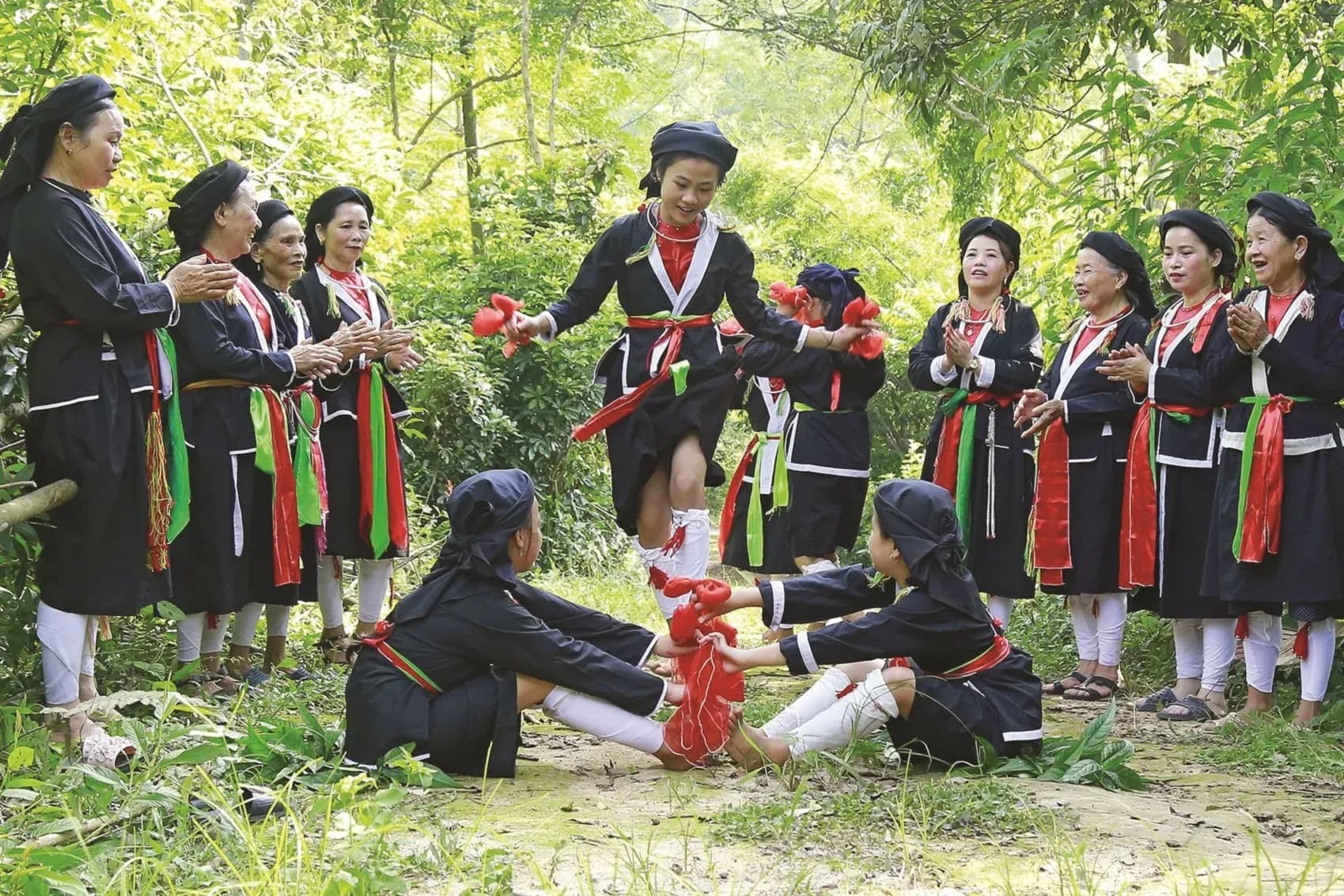
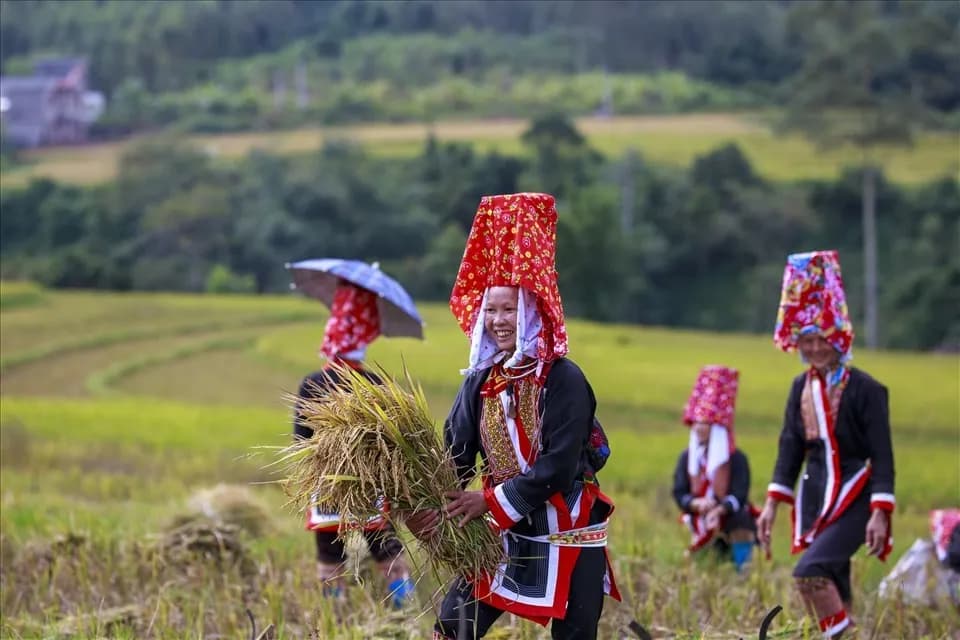
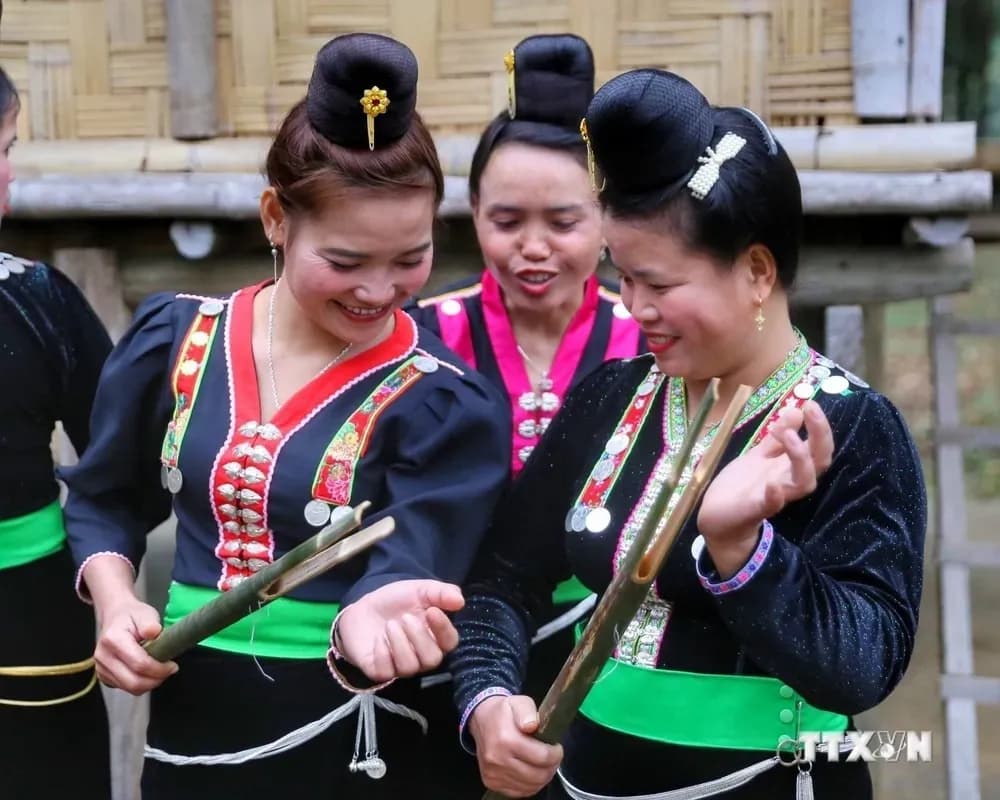
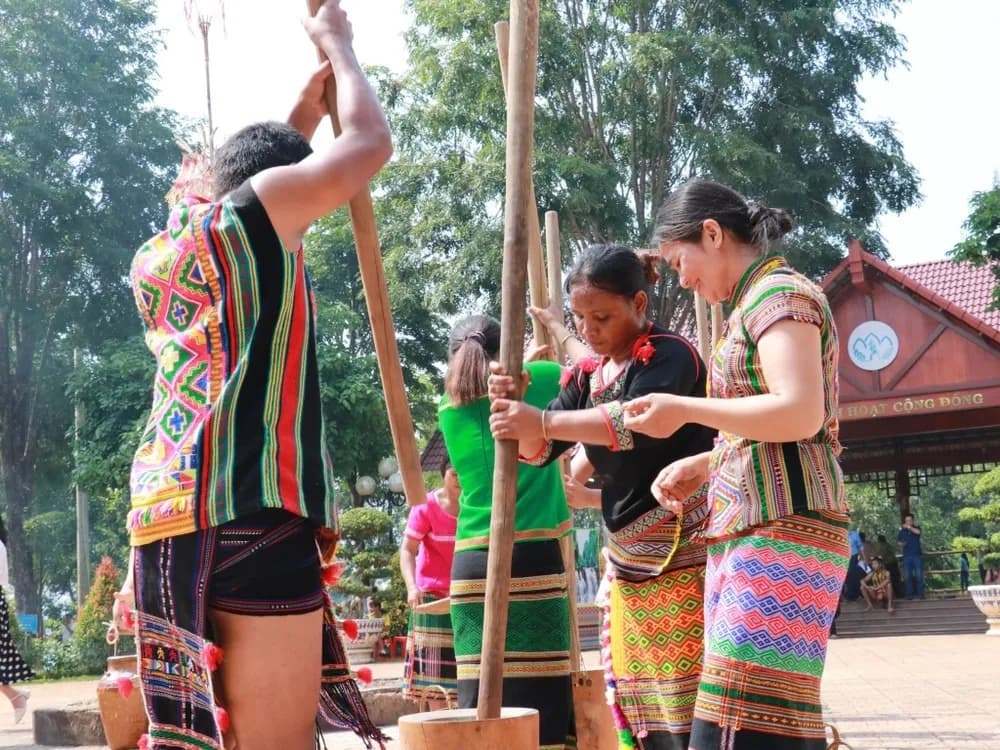
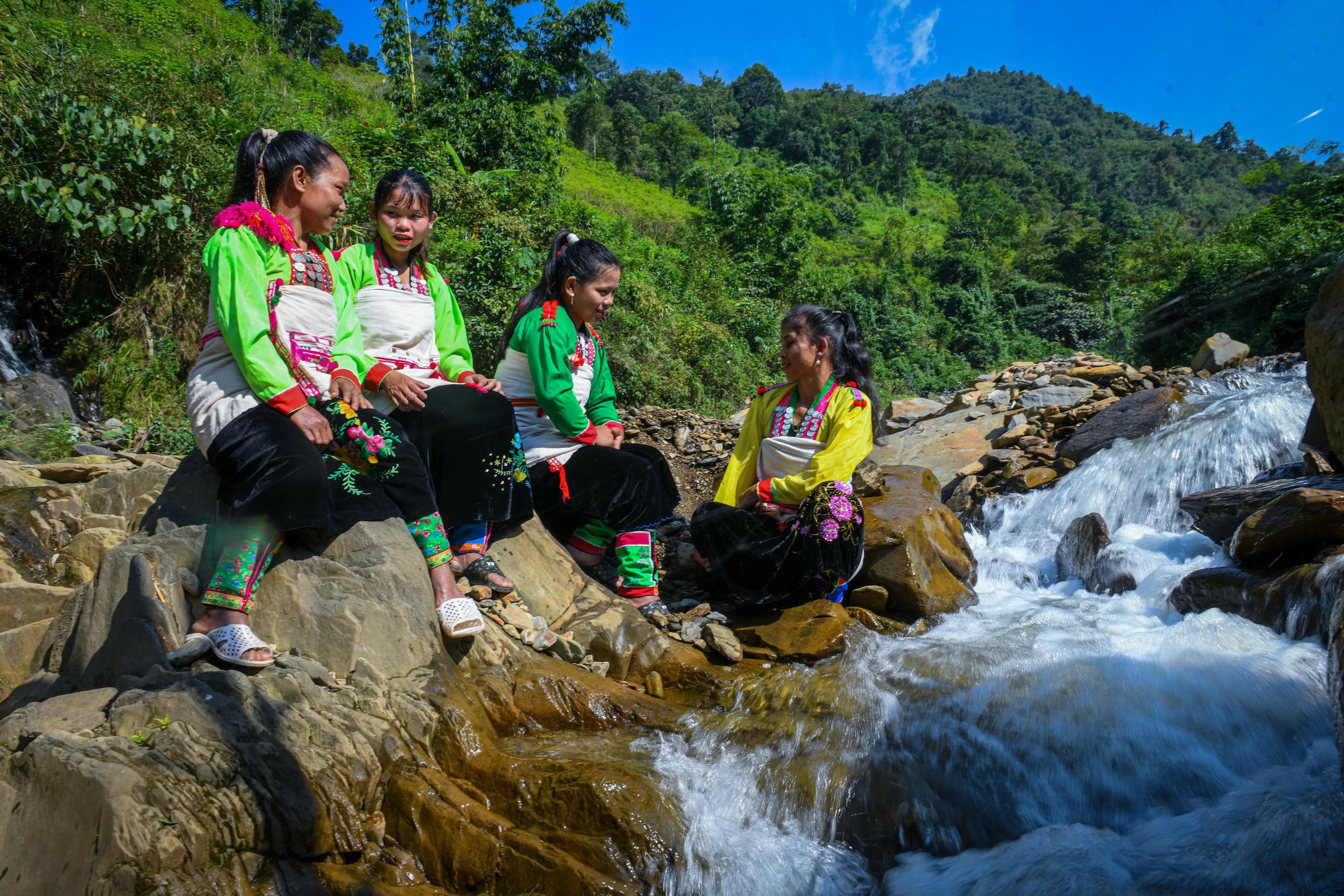
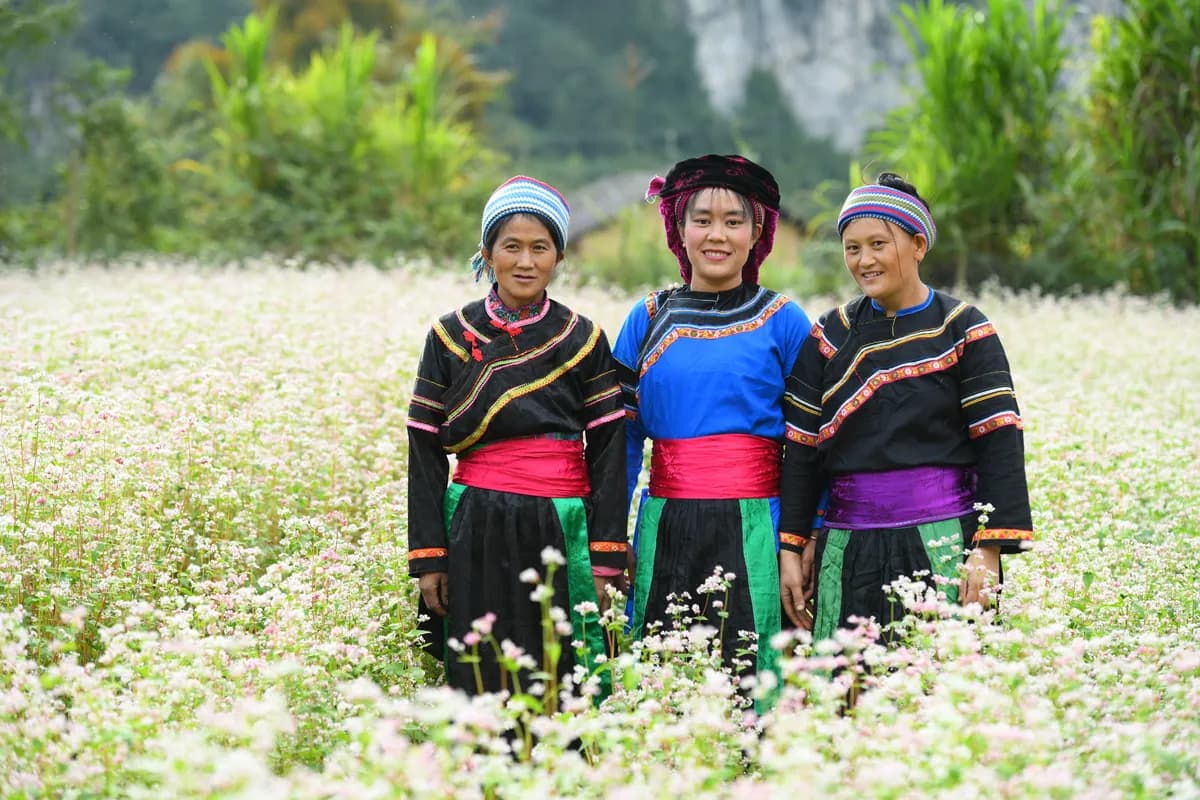
Clothing: Women wear indigo skirts and long dresses with decorative patterns on the armpits and back. Normally, they only use an indigo belt, but during festivals and ceremonies, women will wear indigo clothes that are more beautifully decorated, with white and indigo patches on the front of the chest, red and white embroidered patterns on the back, and a red and light blue belt. On their heads they wear a black indigo square scarf. Men wear long or short indigo shirts and brown or white pants.
The main food sources of the people are sticky rice and rice; besides corn, potatoes, and cassava. These food sources are processed in many ways, such as: cooking, baking, steaming, grinding flour to make cakes and vermicelli... Men often smoke tobacco. Women chew betel.
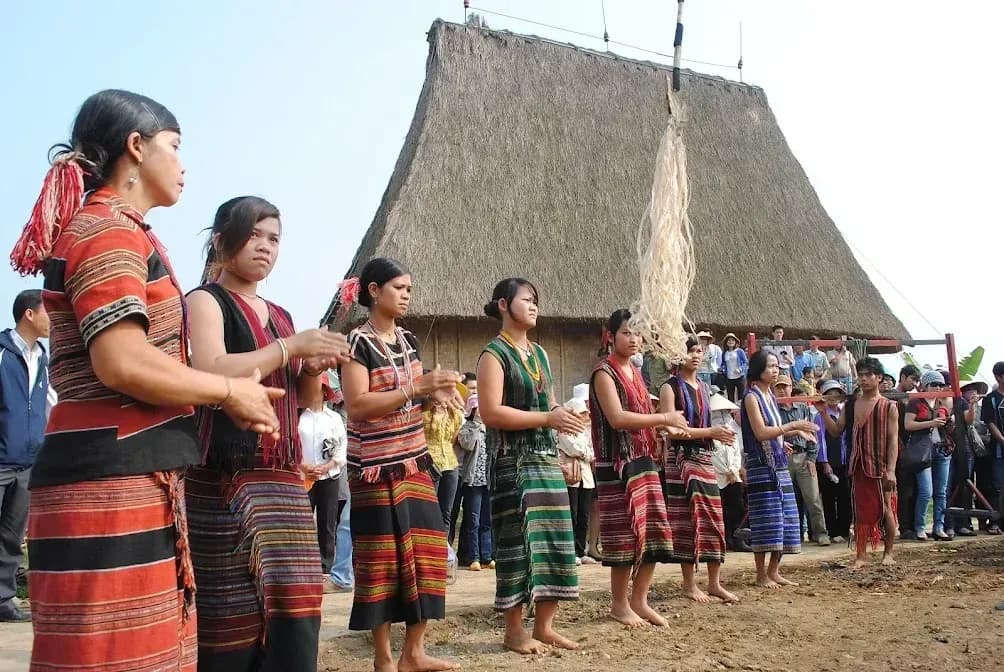
Art: The most prominent are lyrical folk songs - sinh ca, the love songs between men and women, including two types: singing in the village at night and singing on the road or at the market. The San Chay people's dances are also very diverse: drum dance, shrimp-scooping dance, bird dance, fish-stabbing dance, lamp-lighting dance... Musical instruments include: cymbals, gongs, drums, bells, trumpets... The most unique are the earthenware drums and bamboo pipes.
According to the 2019 Survey of 53 Ethnic Minorities, the rate of people aged 15 and over who can read and write in common script is 89.7%; the general school attendance rate of children in primary school is 101.1%; in lower secondary school is 96.6%; in high school: 70.5%. The rate of people aged 15 and over who can read and write in their own script is 7.1%. Notably, 99.68% of San Chay ethnic children over 5 years old go to school.
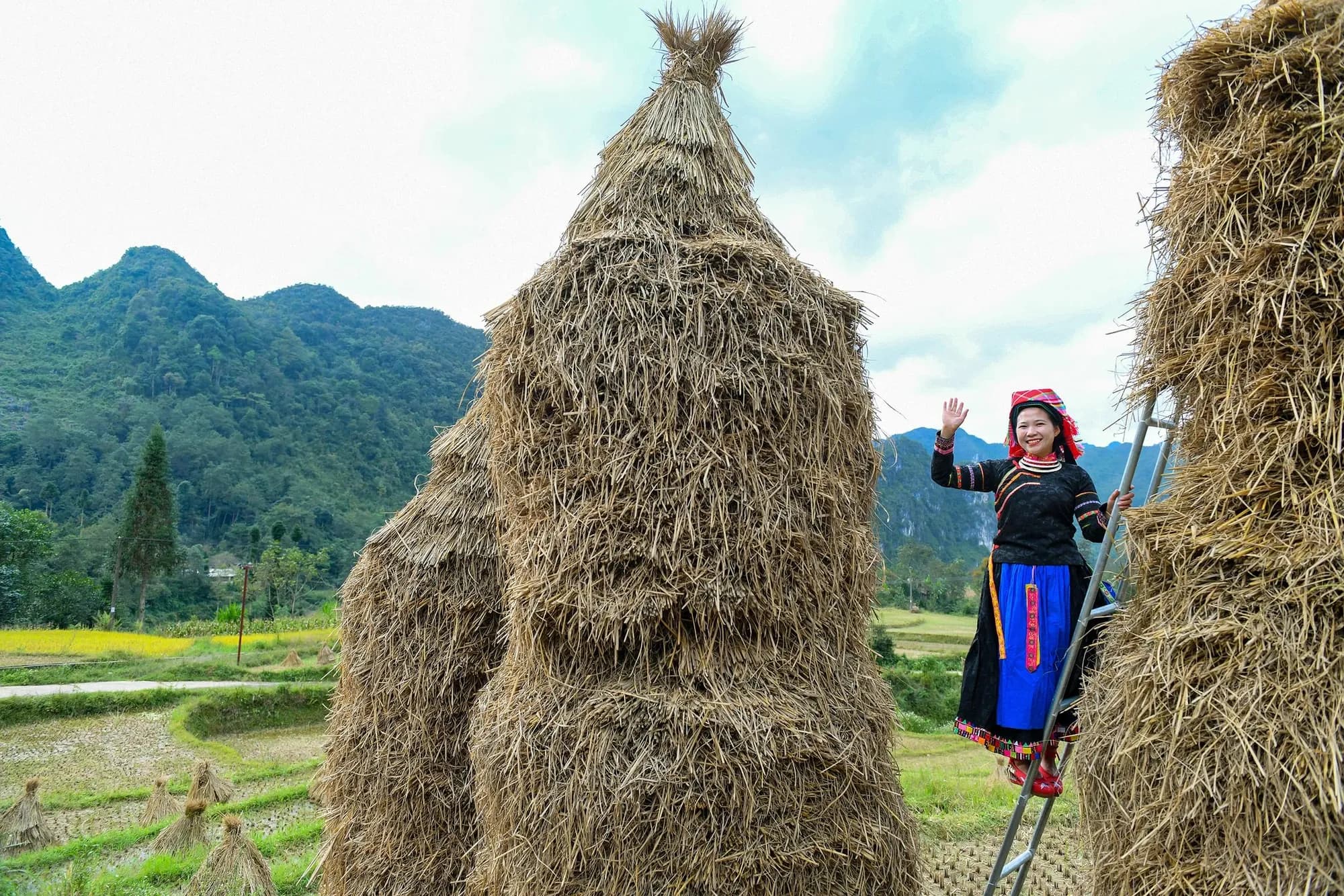
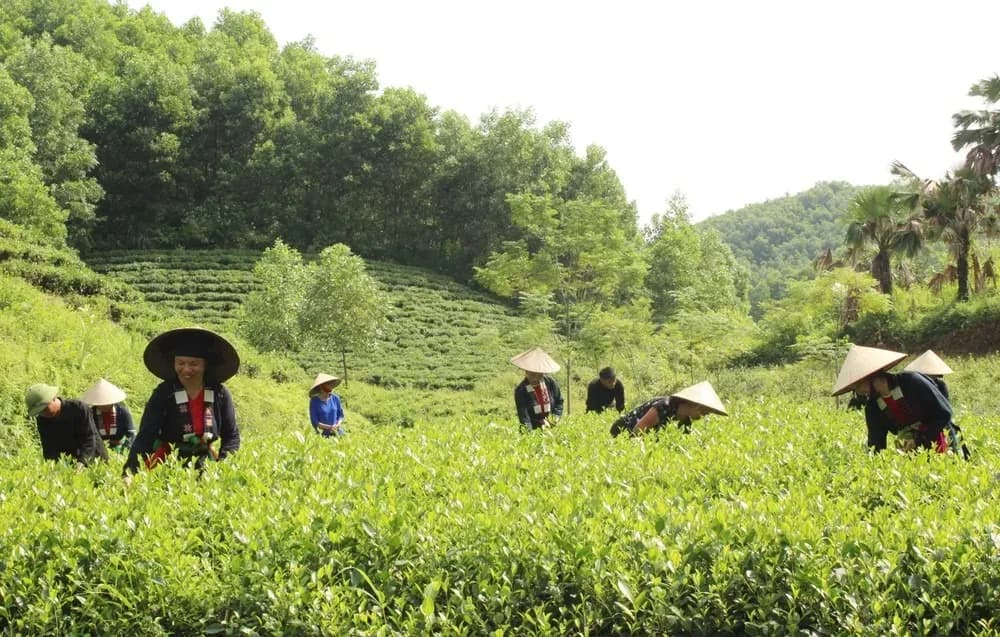
Growing food crops on sloping land is the main economic activity of the San Chay people. The fields of the San Chay people in many places have been cultivated in two crops: winter-spring and summer-autumn. The winter-spring crop lasts from late January to May and June. In the summer-autumn crop, the San Chay people mainly grow Bao Thai Hong rice (dwarf Bao Thai). Currently, hill garden farming is a popular development trend. The main crops grown are lychee, longan, and persimmon, bringing high economic efficiency to the San Chay people in many places, especially in Bac Giang province.
The livestock structure is still raising buffaloes and cows for plowing, raising chickens, ducks, geese, and other poultry to meet the food needs of the family, as well as to meet the needs of offerings in traditional ceremonies. The San Chay people catch fish and shrimp with nets and nets, which does not destroy the environment, and preserves the source of aquatic species, ensuring long-term exploitation.
Beekeeping is a completely new economic activity for the San Chay people. Up to now, many families have developed beekeeping into one of their main economic activities, with high and stable income.
According to the survey data of 53 ethnic minorities on April 1, 2019: The San Chay ethnic group has: Unemployment rate of 1.93%; Rate of trained workers with degrees and certificates: 8.3%; Rate of workers working in the non-agricultural sector: 26.5%; Rate of workers working in management or high and middle-level technical and vocational training: 2.1%; Rate of poor households: 18.7%; Rate of near-poor households: 14.7%; Rate of households using clean water sources: 89.1%; Rate of households using grid electricity for lighting: 98.9%.
Source:
- Ethnic groups in Vietnam (National Political Publishing House Truth)
- Basic characteristics of 54 ethnic minorities in 2019 (Committee on Ethnic Minorities and General Statistics Office)
- Website of the Ethnic Committee, Website of Nhan Dan Newspaper
- Survey results collect information on the socio-economic status of 54 ethnic groups in Vietnam)
Log in to leave a comment. Log in
Be the first to comment.
Curate
Sign in to curate
React to this story