Save
Share
Keep reading
authenticated by

Save
Share
Keep reading
Vietnamese ethnic groups
Discover the unique life and culture of the Mang ethnic group in Lai Chau. Immerse yourself in traditional rituals, customs and unique beauty.
Living along the northern border of our country, despite being one of the 16 ethnic groups with very few people in Vietnam, the Mang people still preserve their unique traditional culture. Let's find out information about the Mang people, Vietnam with iGuide.ai!
The Nam Ban (Dum Bai) area in Nam Ban commune, Sin Ho district, Lai Chau province has long been known as the "homeland" of the Mang people. The Mang people are one of the indigenous peoples in the Northwest region. Self-name: Mang. Other names: Mang U, Xa Mang, Nieng O, Xa Ba O. Local groups: Mang Gung, Mang He.
According to the survey of 53 ethnic minorities on April 1, 2019: The Mang ethnic group has 4,650 people, of which male population: 2,313 people, female population: 2,337 people. Household size: 4.8 people/household. Percentage of population living in rural areas: 97.4%.
Concentrated in Lai Chau province, stretching across the northern border, bordering China.
The language belongs to the Mon-Khmer language group (Austro-Asian language family). According to a survey by the People's Committee of Lai Chau province, the Mang people have preserved their language quite well, 100% of the people use their own language in daily life. When communicating with the outside, some people can use the common language, Thai, Ha Nhi and Hmong.
Education: According to the survey of 53 ethnic minorities on April 1, 2019: The rate of Mang people aged 15 and over who can read and write: 46.2%; The rate of people attending primary school: 104.3%; The rate of people attending lower secondary school: 88.9%; The rate of people attending upper secondary school: 38.8%; The rate of out-of-school children: 14.3%.
Food: The Mang eat two meals (lunch and dinner), corn is the main food, corn mixed with cassava or mixed with a little steamed rice. Young cassava leaves steamed with salt are food for the Mang almost all year round. They like to smoke tobacco and drink white wine.
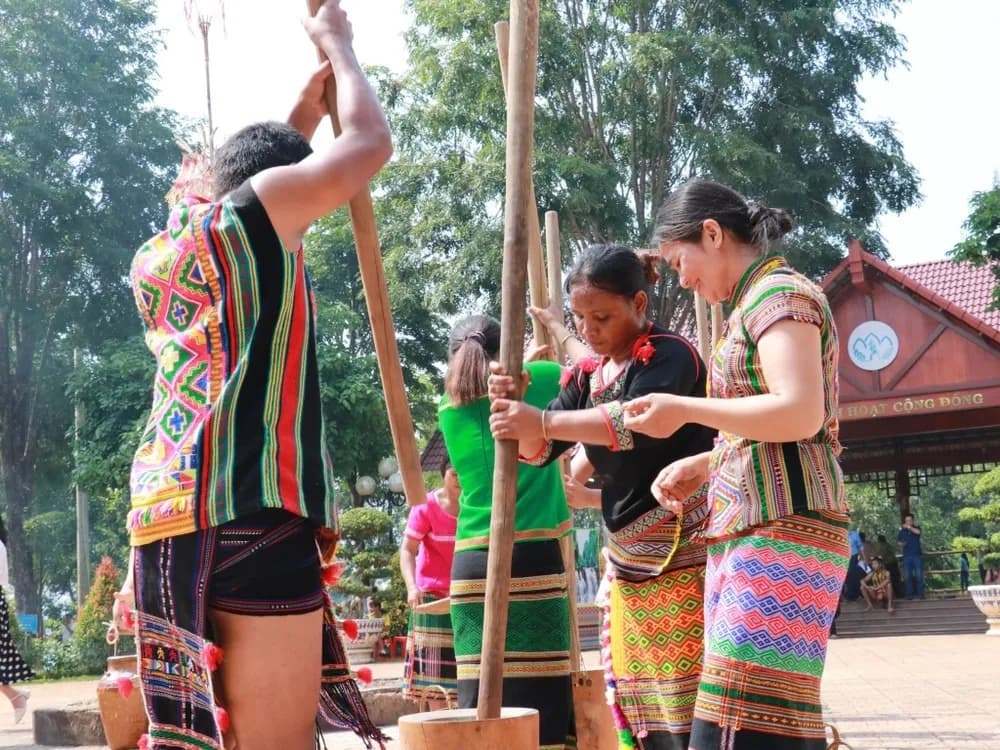
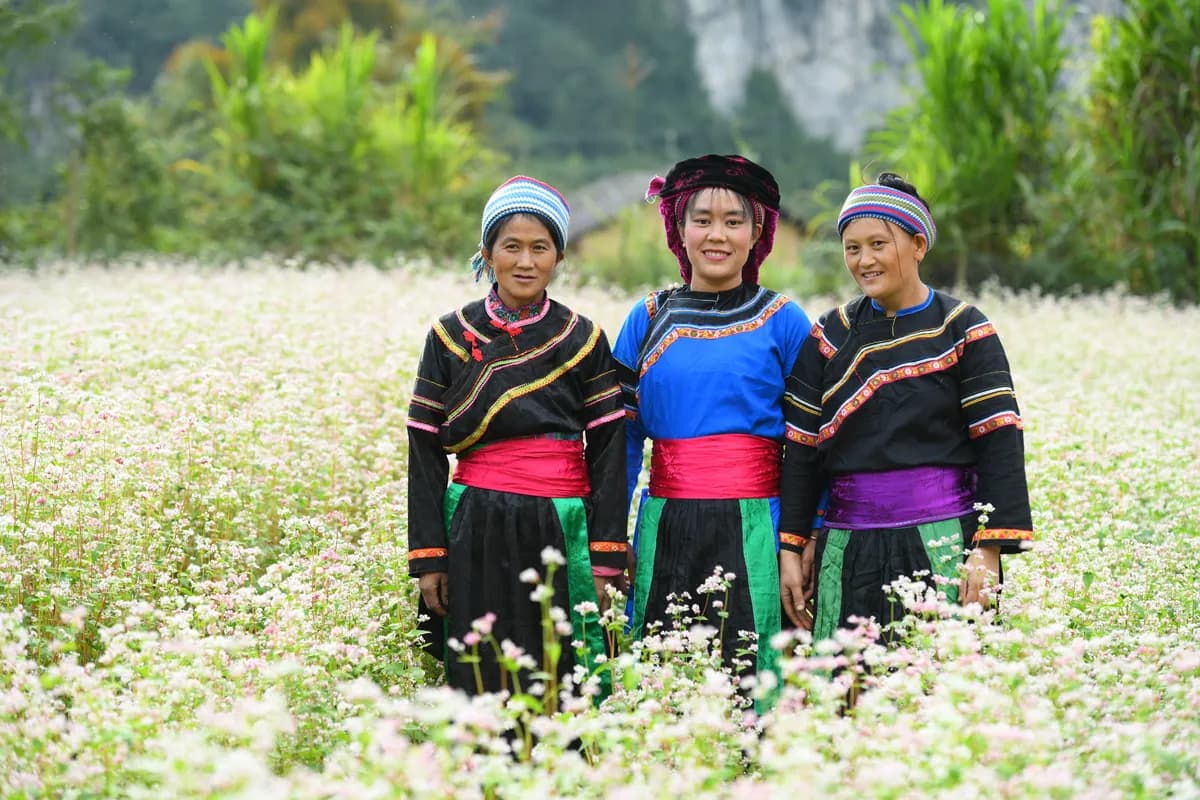
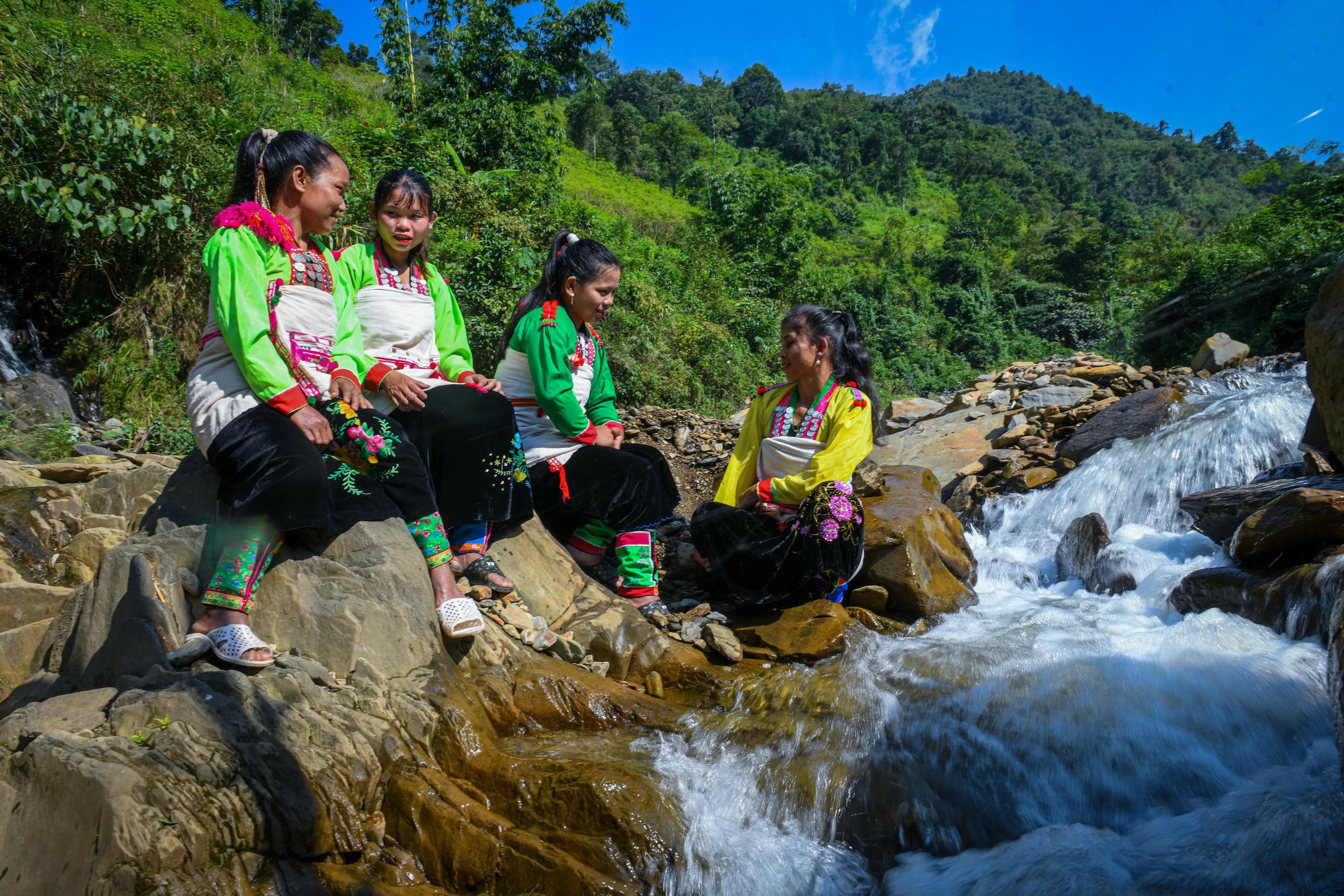
Costume: The unique feature of Mang women's clothing is a shawl wrapped around the body, cut and sewn from white coarse fabric, embroidered with red thread in the middle. The head is bare, the hair is tied into a tuft on the head with a pretty tasseled string, and the legs are wrapped in leggings.
Facial tattooing: In the past, both Mang women and men had to have their faces tattooed (also known as mouth or chin tattoos). This was a mandatory initiation ceremony when boys and girls reached adulthood (boys from 16 to 18 years old, girls from 15 to 16 years old), with the main purpose of being recognized by the community as official members. Thanks to the facial tattoos, after death, the ancestors in heaven would recognize them as members of the same family and allow their souls to reside with them.
Social relations: The head of the traditional social organization is the Pogia. The Ban (Muy) organization is still maintained according to traditional customs. The village has a village chief who oversees the collection of miscellaneous taxes. In the village, there is usually a large clan, the clan chiefs together with the village elders council manage all social and religious activities according to customs. The Mang have 5 main clans, each clan takes an animal as its totem.
Housing: Although Mang houses are very makeshift, from choosing land, leveling the ground, erecting pillars to roofing, all stages require a fortune teller to choose the date and time before starting to build the house. This ceremony includes many complex rituals that represent the ethnic characteristics.
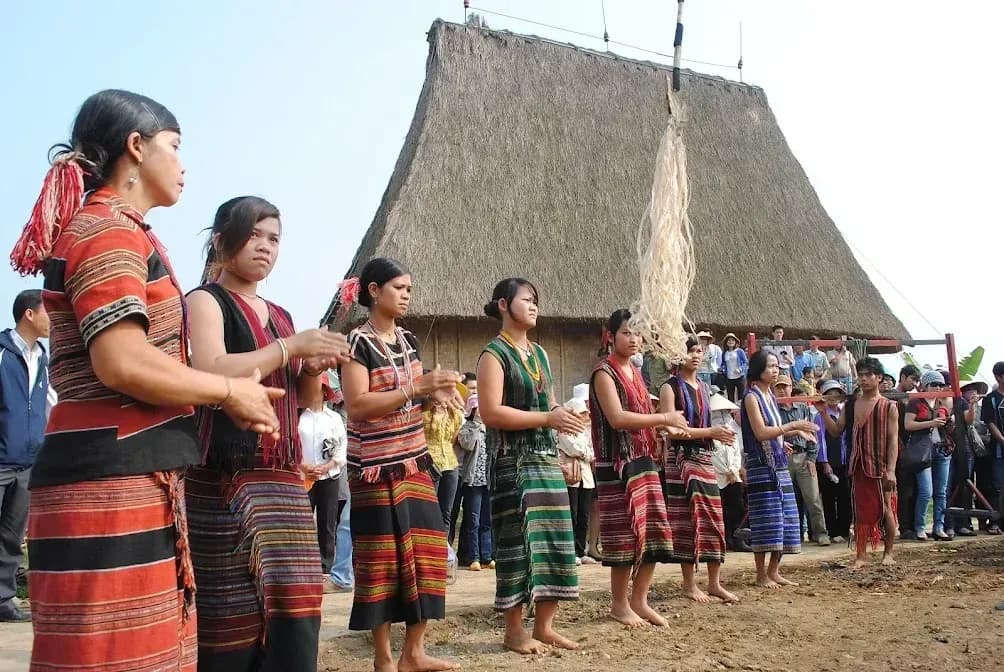
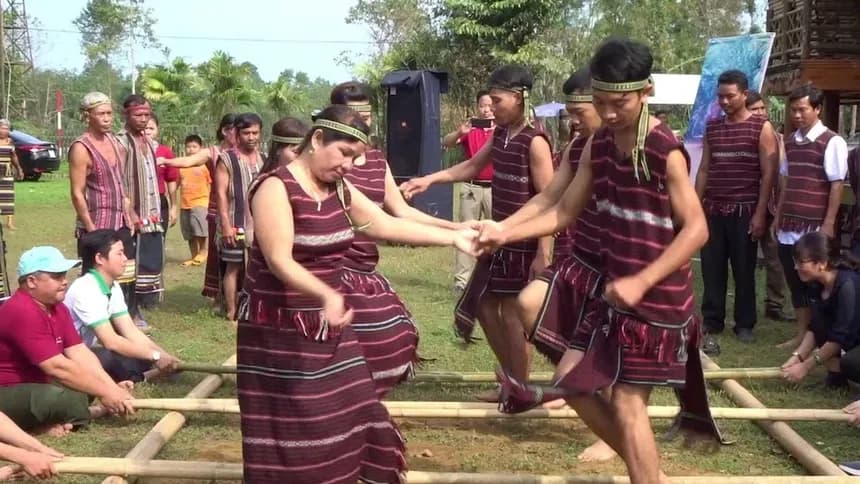
Festivals: In addition to the Lunar New Year, the Mang celebrate the New Rice Festival after the harvest in the 10th lunar month. Every year, the villagers also worship the village ghost and the house ghost to pray for peace. In particular, they have a series of rituals related to agriculture: sowing ceremony; worshiping the rice spirit, the rice mother; worshiping after the harvest...
Worship: House ghosts are worshiped during Tet or when someone in the family is sick. The Mang believe in many ghosts, among which house ghosts hold a particularly important position. Besides, they also worship Dam ghosts - ancestors and family lineage.
Arts: The folk song "xoong" is known and loved by many people. Today, the Mang people still preserve the legend about their ancestral land, Muang Buang, a place on the mountainside of Nam Ban commune, Sin Ho district (now Nam Nhun district).
Slash-and-burn agriculture is the main way of living of the Mang people. In the past, the Mang people raised small livestock, later large livestock; the weaving craft was especially developed, reaching a sophisticated level, while the weaving craft was not developed; the weaving products were mainly exchanged with the Thai people for clothing products. In addition, the hat-making craft was also very developed, used for exchange or sale to the Thai people.
According to the survey data of 53 ethnic minorities on April 1, 2019: Poverty rate: 66.3%; Near-poverty rate: 10.2%; Unemployment rate: 0.67%; Rate of trained workers with degrees and certificates: 4.0%; Rate of workers working in the non-agricultural sector: 11.2%; Rate of workers working in management or high and medium-level technical and vocational training: 1.7%; Rate of households working in traditional handicrafts: 0.11%.
Above is some interesting information about the Mang ethnic group, Vietnam. Let's plan to explore, meet and experience the culture with the Mang people in the near future with iGuide.ai!
Source:
- Ethnic groups in Vietnam (National Political Publishing House Truth)
- Basic characteristics of 54 ethnic minorities in 2019 (Committee on Ethnic Minorities and General Statistics Office)
- Website of the Ethnic Committee, Website of Nhan Dan Newspaper
- Survey results collect information on the socio-economic status of 54 ethnic groups in Vietnam)
Log in to leave a comment. Log in
Be the first to comment.
React to this story
Curate
Sign in to curate