Save
Share
Keep reading
authenticated by

Save
Share
Keep reading
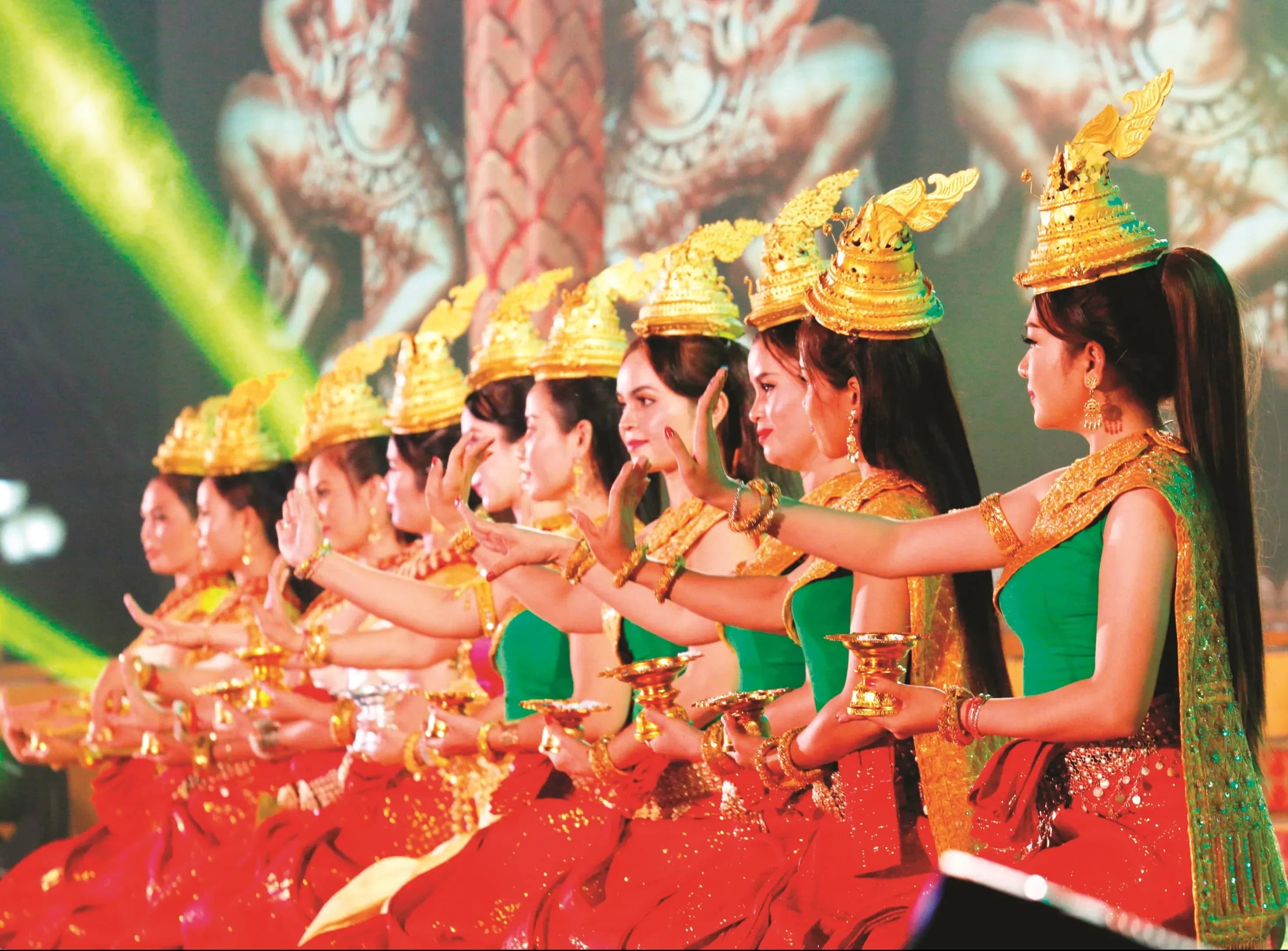
Vietnamese ethnic groups
Explore the life and culture of the Khmer people in the fascinating Mekong Delta.
The Khmer are an indigenous people with a long history of settlement, mainly in southern Vietnam, especially the Mekong Delta. They are one of 54 ethnic groups in Vietnam with many unique cultural identities. Let's find out information about the Khmer people in Vietnam with iGuide.ai!
Many studies have confirmed that the Khmer people in our country are descendants of immigrants from Luc Chan Lap - the predecessor of today's Cambodia. They migrated to this area in many waves and for many different reasons. Along with the Vietnamese and the Chinese, the Khmer people are one of the earliest groups of residents in the Mekong Delta. In Vietnam, the Khmer people also have a number of other names such as Khmer Crom, Khmer Ha, Khmer Duoi, Vietnamese of Khmer origin, etc.
Based on ecological characteristics and natural environment, the distribution of Khmer people in the Mekong Delta can be divided into three main regions as follows: - Inland region: this is the oldest residential area of Khmer people in the Mekong Delta.
- Coastal area: stretching from Tra Vinh, through Soc Trang to Bac Lieu.
- Southwestern border mountainous region: belongs to An Giang and Kien Giang provinces, where there are That Son mountain range, Sap mountain, and Vong The mountain.
- Population: According to the survey data of 53 ethnic minorities on April 1, 2019, the total population of Khmer people: 1,319,652 people; male population: 650,238 people; female population: 669,414 people; household size: 3.7 people/household; proportion of population living in rural areas: 76.5%. - Language: Khmer people speak Khmer - a language belonging to the Mon-Khmer group in the South Asian language family.
- Traditional social institutions: Khmer people in the Mekong Delta live in groups of phums and socs. Blood relations and marriage are two basic relationships in phums; neighborly and territorial relations mixed with close kinship relations are basic relationships in socs.
- Religion and beliefs: Most Khmer people in Vietnam are followers of Theravada Buddhism. In addition, Khmer people also have folk beliefs and festivals that contain many Hindu elements but are integrated into Buddhism.
- Housing: Khmer people used to live in stilt houses or houses on the ground, but now most of them have moved to houses on the ground.
- Clothing: Khmer men and women used to wear silk sarongs that they wove themselves, but young people today often wear modern clothing.
- Cuisine: The main food of the Khmer people is sticky rice and vermicelli soup (tuksamlo) is a special dish.
- Education: The rate of Khmer people aged 15 and over who can read and write in common: 76.7%. Education indicators show the State's interest in developing education for the Khmer people.
- Festivals: The festival system is very rich with Chol Chnam Thmay and Ok-ang Bok being the two major festivals of the year.
Khmer people mainly live by growing rice, fishing, weaving mats, knitting, making palm sugar and pottery. Pottery techniques are simple with main products such as stoves (Ca rang) and pots (Ca om). Trading is done through traders. According to the survey data of 53 ethnic minorities on April 1, 2019: unemployment rate 2%; rate of trained workers with degrees and certificates: 7%; rate of poor households: 13%; rate of near-poor households: 12.8%; rate of households using clean water sources: 99.3%; rate of households using grid electricity for lighting: 99.6%.
Above is some interesting information about the Khmer people in Vietnam. Let's plan to meet and learn about the culture of the Khmer people in the near future with iGuide.ai!
Source:
- Ethnic groups in Vietnam (National Political Publishing House Truth)
- Basic characteristics of 54 ethnic minorities in 2019 (Committee on Ethnic Minorities and General Statistics Office)
- Website of the Ethnic Committee, Website of Nhan Dan Newspaper
- Survey results collect information on the socio-economic status of 54 ethnic groups in Vietnam)
Log in to leave a comment. Log in
Be the first to comment.
Curate
Sign in to curate
React to this story