Save
Share
Keep reading
authenticated by

Save
Share
Keep reading
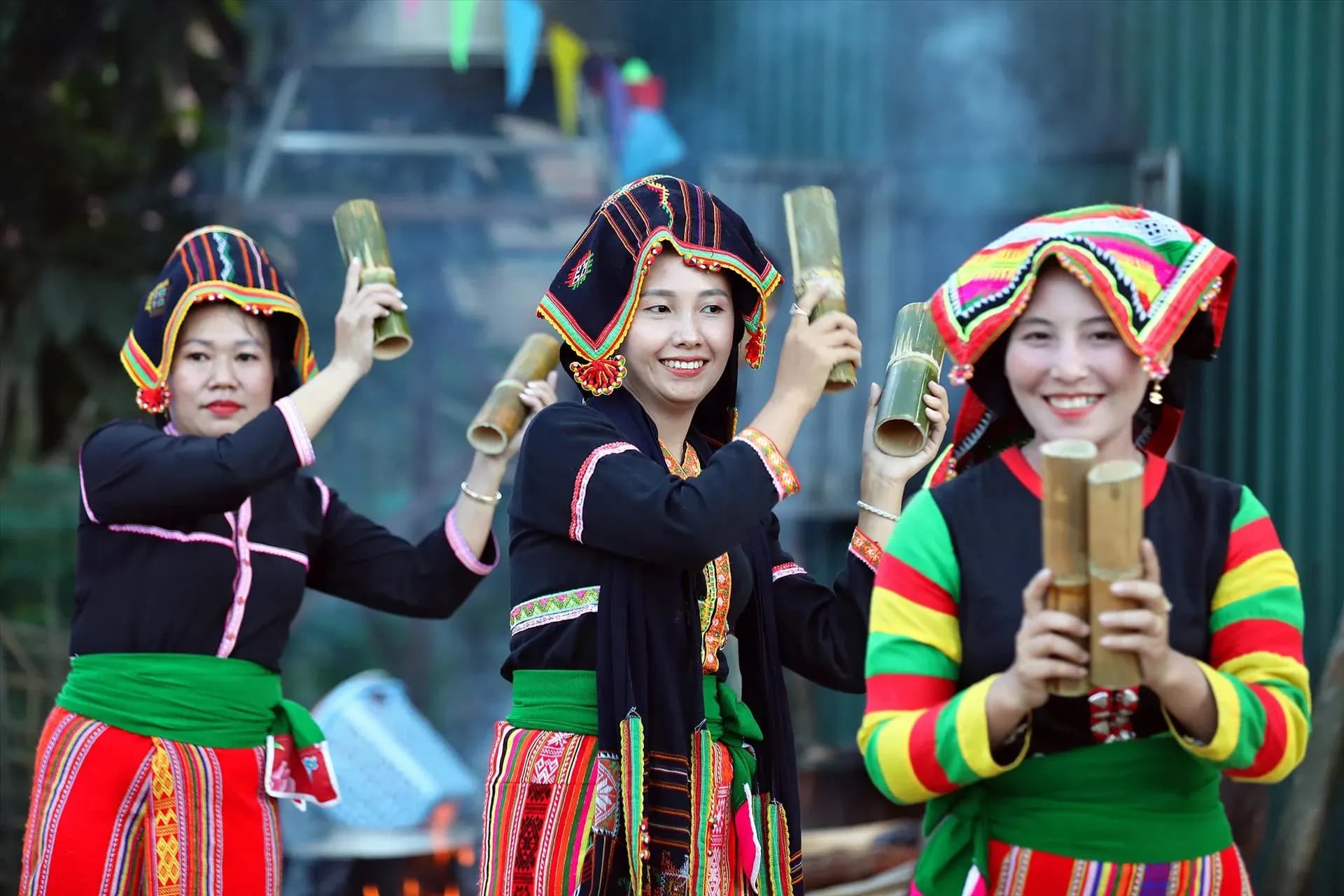
Vietnamese ethnic groups
Learn about the life and customs of the Cong people, a unique ethnic group in the Northwest region with many unique cultural features and long-standing traditions.
The Cong people in Vietnam are called Xa, Mang... residing mainly in the Northwest region, mainly Lai Chau and Dien Bien. Let's find out information about the Cong ethnic group in Vietnam with iGuide.ai according to reference information from the Vietnam Ethnic Committee!
The Cong people in China are classified as Ha Nhi ethnic group, called Bach Kong. According to researchers, the Bach Kong people may have migrated from Mang La area, Yunnan province, China to Phong Tho area, Lai Chau province, the Northwest region of our country. Therefore, the Cong people in Vietnam are also called Mang people. Regarding ethnic names: The Cong people have self-names such as Xa, Cong Bo Kham, Xam, Khong, Mang La...
According to the results of the survey on collecting information on the socio-economic status of 54 ethnic minorities in 2019 by the Vietnam Ethnic Minorities Committee - General Statistics Office, the population of the Cong people as of April 1, 2019 was 2,729 people, of which 1,341 were men and 1,388 were women.
The Cong people belong to the Tibeto-Burman language group. Their language belongs to the Sino-Tibetan language family, closer to Burmese, in the same group as La Hu, Phu La, Si La... They are used to using Thai in daily communication.
Currently, more than 98% of the Cong ethnic group lives in the Northwest region, mainly in Lai Chau and Dien Bien.
The Cong people live in three- or four-room stilt houses with only one entrance and one window in the middle room. Along the main wall of the house is a small floor, which has little practical value but is typical of every house. The Cong family has a patriarchal structure.
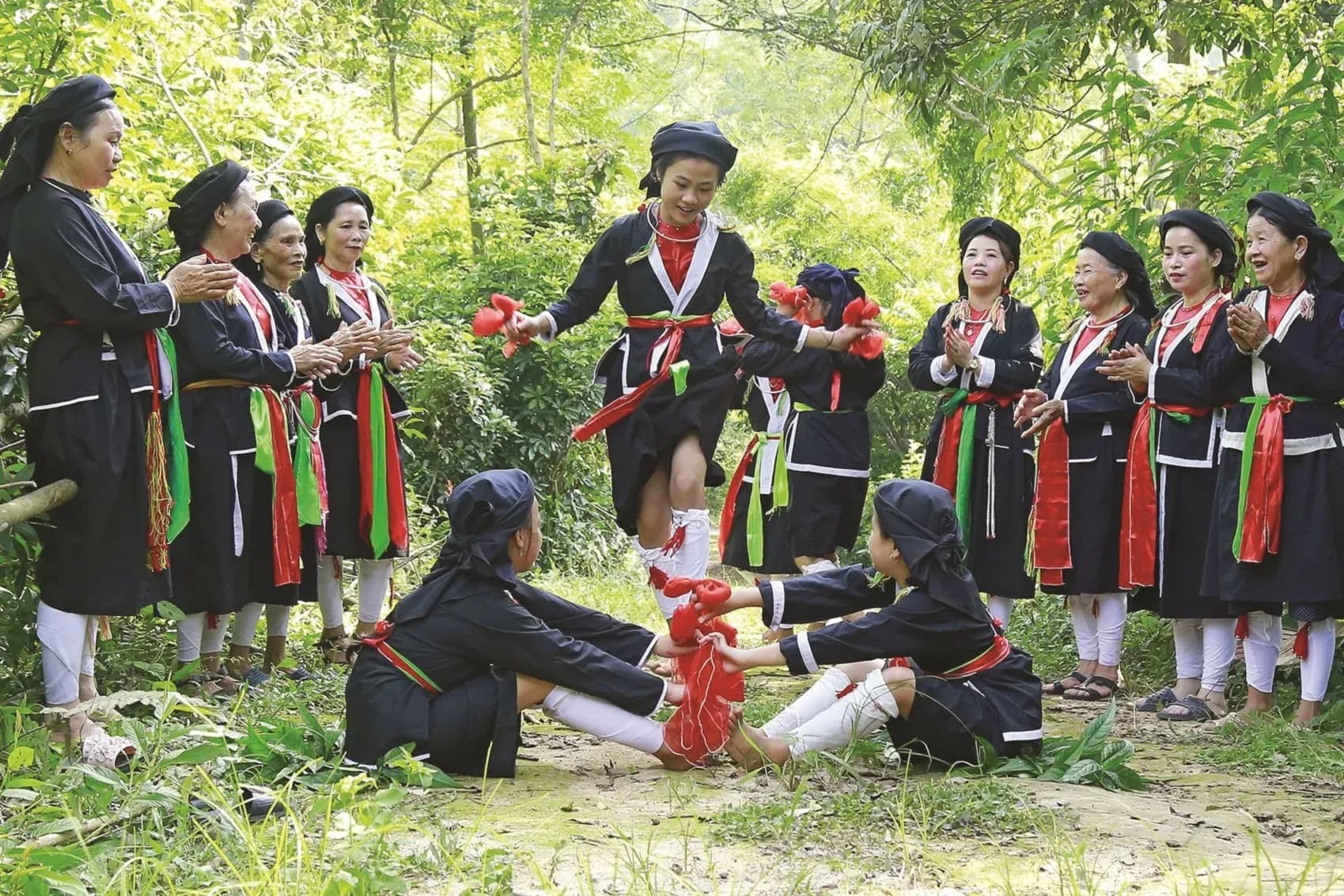
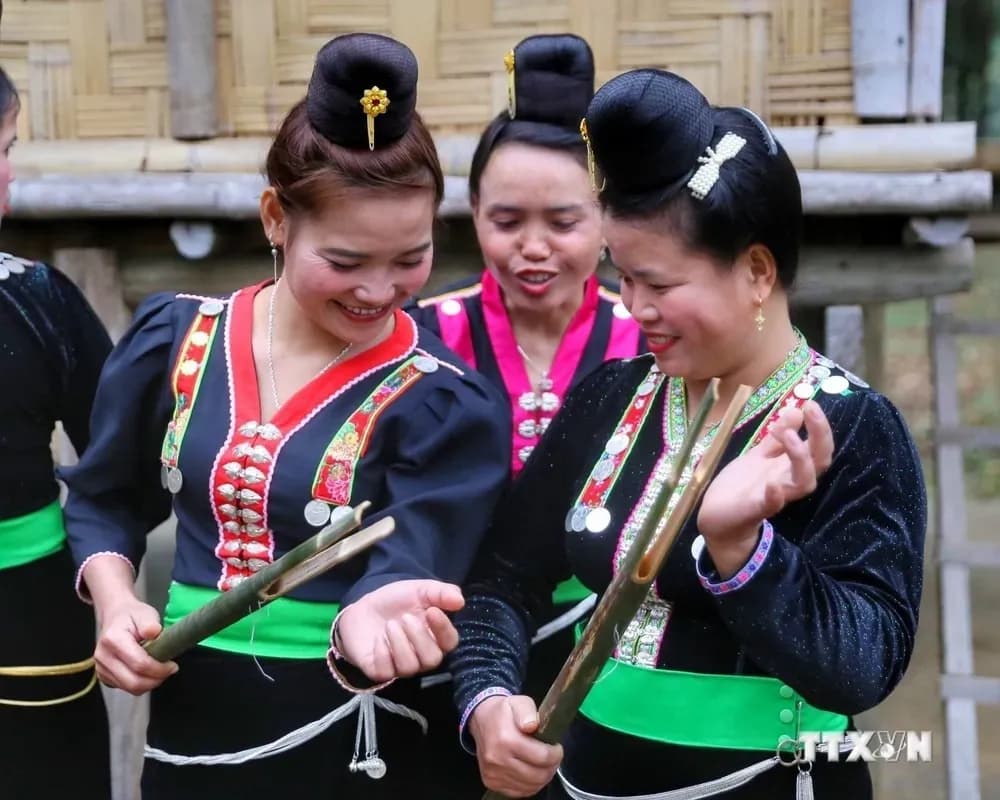
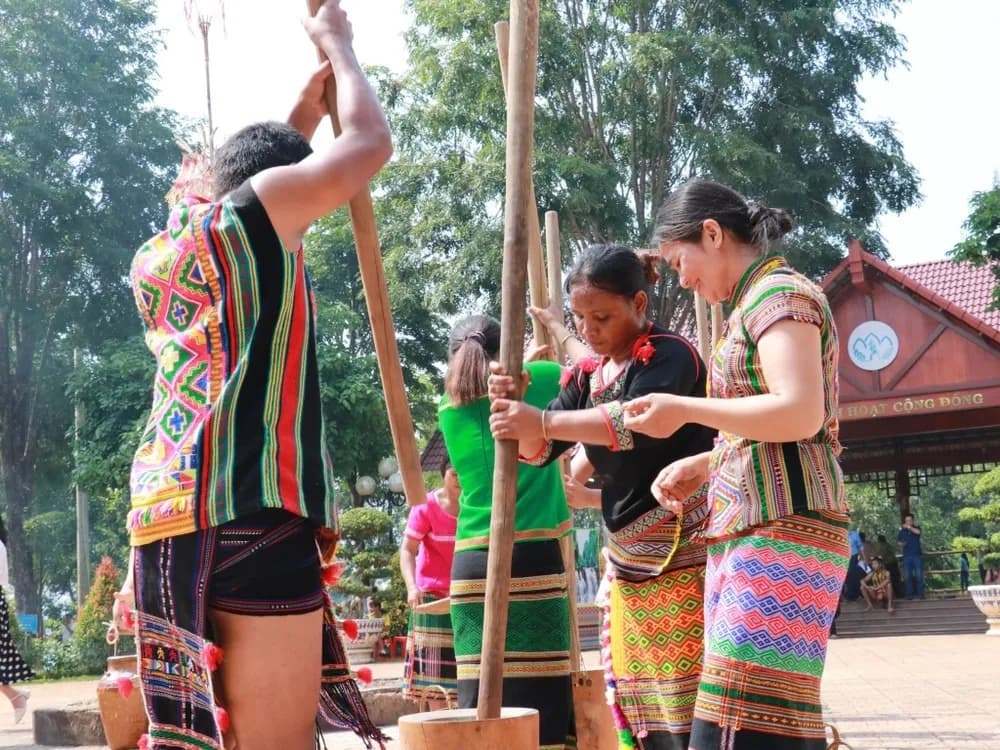
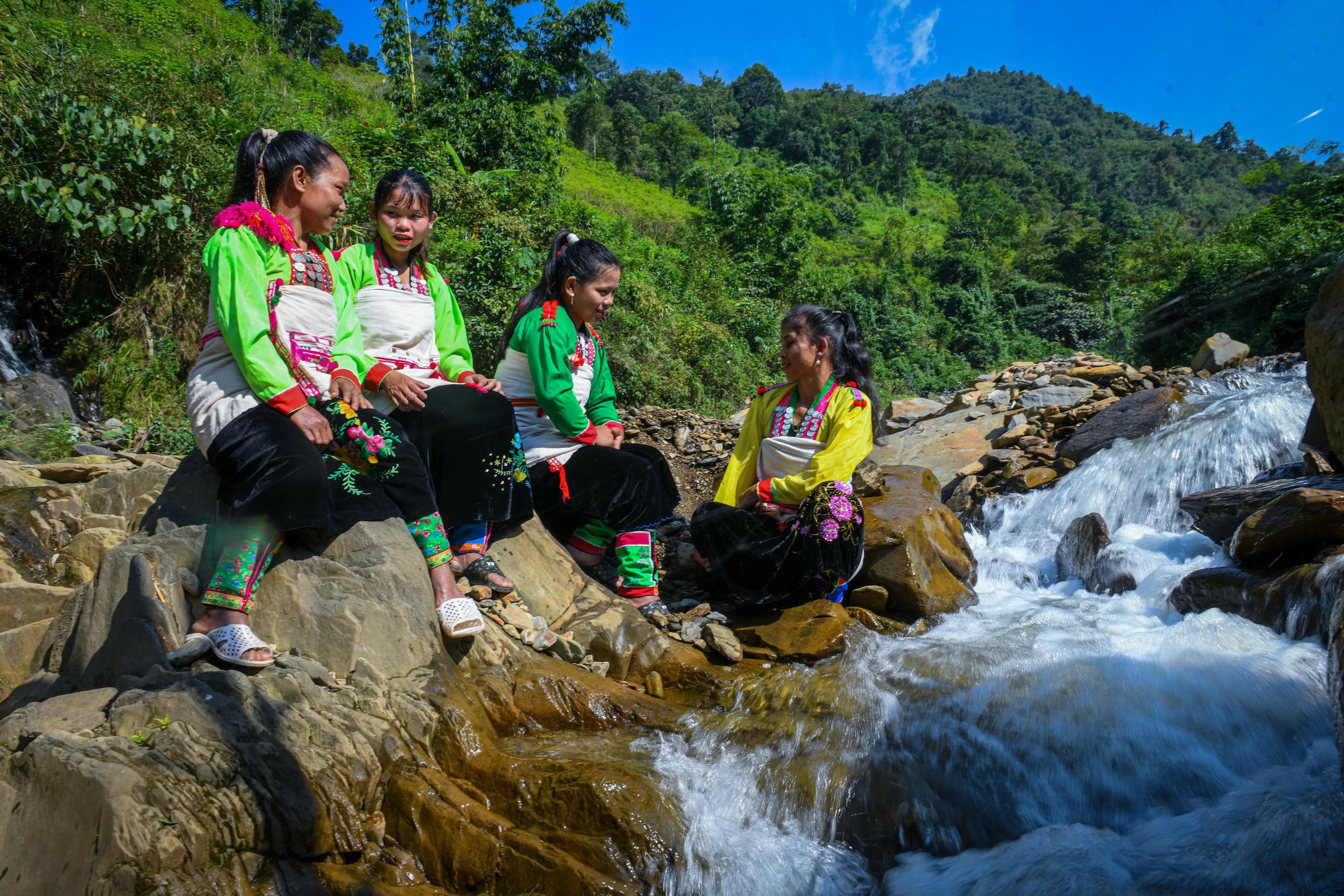
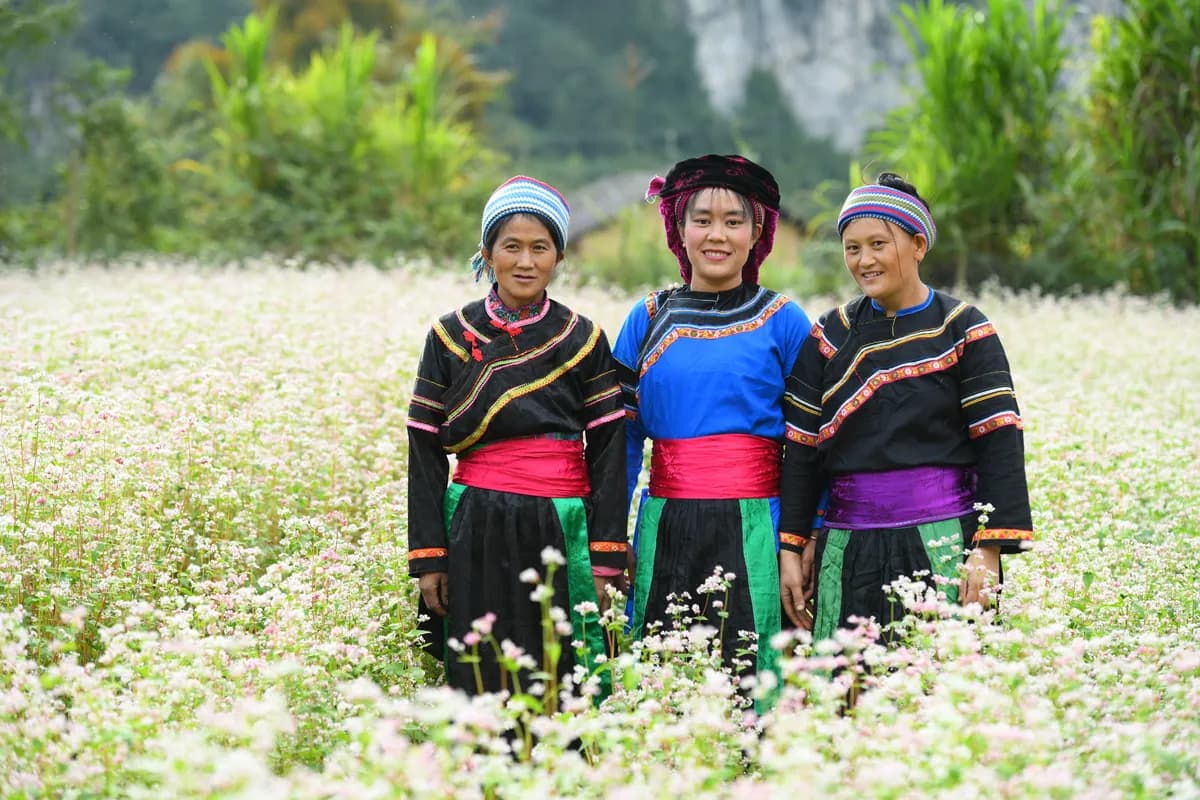
The costume of Cong women is quite simple, consisting of a shirt, skirt, belt, bib, head scarf and some jewelry. The short shirt is made of white or indigo fabric, the sleeves are extended, the chest is open, the collar is attached to the chest band, the shirt has no slit. The collar is a strip of black fabric that extends from the right flap of the shirt, around the neck to the left flap of the shirt. Along the length of the flap of the shirt, there are two strings of cotton twisted into a rope shape to make a tie. Men's costumes include a scarf, shirt, and pants made of fabric, dyed indigo without decoration.
The Cong eat rice, sticky rice, porridge, and meat processed in various ways such as boiled, grilled, hung, and cooked in soup. Later, they added stir-fried and steamed methods. They also consume seafood such as shrimp, crab, fish, snails, and cultivated and wild vegetables. A special dish is Cha kha cha vang, cooked from pig's blood with vồn vén leaves and bitter vegetables, which is effective in treating stomach ailments and is often used when suffering from stomachaches. In addition, they have many ways of processing food to store for the farming season or holidays such as making fish sauce, dried fish, and dried pickled bamboo shoots. The Cong often drink water from leaves and roots of wild plants. Some herbs have a sedative effect, help with sleep, and stimulate digestion. They also used to grow tobacco to roll themselves.
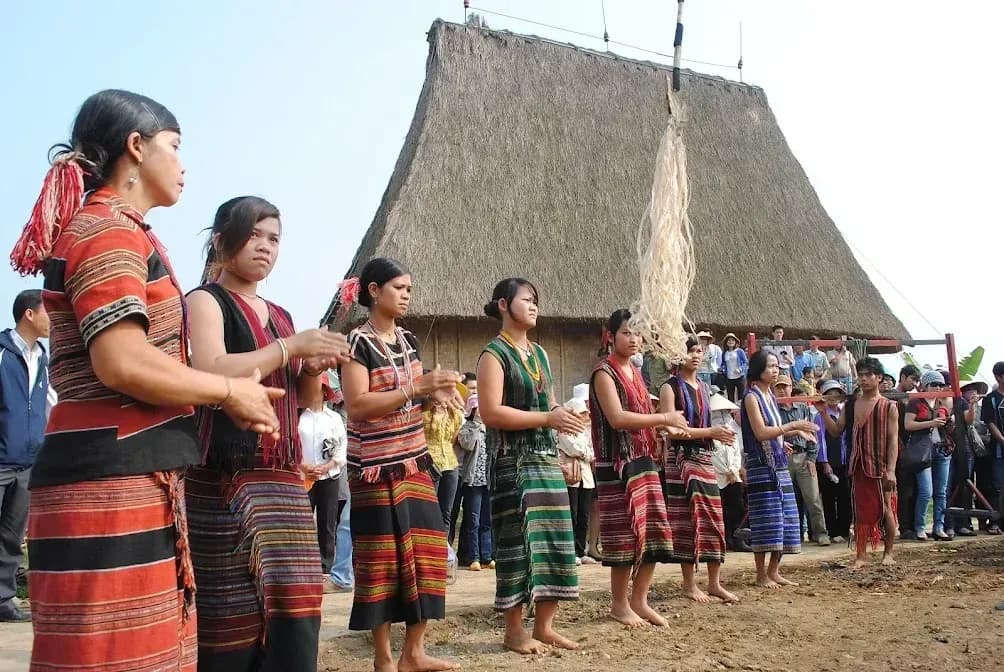
Every year, in the third lunar month, the villages hold a village worship ceremony before sowing. Gates are built on the roads leading to the village, and taboo signs are put up to prevent anyone from entering the village for one day. Families also hold worship ceremonies in the fields, with offerings of only fish and crabs, praying that birds and animals will not cause harm. The Cong people worship their ancestors of 2-3 generations according to the paternal line and worship their parents-in-law during Tet.
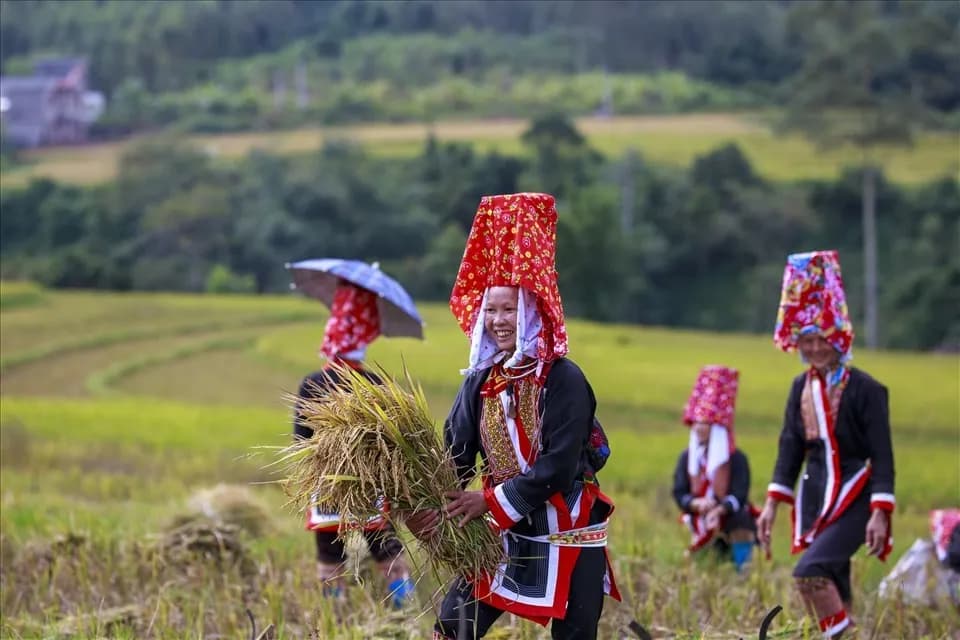
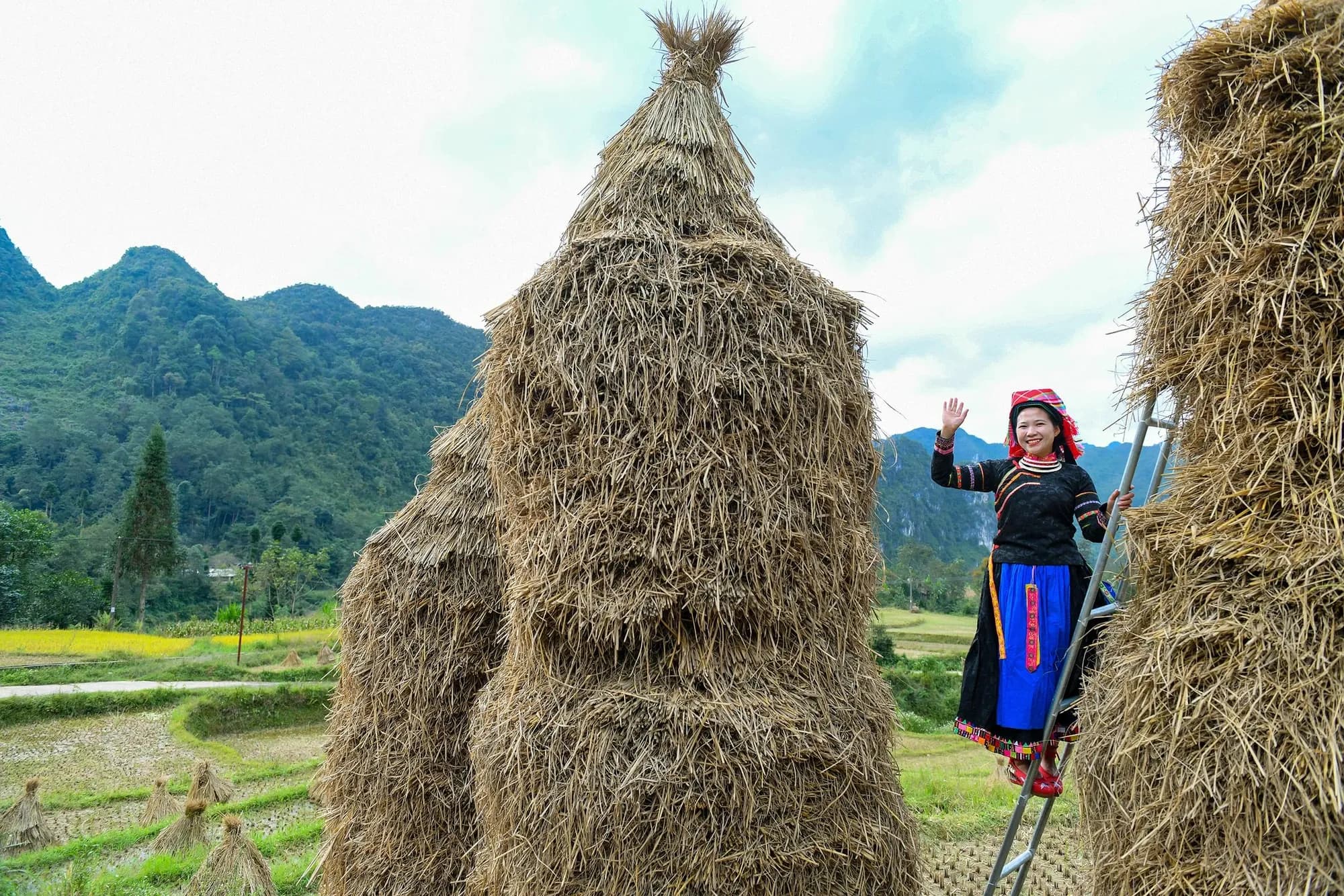
The Cong people mainly cultivate on swidden fields and cultivate rice fields, raise cattle and pigs, raise fish, and exploit natural products such as vegetables, fruits, and medicinal herbs. They also make wine and weave baskets. According to the "Basic characteristics of 54 ethnic minorities in 2019" of the Ethnic Committee and the General Statistics Office, the poverty rate is 54.0%; near-poor households are 11.7%; the unemployment rate is 0.07%. The rate of trained workers with degrees and certificates is 8.3%; workers working in the non-agricultural sector is 6.8%; and workers working in management or high and middle-level technical and vocational jobs is 4.1%.
According to “Basic characteristics of 54 ethnic minorities in 2019”, the rate of people aged 15 and over who can read and write is 59.3%. The rate of people attending primary school is 104.2%; lower secondary school is 92.5%; upper secondary school is 69.9%; and the rate of out-of-school children is 6.5%.
According to the "Basic characteristics of 54 ethnic minorities in 2019" conducted by the Ethnic Committee and the General Statistics Office, the rate of people aged 15 and over who can read and write: 59.3%; The rate of people attending primary school: 104.2%; The rate of people attending lower secondary school: 92.5%; The rate of people attending upper secondary school: 69.9%; The rate of out-of-school children: 6.5%.
Above is some interesting information about the Cong ethnic group, Vietnam. Let's plan to explore, meet and experience the culture with the Cong people in the near future with iGuide.ai!
Source:
- Ethnic groups in Vietnam (National Political Publishing House Truth);
- Basic characteristics of 54 ethnic minorities in 2019 (Committee on Ethnic Minorities and General Statistics Office);
- Website of the Ethnic Committee, Website of Nhan Dan Newspaper;
- The survey results collect information on the socio-economic status of 54 ethnic groups in Vietnam.
Log in to leave a comment. Log in
Be the first to comment.
React to this story
Curate
Sign in to curate