Save
Share
Keep reading
authenticated by

Save
Share
Keep reading
Vietnamese ethnic groups
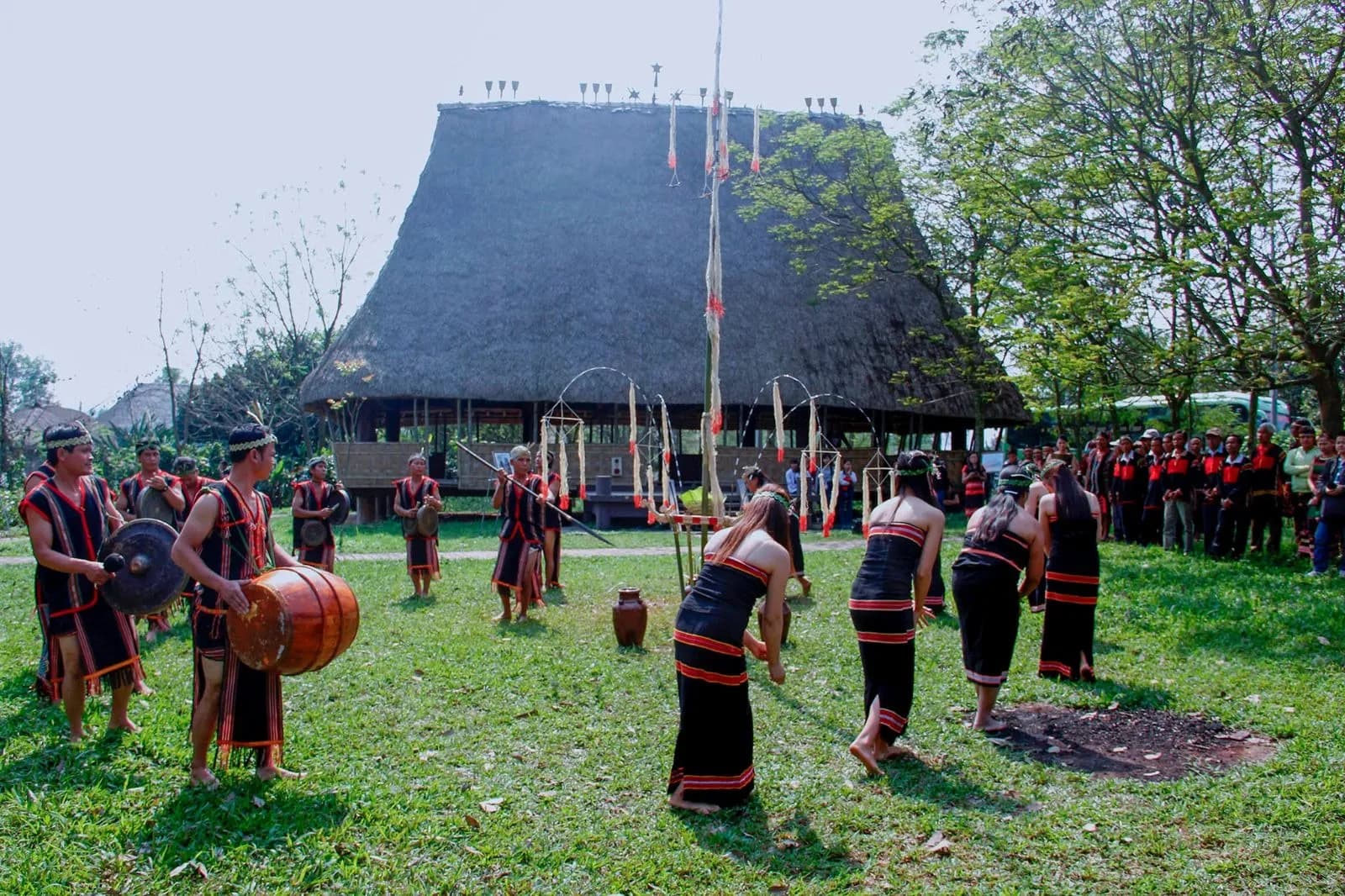
The Gie Trieng ethnic group is associated with a unique culture and slow pace of life, leaving an impression on anyone who sets foot there.
The Gie Trieng people have always been attached to the Ngoc Linh mountain range and have made many contributions to the exploration, construction, protection and development of this land, while still preserving many traditional cultural identities. Let's join iGuide.ai to learn about the Gie Trieng ethnic group in Vietnam!
Research on the history of the Gie Trieng ethnic group in Vietnam shows that this ethnic group originated from Laos. However, the ancestors of the Gie Trieng people have long lived in the area around the Ngoc Linh mountain range, residing mainly in the two provinces of Kon Tum and Quang Nam. In addition to the name Gie Trieng, this ethnic group also has other names such as Ca-tang, Doan, Xop, Brila (in Dak Glei district, Kon Tum province) and M'noong or P'noong (in Quang Nam province). The Gie Trieng ethnic group consists of many local groups such as Gie (Gie), Trieng, Ve, Bhnoong...
The Gie Trieng people live mainly in the two provinces of Kon Tum and Quang Nam.
Population: According to the survey data of 53 ethnic minorities on April 1, 2019, the total population of the Gie Trieng people: 63,322 people; male population: 31,152 people; female population: 32,170 people; household size: 3.8 people/household; proportion of population living in rural areas: 91.1%. Language: The language of the Gie Trieng people belongs to the Mon-Khmer group (Austroasiatic language family), relatively close to the Xo Dang and Ba Na languages. Before 1975, the Gie Trieng people had a written language with a syllable structure based on the Latin alphabet.
The Gie Trieng live in villages. The head of the village is the village chief - also known as the village elder, who is knowledgeable about customs and practices and has the highest prestige among the villagers, and is also the person who makes the final decisions at village meetings. In addition to the village elder, the village also has a village elders' council consisting of heads and elders of families and military commanders. In each Gie Trieng village, there must be a blacksmith and a public hammer. Each village will include many houses - where Gie Trieng families live, arranged along the village roads.
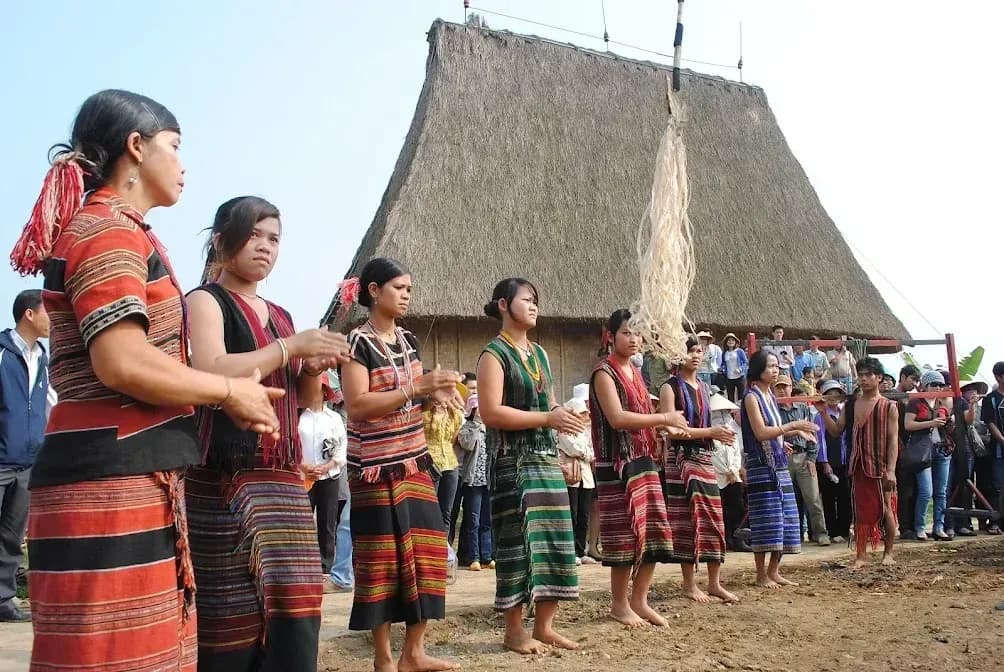
According to Gie Trieng customs, when boys are over 10 years old, they start sleeping at the communal house and after a few years they will get married. Gie Trieng parents respect their children's choice of marriage. Housing: Gie Trieng people live in long stilt houses and small stilt houses. In addition, they also have public/common houses for men and women and temporary houses for women giving birth. Currently, Gie Trieng people still use long rectangular or circular ground-floor houses surrounding the public house in the middle of the village.
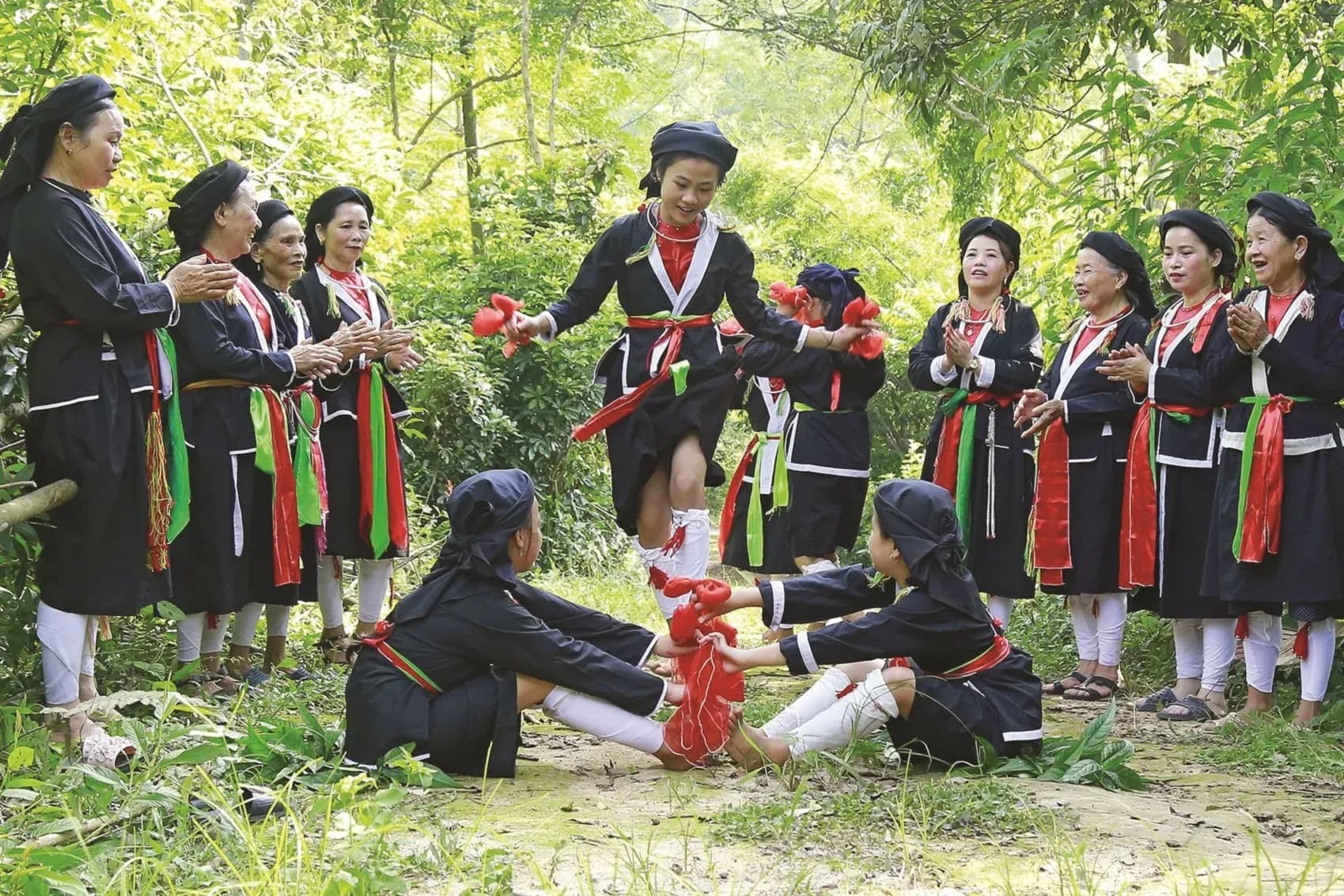
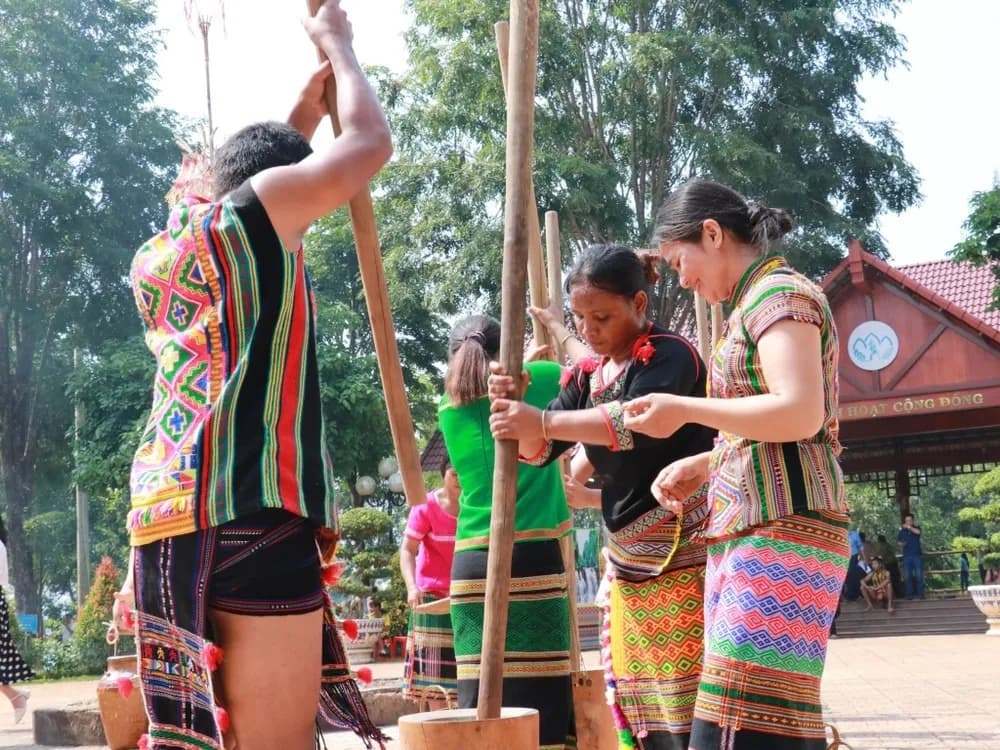
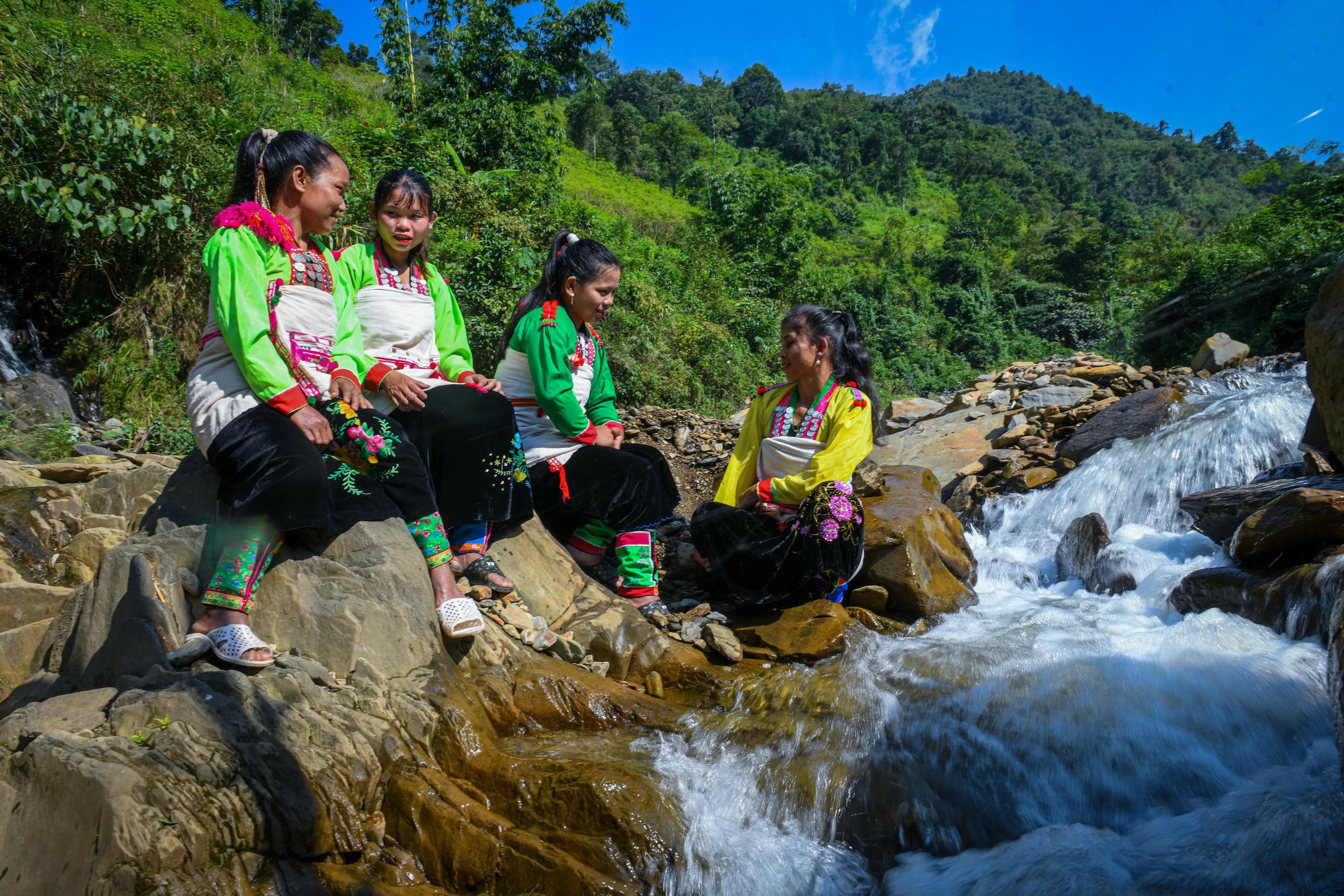
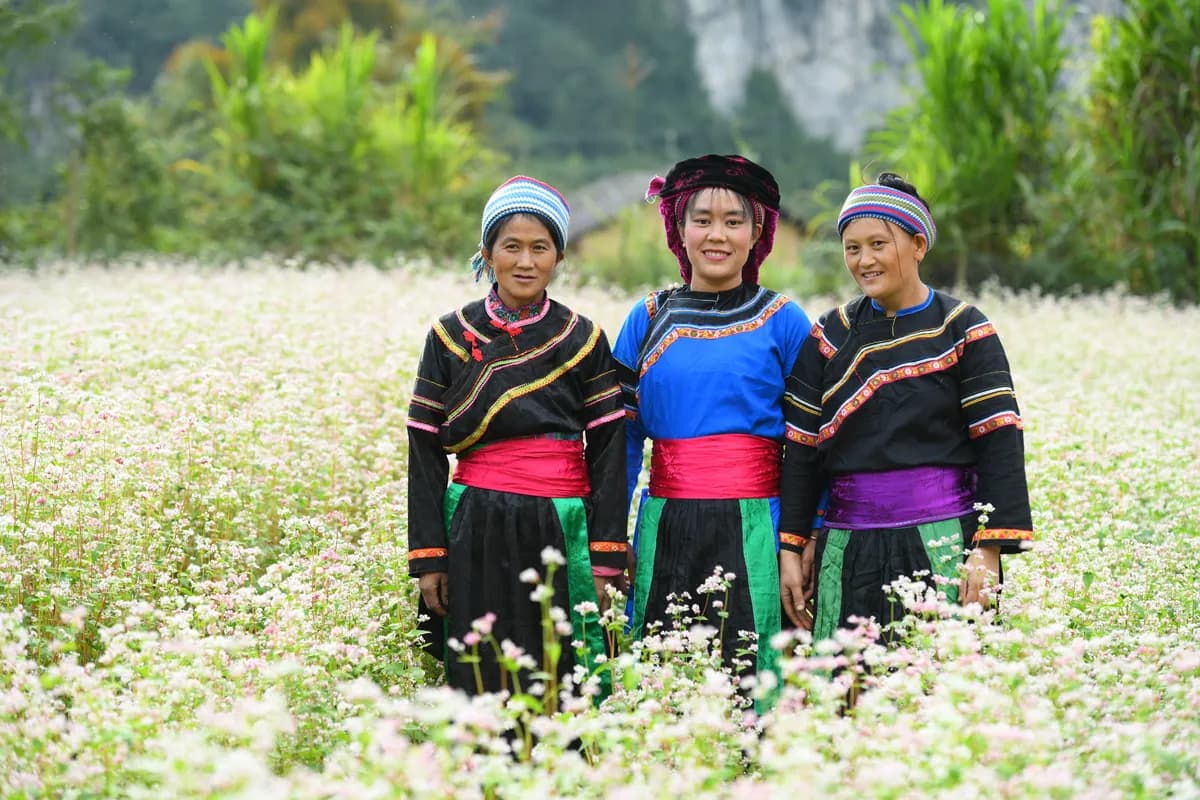
Gie Trieng men usually wear loincloths, go shirtless, and have long or short hair. In the cold season, they wear a woven cloth cloak and a white scarf. Gie Trieng women wear many different types of skirts, with different names, patterns, and meanings. Both Gie Trieng men and women like to wear a lot of jewelry.
The Gie Trieng follow polytheistic beliefs, but they do not have a separate concept to distinguish between gods, saints, and demons. In addition to the rituals of each family, every few years the whole village organizes a common ceremony to pray for peace and give thanks to the gods. In addition to the above forms of belief, the Gie Trieng also have magical forms in healing, economic activities..., associated with rituals and "sacred objects".
The Gie Trieng mainly eat rice, sticky rice, corn, potatoes, cassava and products from farming, raising animals, hunting, gathering such as birds, wild pigs, deer, weasels, eggplants, squash... In the past, the people had the habit of eating with their hands, but now they use chopsticks and bowls more. Both men and women smoke tobacco with pipes.
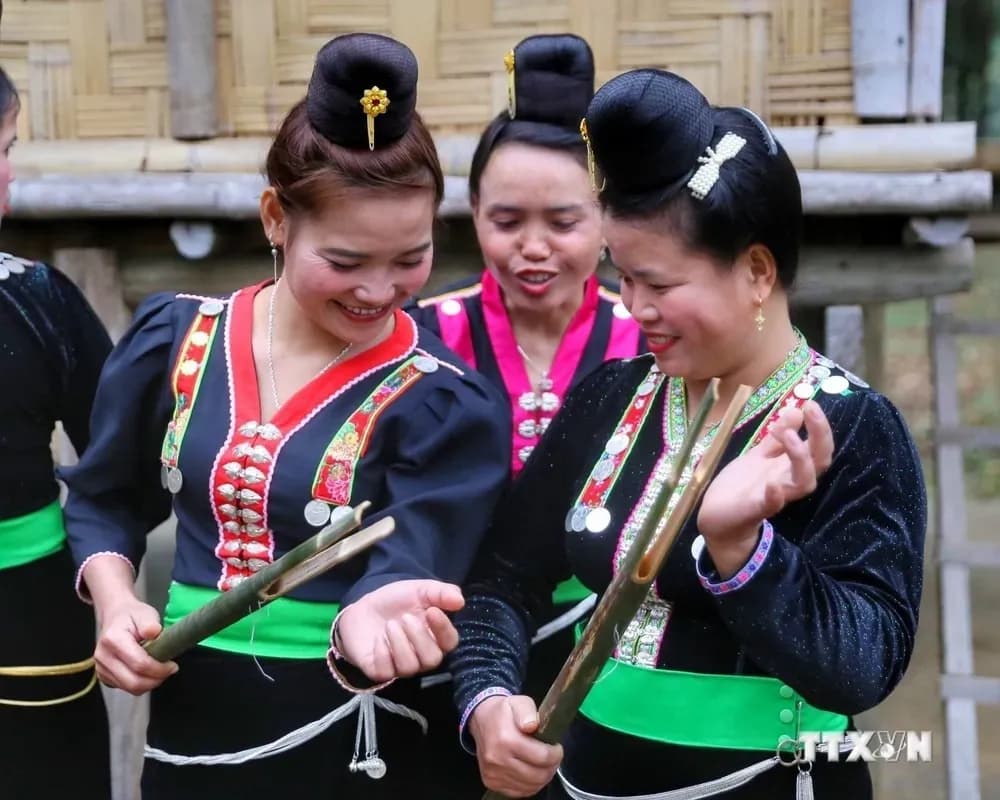
The most important musical instrument of the Gie Trieng is the gong. Sometimes the people play the gong together with drums and bamboo tubes. The bamboo tube is also a popular musical instrument to blow, clap, and knock to produce sound.
According to the survey data of 53 ethnic minorities on April 1, 2019: the rate of people aged 15 and over who can read and write is 77.6%, the rate of people attending primary school is 100.2%, the rate of people attending lower secondary school is 90.5%, the rate of people attending upper secondary school is 54.2%, the rate of out-of-school children is 13.4%.
Every time they worship, the Gie Trieng people perform sacrifices, and the blood of the sacrificed animal is the most important. Important ceremonies require buffalo stabbing, and in ancient times, there were places where human blood was used in special rituals related to the rice god. In the annual production cycle, there are often rituals when choosing land, clearing fields, sowing, when there is drought or flooding, when starting to thresh rice, when bringing rice to the warehouse, when there are 100 or more baskets of rice, and when taking rice home for the first time to eat. Associated with the cycle of human life, the Gie Trieng people also perform rituals during pregnancy, during and after giving birth, when naming, when being sick, when cutting teeth, in marriage, and when dying. The national New Year is usually earlier than the Lunar New Year, and is organized by village.
The Gie Trieng people mainly live by farming. In the past, they mainly grew sticky rice, but today they grow more rice, with simple farming methods. In addition to growing agricultural products such as corn, potatoes, cassava, etc., the Gie Trieng people also raise chickens, pigs, buffaloes, and dogs for use in offerings. The Gie Trieng people are also good at weaving, weaving, and making pottery at a basic level. In the process of exchanging goods, the Gie Trieng people know how to use money as a medium of exchange.
According to the survey data of 53 ethnic minorities on April 1, 2019: The Gie Trieng ethnic group has: Unemployment rate of 1.7%; Rate of trained workers with degrees and certificates: 9.8%; Rate of workers working in the non-agricultural sector: 11.2%; Rate of workers working in management or high and middle-level technical and vocational training: 4.4%; Rate of poor households: 27.7%; Rate of near-poor households: 10.4%; Rate of households using clean water sources: 74.7%; Rate of households using grid electricity for lighting: 98.6%.
Above is some interesting information about the Gie Trieng ethnic group, Vietnam. Let's plan to explore, meet and experience the culture with the Gie Trieng people in the near future with iGuide.ai!
Source:
- Ethnic groups in Vietnam (National Political Publishing House Truth)
- Basic characteristics of 54 ethnic minorities in 2019 (Committee on Ethnic Minorities and General Statistics Office)
- Website of the Ethnic Committee, Website of Nhan Dan Newspaper
- Survey results collect information on the socio-economic status of 54 ethnic groups in Vietnam)
Log in to leave a comment. Log in
Be the first to comment.
React to this story
Curate
Sign in to curate