Save
Share
Keep reading
authenticated by

Save
Share
Keep reading
Vietnamese ethnic groups
The culture and life of the San Diu people are notable for their long-standing traditions and unique lifestyle.
The San Diu people are one of 53 ethnic minorities in our country, belonging to the Sino-Tibetan language group, living concentrated in the Northern midlands, in the area from the left bank of the Red River to the east. Let's find out information about the San Diu ethnic group, Vietnam with iGuide.ai!
Regarding ethnic origin, based on the self-proclaimed name Son Dao, many thoughts can be drawn about the origin of the San Diu ethnic group. Researcher Ma Khanh Bang speculates that the San Diu people are of Dao origin. Since ancient times, the Dao ethnic community was dominated and oppressed by the Chinese feudal state, forcing this group of people to wander to different places to make a living and develop. The San Diu people are one of those groups.
Population:According to the survey of 53 ethnic minorities on April 1, 2019, the total population of San Diu people nationwide is 183,004, of which 94,743 are male and 88,261 are female; the number of households is 54,901; the proportion of the population living in rural areas accounts for 89.8%.Language:The San Diu people are one of 53 ethnic minorities in our country belonging to the Sino-Tibetan language group. Due to living for a long time next to the southern Han people, they gradually lost their mother tongue (Dao language) and adopted the Cantonese Han dialect. In the past, young people often learned Chinese characters to become shamans, but now very few people know Chinese characters.
The San Diu people live in concentrated areas in the provinces and cities of Thai Nguyen, Vinh Phuc, Bac Giang, Quang Ninh, Tuyen Quang, Hai Duong, etc. They live in separate hamlets or villages or intermingle with the Chinese, Kinh, Tay, and Nung people in the locality.
Cuisine:The San Diu people eat plain rice mixed with cassava. After meals, they often sip a bowl of thin porridge like the Nung people.
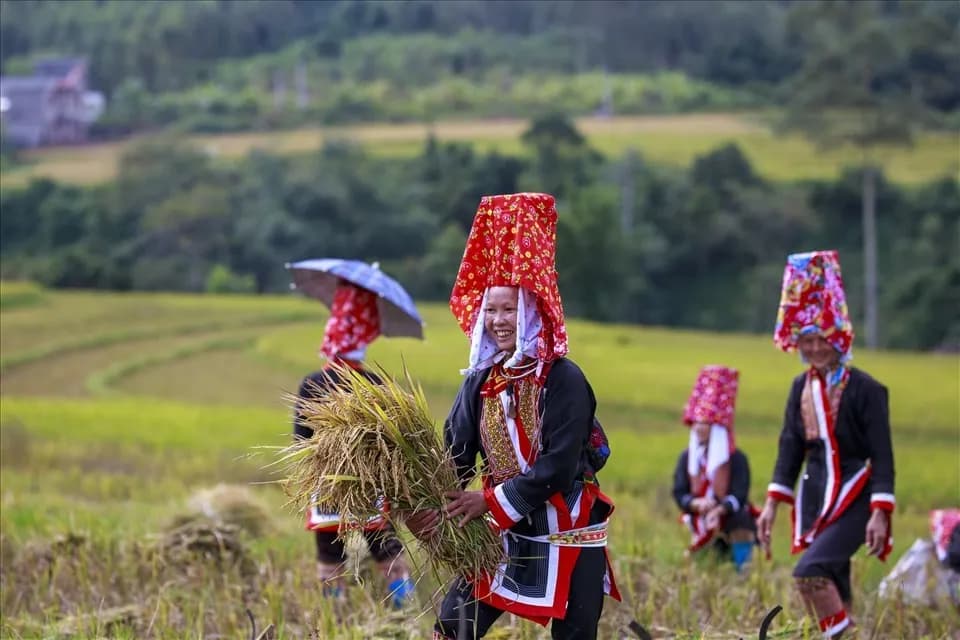
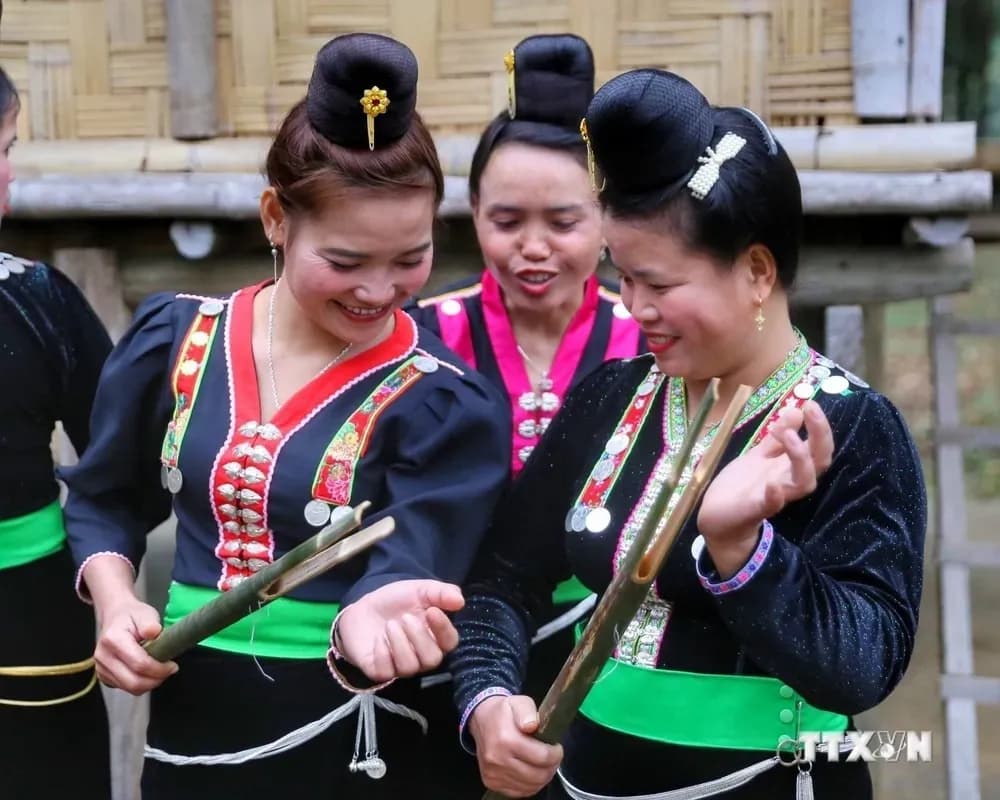
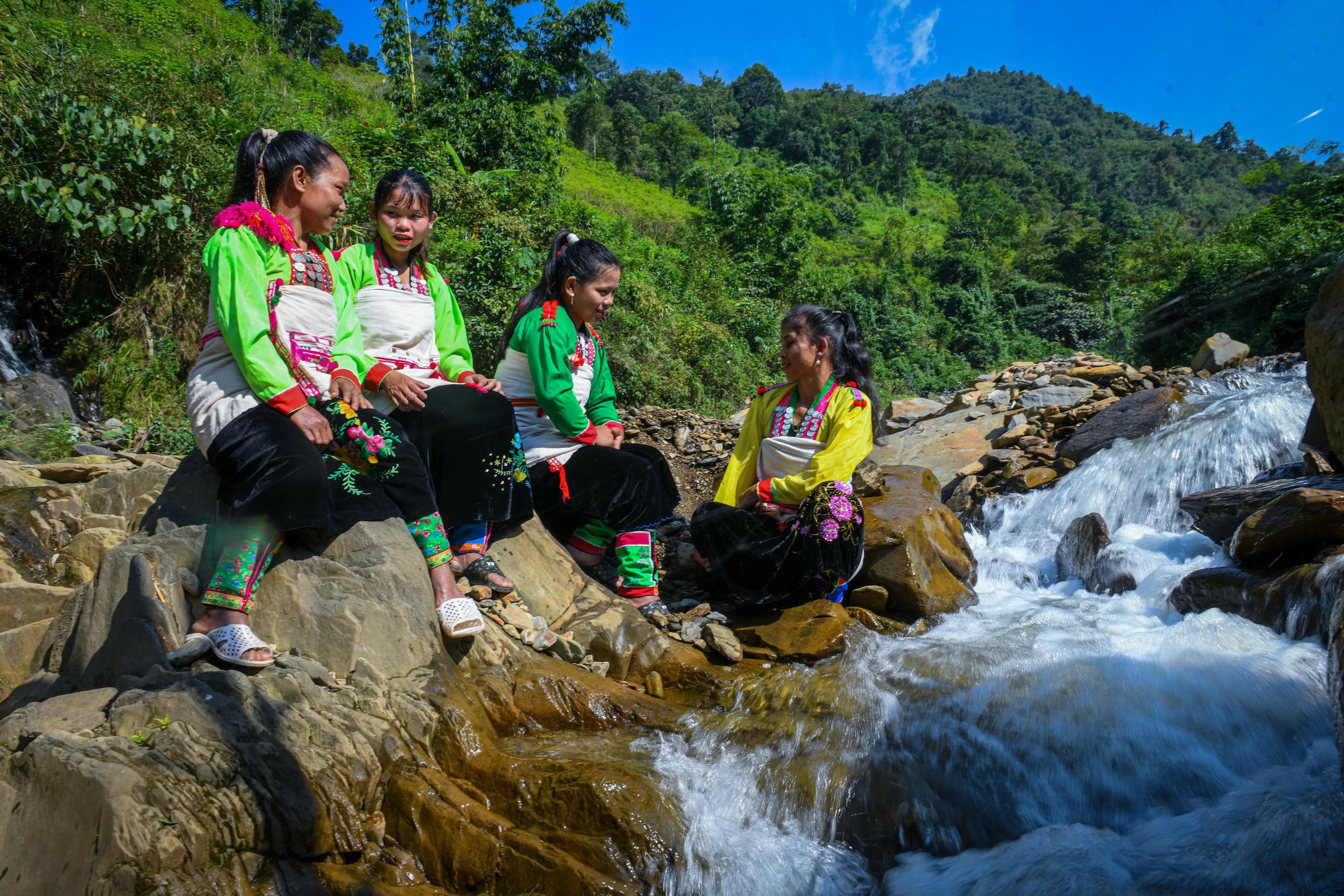
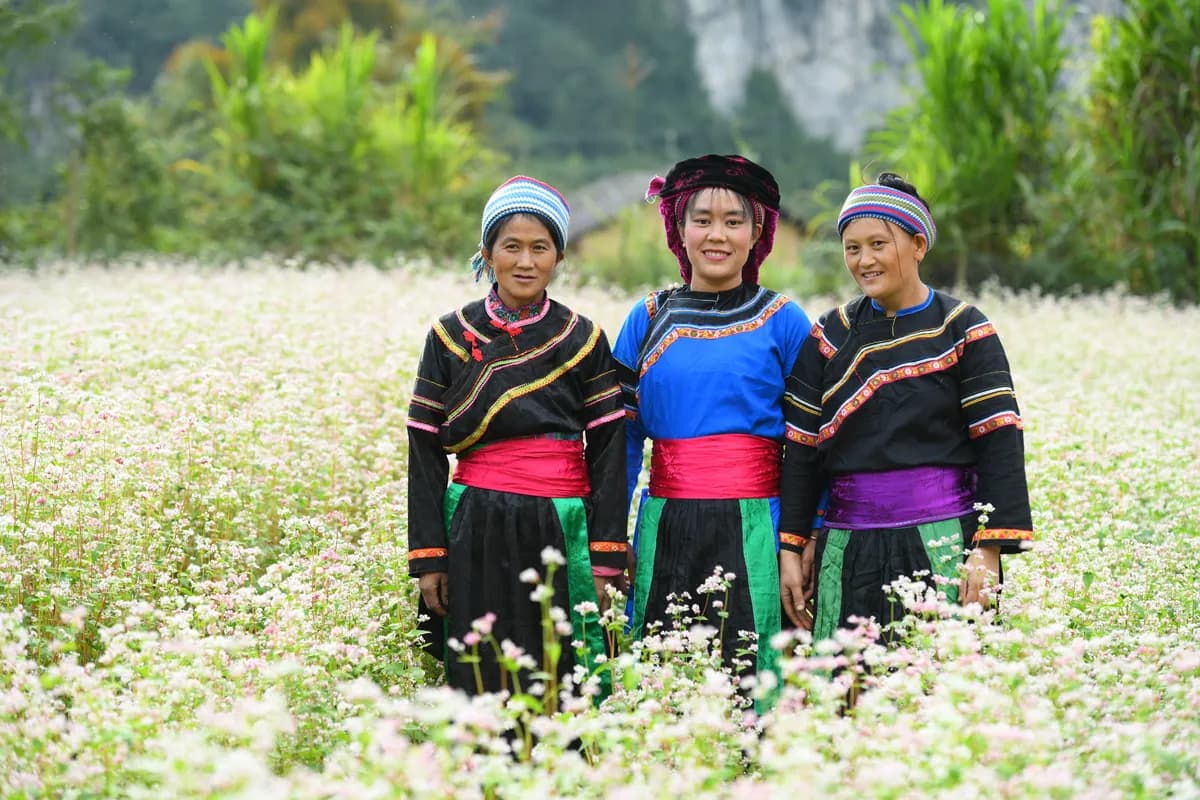
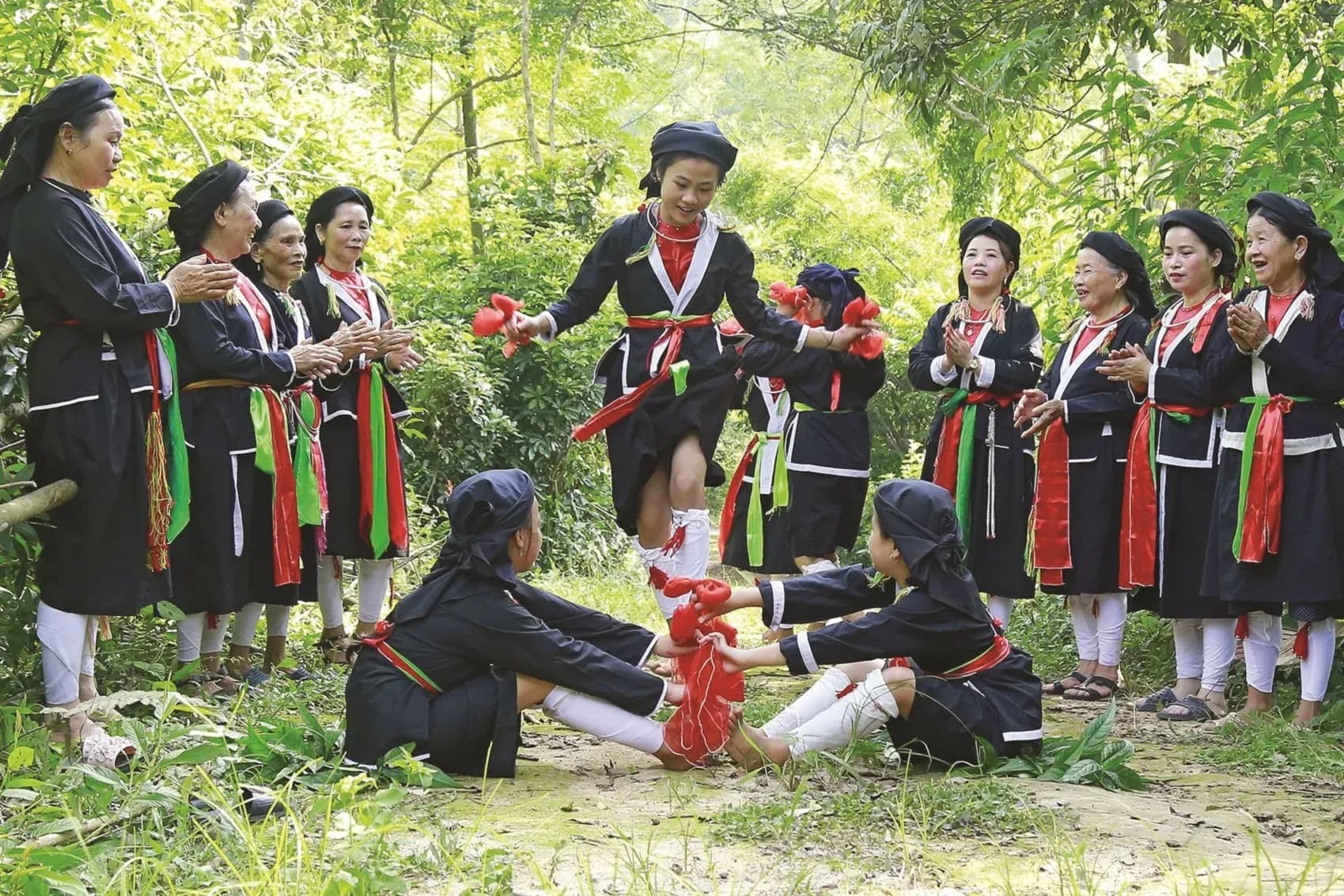
Skin:The traditional costume of women includes a black scarf, a long dress (single or double), if it is a double dress, the inner one is also white, the outer one is indigo and a little longer; a red bib; a white, pink or light blue belt; a skirt is two separate pieces with a common waistband, only longer than the knee, indigo; indigo leggings; white leggings. Decorations include necklaces, bracelets, earrings and silver chains. Men dress like the Vietnamese: hair in a bun, turban or turban, dark long dress, white pants.
Location:Lives concentrated in the midlands of the North, in the area from the left bank of the Red River to the east.
Wedding:The Phu La people's wedding customs include many rituals. The flower wine opening ceremony takes place at the bride's house, before the day the bride goes to her husband's house. People take a bottle of wine and a plate, on the plate put two pieces of flower-cut paper, the white piece on the bottom, the red piece on the top, put on the plate two boiled eggs with red thread and tie two coins on each side of the egg. After the offering, peel the egg, take the yolk and mix it with wine for everyone to drink to celebrate the happiness of the bride and groom.
Worship:On the altar, there are usually three incense bowls to worship ancestors, shamans and the Kitchen Gods. If the homeowner has not yet been granted a title, there are only two incense bowls. Those who have just died and have not yet had time to be buried also have incense bowls placed on the altar, but lower. In addition, the San Diu people also worship the local god at the communal house's tutelary god shrine.
Holidays:There are Tet holidays like many ethnic groups in the region. The Dong Chi festival also has the meaning of praying for many children and grandchildren. For those who have been married for a long time but still do not have children, after Tet, the wife returns to her parents' house, the husband sends a matchmaker to ask for her hand in marriage and then organizes the wedding again as if marrying a new wife.
Calendar:San Diu people follow the lunar calendar.Music and dance:Male and female love singing, called soong co (singing at night).
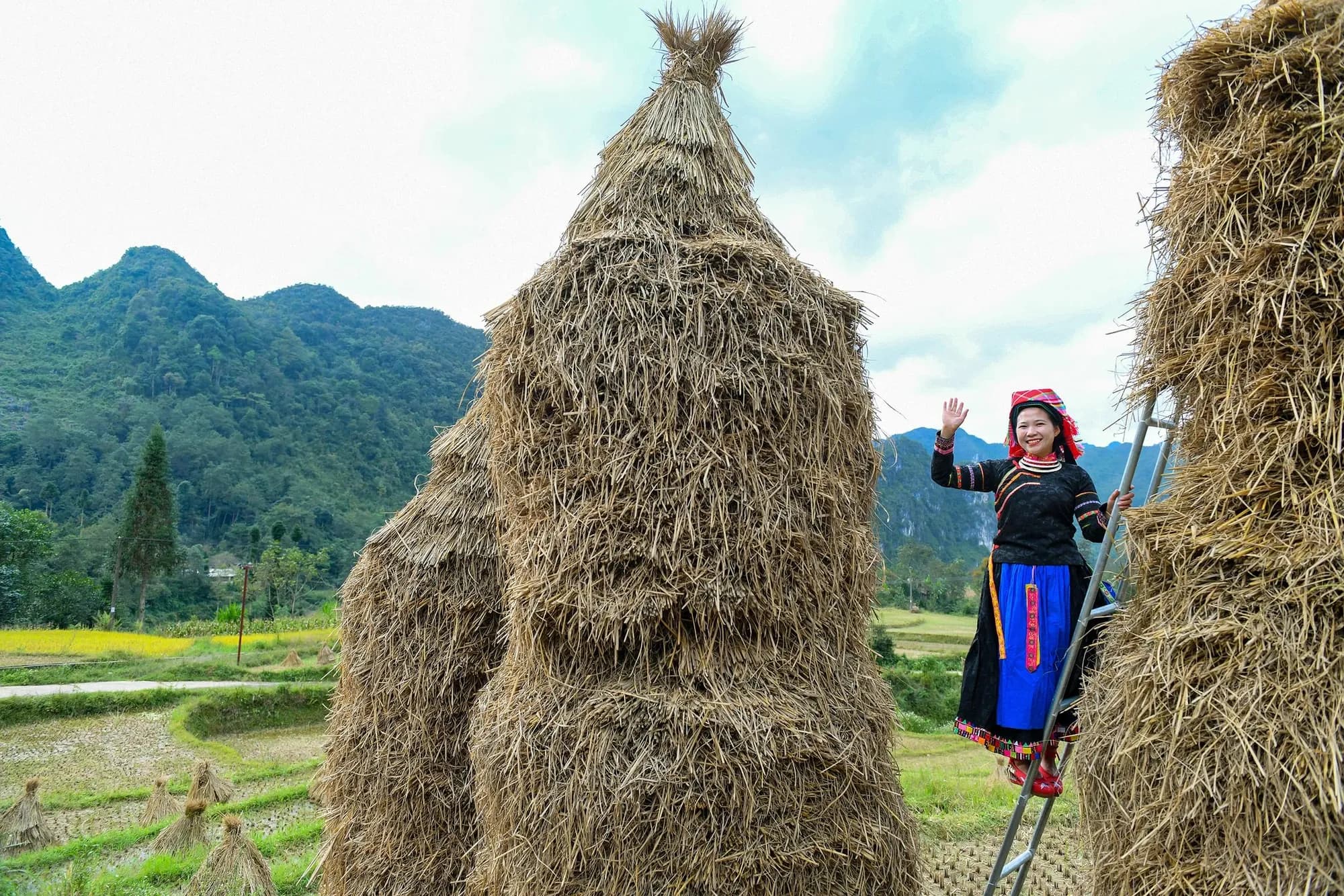
Crop:The San Diu people live on the low hills of the midland, gently sloping like an upside-down bowl. The climatic and hydrological factors are not really favorable for the development of agriculture. However, like other ethnic groups living in the northeastern region of Vietnam, the San Diu people still survive by eating rice, potatoes, corn, cassava, etc. They cultivate on 4 types of fields: swampy fields, wet fields, terraced fields, and dry fields (hill slopes, fields, and beaches).
Animal husbandry:The San Diu people pay attention to animal husbandry not only for draught power and meat but also for manure to improve the fields. Common poultry are chickens, ducks, geese, and swans; pig raising is very important because of the food source from secondary crops. In places near forests or hills, people develop beekeeping for honey. Silkworms are also raised by some people but are one of the economic activities that receive little attention.
Forestry exploitation and hunting:In the residential area of the San Diu people, there are many essential forest products such as: wood, bamboo, leaves, tubers (brown tubers, yam tubers, wild yam tubers), wild vegetables (bo khai vegetables, bay vegetables, gai vegetables, bitter vegetables), medicinal plants, firewood... which are favorable conditions for the San Diu people to exploit to serve their daily needs. For the San Diu people in Tuyen Quang, collecting plants to decorate their houses has become popular, especially orchids and cymbidiums. In addition, they also bring economic value to the people. Besides exploiting forest products, the San Diu people also hunt wild animals.
Handicraft:In addition to farming, the San Diu people also do some other side jobs such as: knitting, spinning, weaving, pottery, carpentry, forging... In the past, the San Diu people also had the job of using Do paper, binding it into books, writing with brushes and Chinese ink, to record genealogy, Mo literature, calendars, fairy tales, poetry...
Source:
- Ethnic groups in Vietnam (National Political Publishing House Truth)
- Basic characteristics of 54 ethnic minorities in 2019 (Committee on Ethnic Minorities and General Statistics Office)
- Website of the Ethnic Committee, Website of Nhan Dan Newspaper
- Survey results collect information on the socio-economic status of 54 ethnic groups in Vietnam)
Log in to leave a comment. Log in
Be the first to comment.
React to this story
Curate
Sign in to curate