
Save
Share
authenticated by

Save
Share
Vietnamese ethnic groups
The La Ha people offer a rich and mysterious cultural picture, from their unique language to their profound beliefs, captivating explorers.
The La Ha people live in the Northwest region of Vietnam, with the majority of them cultivating slash-and-burn agriculture as their main source of income. In the late 20th century, the weaving profession of the people was relatively developed and had quite sophisticated techniques. Let's join iGuide.ai to learn about the information about the La Ha ethnic group in Vietnam according to reference information from the Vietnam Ethnic Committee!
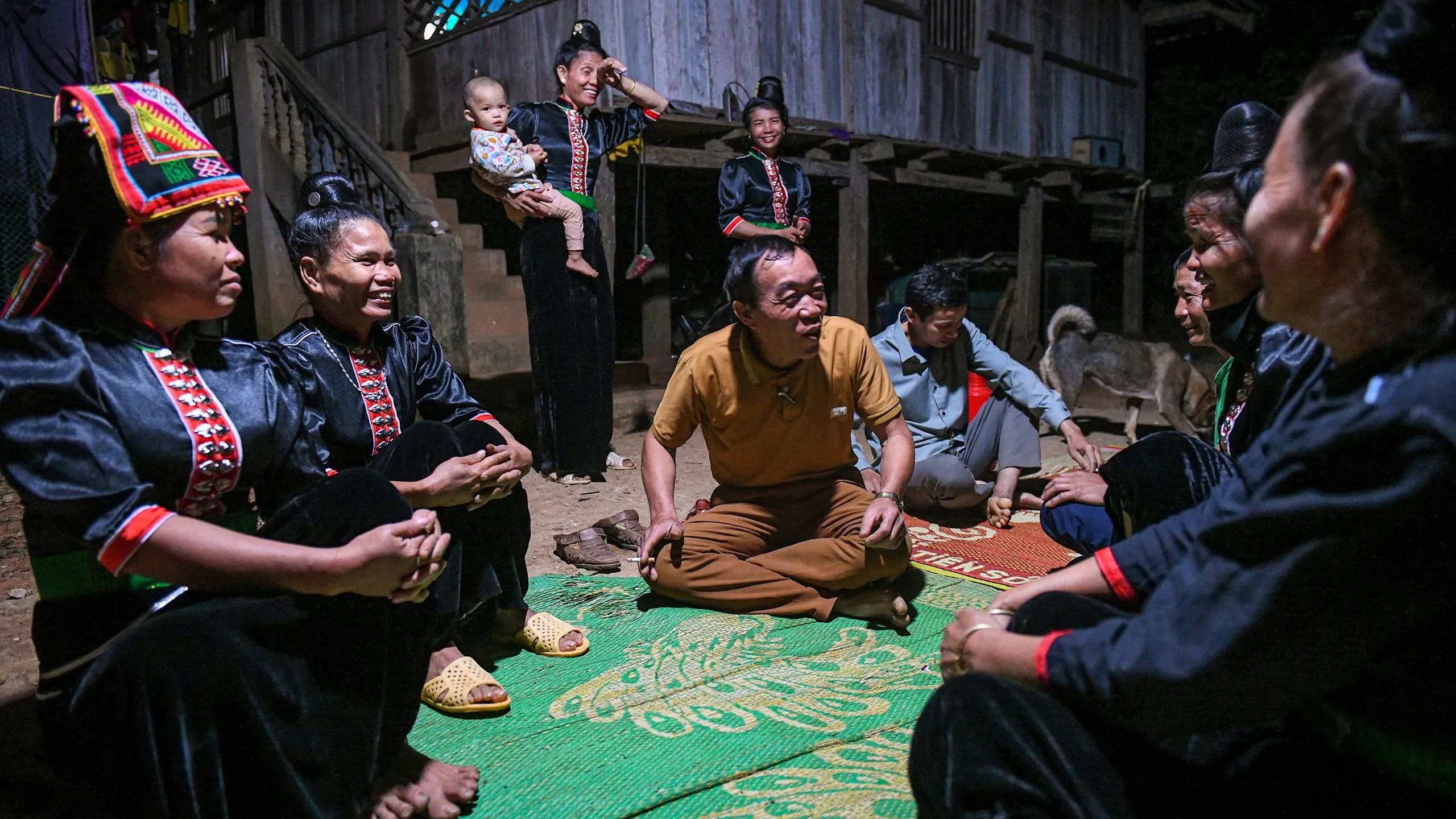
The La Ha people have long lived in the Northwest region of our country. The La Ha people call themselves La Ha, Kla and Phlao and are called by other ethnic groups by different names such as: Xa Khac, Phlac, Khla Xa Cha, Xa Bung, Xa Khao, Xa Tau Nha, Xa Poong, Xa Uong, Bu Ha, Pua... The La Ha people have 2 groups: La Ha Ung - La Ha people living in the water (growing wet rice) and Khla Phlao or La Ha Plao - La Ha people living in the dry land (growing swidden fields).
According to ancient Thai books, in the 11th and 12th centuries, when the Black Thai people migrated to the Northwest region, they saw the La Ha people living in many places and with many different names.
- Population: According to the 2019 Census of 53 Ethnic Minorities, the La Ha ethnic group has a total population of 10,157 people (of which, males: 5,186 people, females: 4,971 people). - Language: Currently, most ethnic groups in our country, including the La Ha people, live together in a "comb-toothed" style, so the use of bilingualism and multilingualism has become common. The La Ha people live together with the Black Thai people, so in their daily lives, in addition to their mother tongue, they also learn and use the Black Thai language to communicate. As a result, the La Ha language has absorbed many words from the Black Thai language. In addition, the number of people who can speak Vietnamese, especially young people, is also increasing. Due to intermingling and marriage, some La Ha people also know the H'Mong, Dao and Muong languages.
As in other ethnic groups, the La Ha village is the residential and social unit. The traditional family of the La Ha is a small patriarchal family. In the family, the husband, the father, always plays the role of head of the household and has the right to decide important matters. Inheritance rights: Family property belongs to the sons. When daughters get married, they are only given a small dowry by their parents.
In the villages of the La Ha people, there are still two different types of stilt houses in terms of structure, size and solidity. The temporary stilt house is still built with buried wooden pillars, has 2 rooms and 2 wings. These rooms have no partitions, one room is for cooking and one room is for sleeping. Families who have to worship have an additional altar pillar erected in the kitchen. Compared to the temporary stilt house, the relatively solid stilt house is quite popular in the villages of the La Ha people.
Like many other ethnic groups, the La Ha also follow the belief of "animism". They have taboos and worship many types of ghosts called by different names, for example: the night, the night... Ancestor worship is a popular belief among the people. They only worship up to two generations, meaning they only worship the ghosts of their deceased parents. The La Ha have many taboos in daily life such as not being free to move or play in the ghost worship place, daughters-in-law and sons-in-law are not allowed to enter the last room, the sleeping place of grandparents, parents, the worship place, especially on worship days and the ghost window is located on the opposite side of the worship room. They never encroach on the ghost forest (where the dead of the whole village are buried). Specifically, they are not allowed to exploit fallen trees, hunt and graze livestock,... in the ghost forest.
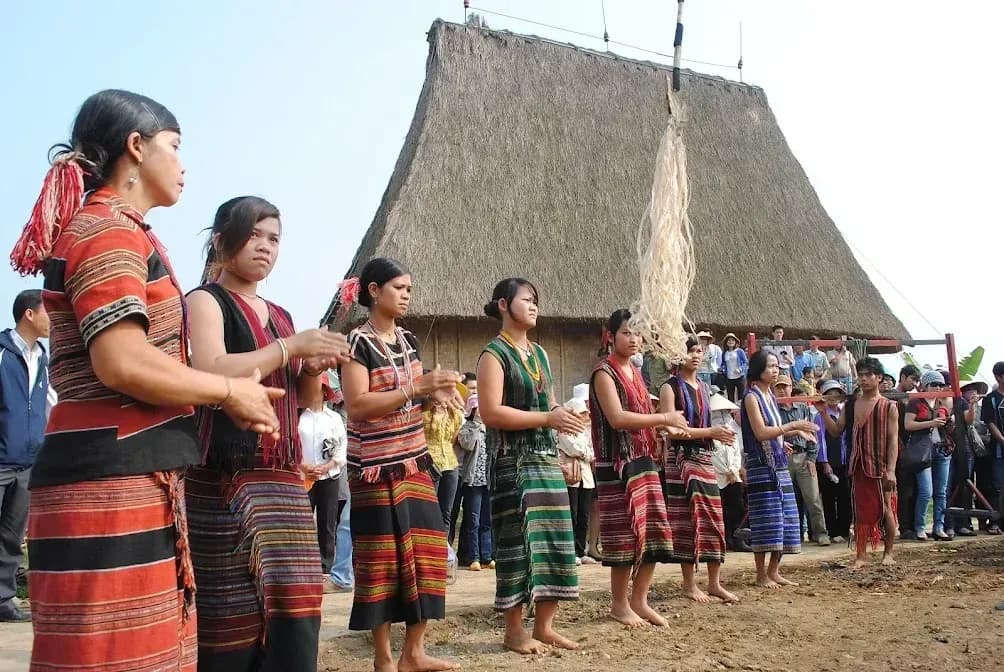
La Ha women usually wear com shirts with silver buttons, black skirts with waistbands and blue belts. They wear embroidered pieu scarves and tie their hair up on top of their heads when they are married, like Thai women. La Ha men's costumes are quite simple, including short blouses, la ta pants and headscarves, all dyed indigo. La Ha children do not have their own costumes. In the past, La Ha women also wore jewelry such as: xa tich strings, silver earrings, necklaces, bracelets, brooches, etc.
Changes in the economy and living environment have had a direct impact on the daily meals and holidays of the La Ha people. In terms of food, the main foods of the La Ha people are corn and sticky rice. However, cassava and taro also occupy an important position. Sticky rice is often steamed with a sticky rice cooker. Ordinary rice has also begun to appear in the people's meals but only to entertain guests who cannot eat sticky rice. Currently, the people still maintain the habit of eating sticky rice. Wine is a favorite drink of the people, especially during occasions of receiving guests, festivals, weddings, and funerals. The people often use wine cooked in bottles or wine stored in jars. Every family has a few jars of wine stored in the house to offer to each other in free time, happy times or on festivals.
According to the 2019 Survey of 53 Ethnic Minorities, the rate of people aged 15 and over who can read and write in common languages is 60.1%, the general school attendance rate of children in primary school is 102.7%, in lower secondary school is 91.9%, in high school is 35.1%.
Similar to many other ethnic groups in the northern mountainous region of our country, the majority of La Ha people use slash-and-burn cultivation as their main production (growing sticky rice, cassava, corn and cotton), only a small part of the remaining people do wet rice farming combined with slash-and-burn cultivation. Fishing and gathering also play an important role in the economic activities of the ethnic groups. In the late 20th century, the ethnic group's weaving profession was relatively developed and had quite sophisticated techniques. Most of the La Ha people live far from the commune and town centers, so the buying and selling of goods often takes place in the village. In addition, the ethnic groups also go to the district markets to buy and sell. These markets are often held in sessions, with many items, notably agricultural products, livestock and traditional handicrafts of the ethnic groups in the region.
Above is some interesting information about the La Ha ethnic group, Vietnam. Let's plan to explore, meet and experience the culture with the La Ha people in the near future with iGuide.ai!
Source:
- Ethnic groups in Vietnam (National Political Publishing House Truth)
- Basic characteristics of 54 ethnic minorities in 2019 (Committee on Ethnic Minorities and General Statistics Office)
- Website of the Ethnic Committee, Website of Nhan Dan Newspaper
- Survey results collect information on the socio-economic status of 54 ethnic groups in Vietnam)
Keep reading
 Related
 Related
 Related
 Related
 Related
 Related
 Related
 Related
Log in to leave a comment. Log in
Be the first to comment.
React to this story
Curate
Sign in to curate