Save
Share
Keep reading
authenticated by

Save
Share
Keep reading
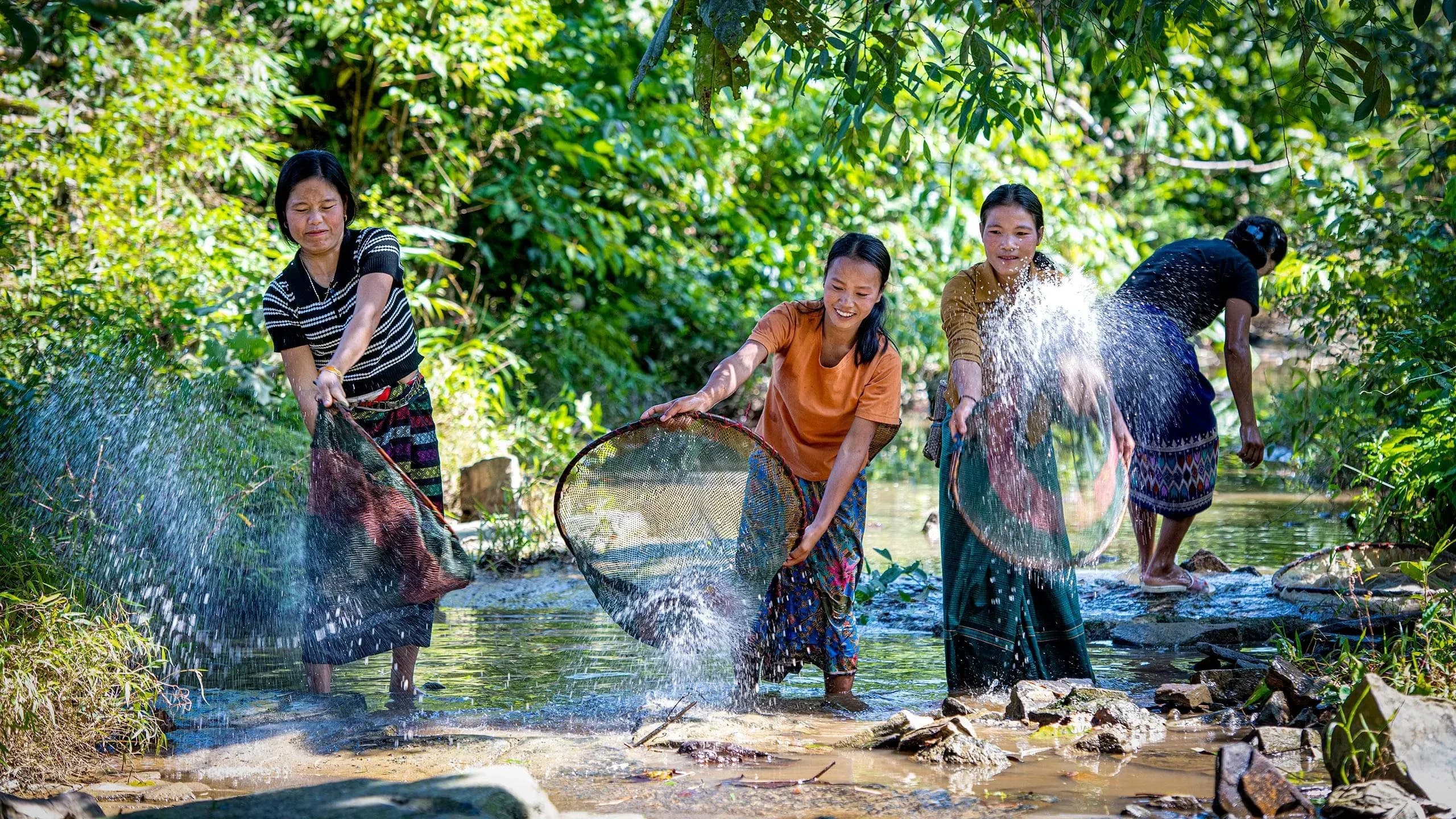
Vietnamese ethnic groups
The diverse culture and unique customs of the Chut people in Quang Binh offer interesting experiences through beliefs, lifestyles and economic conditions.
The Chut ethnic group, belonging to the Viet-Muong group, is one of the ethnic minorities living in central Vietnam. Currently, the socio-economic life of the Chut people is gradually improving, thereby narrowing the development gap with other ethnic groups. Let's find out information about the Chut ethnic group in Vietnam with iGuide.ai!
The ancient homeland of the Chut people is the residential area of the Vietnamese people in the two districts of Bo Trach and Quang Trach, Quang Binh province. Because of war and heavy taxes, they had to flee to the mountains to seek refuge, some gradually moved deeper into the western region of the two districts of Minh Hoa and Bo Trach, Quang Binh province. According to the genealogy of some Vietnamese families in the area, the Ruc and Sach groups have lived in this mountainous area for at least 500 years. Other names: Ma Lieng, A Rem, Tu Vang, Pa Leng, Xo Lang, To Hung, Cha Cui, Tac Cui, U Mo, Xa La Vang, Ruc, Sach, May, Ma Lieng...
The Chut ethnic group includes the following groups: Sach, Ruc, Arem, May, Ma Lieng; residing mainly in mountainous districts such as Minh Hoa, Tuyen Hoa, Bo Trach in Quang Binh province and 1 Ma Lieng group residing in 2 communes of Huong Lien, Huong Vinh in Huong Khe district of Ha Tinh province. This is a rugged mountainous area, steep hills and often divided by a dense river and stream system.
Population: According to the 2019 Census of 53 Ethnic Minorities, the Chut people are the 12th smallest ethnic group in our country with a total population of 7,513 people (3,793 males, 3,720 females). Language: Ruc language, belonging to the Viet - Muong language group in the South Asian language family.
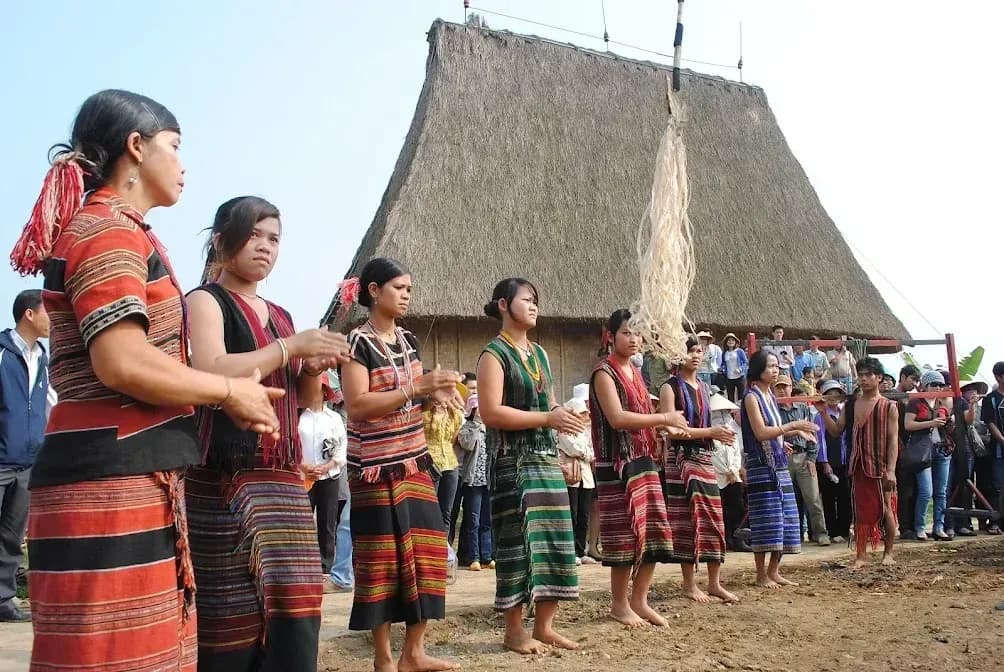
The Chut people call a village cavel. Each village usually has only five, seven or ten families of a clan living there. Sometimes families in a clan live in many different villages. The head of each village is the pu cavel, meaning the father of the village, elected by the people. Assisting the pu cavel are village elders, including people aged 50 and over. Collective activities, the most important in the village, are on agricultural holidays.
The Chut family is mainly a small family, consisting of 2 generations of parents and children. Families with 3 generations are very rare. After getting married, sons often live separately. The Chut follow a patriarchal system. The man is the head of the family, with the right to decide all major matters in the family.
In the Chut ethnic groups, the May, Ma Lieng, and Arem people live in stilt houses; the Sach and Ruc people live in earthen houses. In the past, when they lived in the forest, the Sach Coi, May, and Ruc people all had the custom of living in caves, rock roofs, and places with water holes. Regarding the layout, the houses of the May and Ma Lieng people are divided into 3 rooms: the outer room, the middle room, and the chamber. The houses of the 3 groups of Sach, Ruc, and Arem have only 2 rooms (the Sach and Ruc people call it a can; the Arem people call it a day).
Worship ancestors, gods and worldview. Believing that all things and humans have souls, all five Chut groups believe in the presence of ghosts such as forest ghosts, mountain ghosts, stream ghosts, tree ghosts, and kitchen ghosts; living people have souls, and when they die, they turn into ghosts.
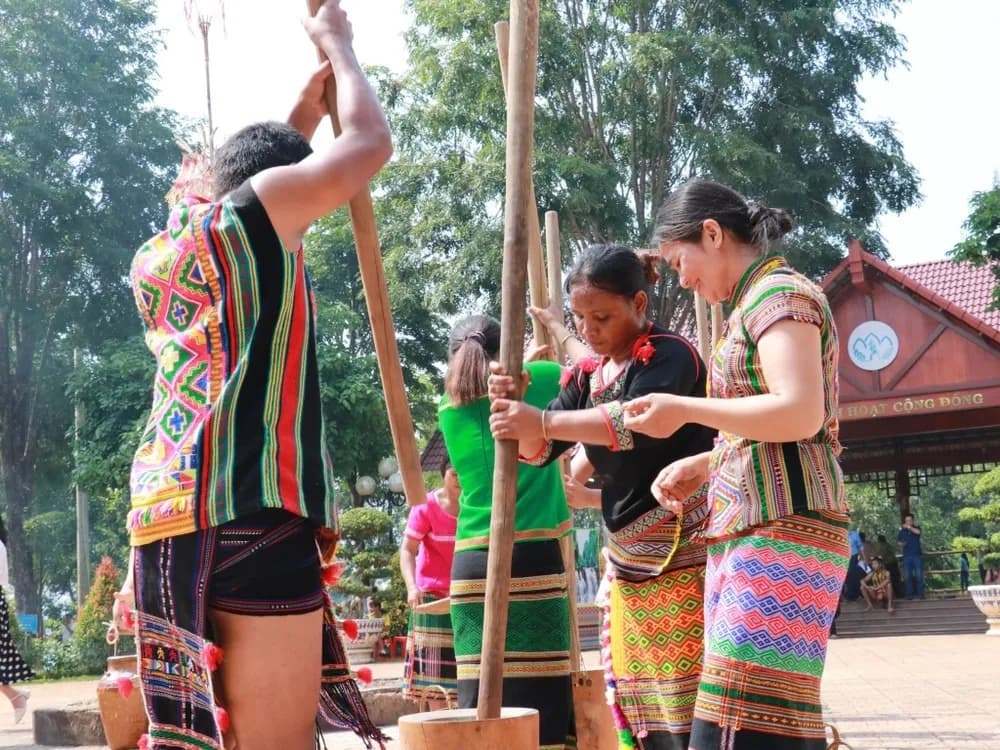
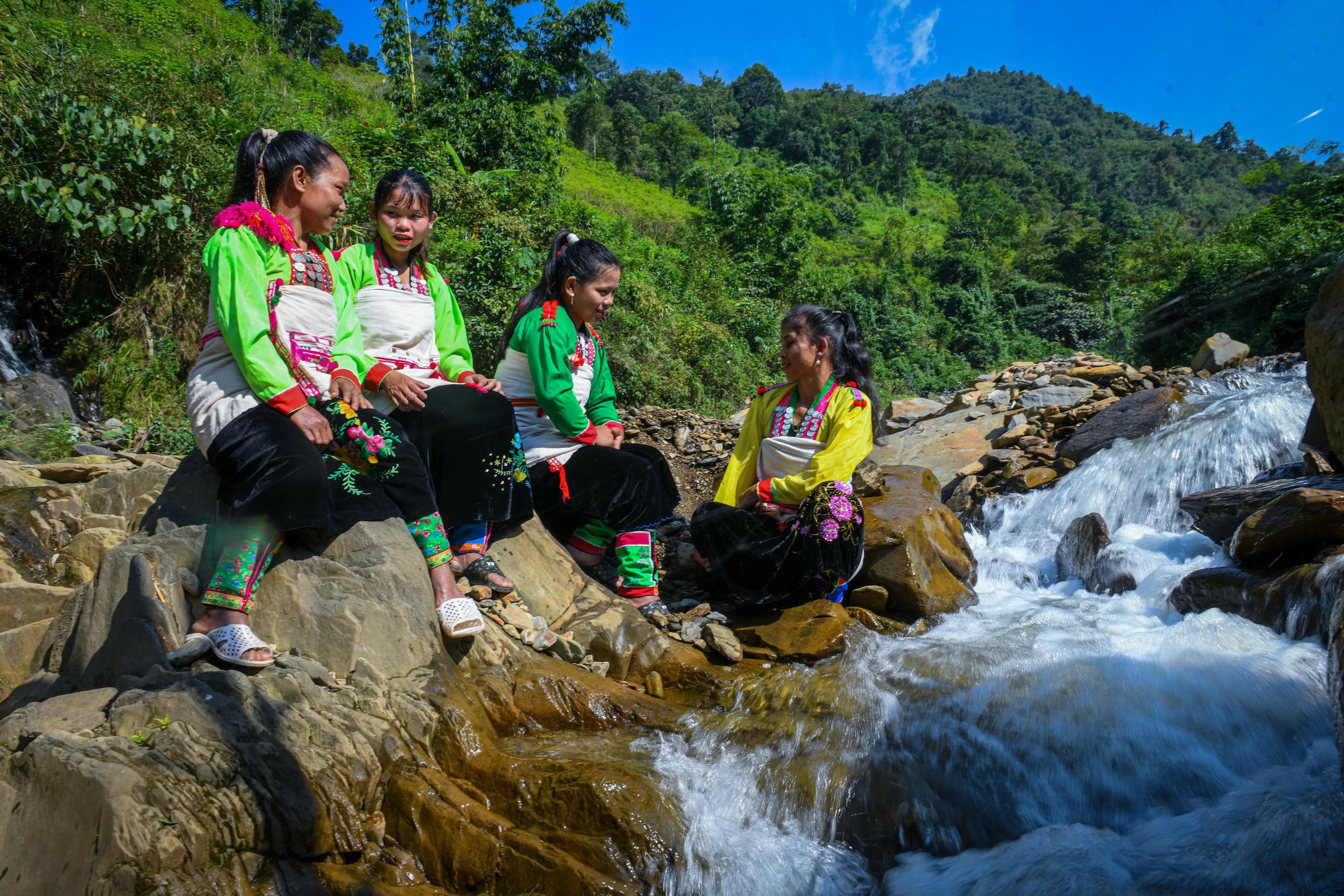
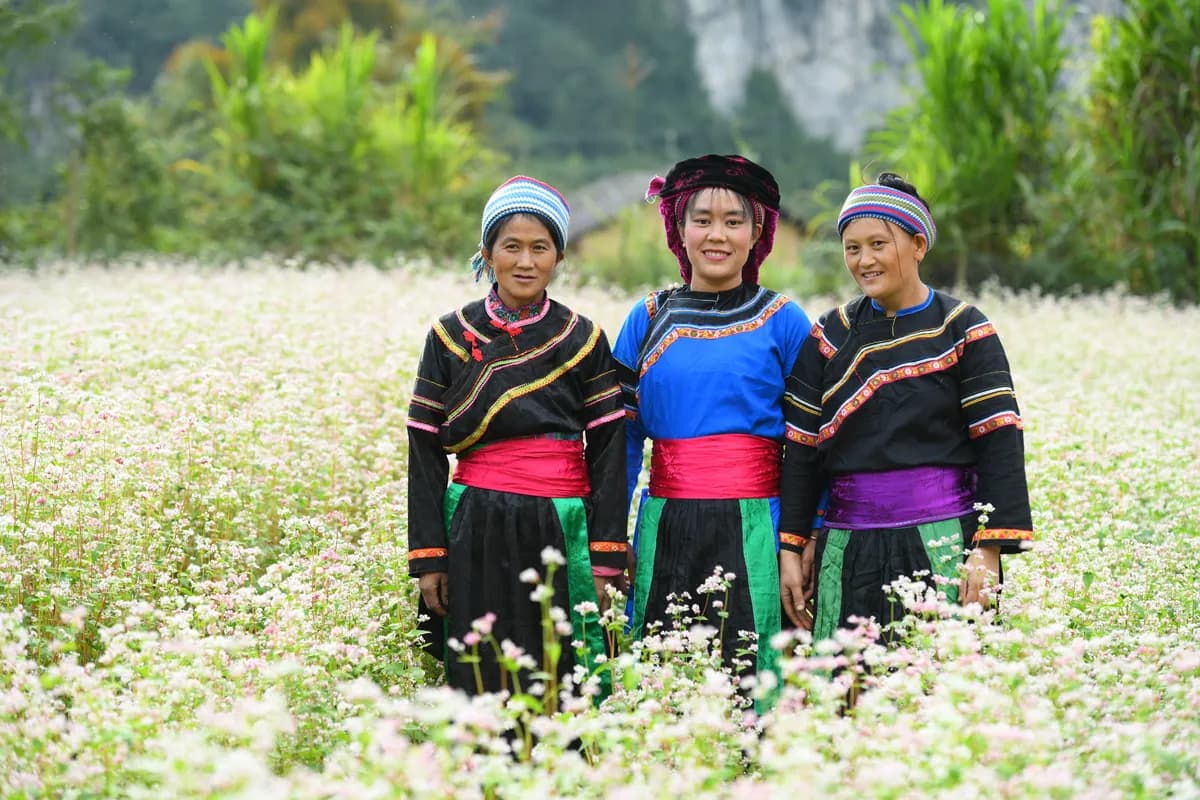
The Chut people do not know how to grow cotton and weave cloth. In the past, the traditional costumes of the Chut people were mainly shirts and loincloths made from the bark of forest trees such as the sui tree, the sang tree, the si tree... Nowadays, the Chut people tend to dress like the Vietnamese or the Khua, Lao people...
Boys and girls of adulthood are free to date and fall in love. The Chut people follow a monogamous system. Before getting married, the groom's family must choose a matchmaker and go through several engagements. The most important gift must be dried monkey meat. The Chut people have the custom of living with the groom's family for 2-3 years after the engagement ceremony.
The main foods of the Chut people are rice, corn, cassava, and rice. They usually eat two main meals, morning (6-7am) and afternoon (4-5pm). Lunch is usually boiled potatoes and cassava. During crop failures and crop shortages, people still have to eat rice flour or some wild tubers and fruits instead of rice. Drinking tea is a long-standing custom of the Chut people. In addition, they also like to drink alcohol, smoke, and chew betel.
Currently, most Chut ethnic children of school age go to school. According to the General Statistics Office in 2019, the rate of people aged 15 and over who can read and write is 64.9%, the rate of people attending primary school is 101.9%, the rate of people attending lower secondary school is 84.7%, the rate of people attending upper secondary school is 42.4%, and the rate of out-of-school children is 16.4%.
The Chut people live by shifting cultivation and hunting and gathering. The main crops are corn, cassava, beans, and rice. Production tools include axes, machetes, and sticks for making holes. In the fields, there are also plows and harrows. Since settling down, the Chut people have raised buffalo and cows for plowing and pulling. Weaving is mainly for family consumption. In some places, they also know how to forge knives and axes.
Currently, the production economy plays an increasingly leading role. Although life is still difficult, the Chut people are gradually escaping poverty and opening up the future of a prosperous life thanks to the emergence of wet rice cultivation; at the same time, forming inter-village areas with typical economic forms. According to data from the General Statistics Office in 2019: unemployment rate (6.11%); proportion of workers working in the non-agricultural sector (8.4%); poverty rate (60.6%); near-poor household rate (28.7%); proportion of households using clean water sources (39.2%); proportion of households using grid electricity for lighting (85.0%).
Above is some interesting information about the Chut ethnic group in Vietnam. Let's plan to meet and integrate with the Chut people in the near future with iGuide.ai!
Source:
- Ethnic groups in Vietnam (National Political Publishing House Truth)
- Basic characteristics of 54 ethnic minorities in 2019 (Committee on Ethnic Minorities and General Statistics Office)
- Website of the Ethnic Committee, Website of Nhan Dan Newspaper
- Survey results collect information on the socio-economic status of 54 ethnic groups in Vietnam)
Log in to leave a comment. Log in
Be the first to comment.
React to this story
Curate
Sign in to curate