Save
Share
Keep reading
authenticated by

Save
Share
Keep reading
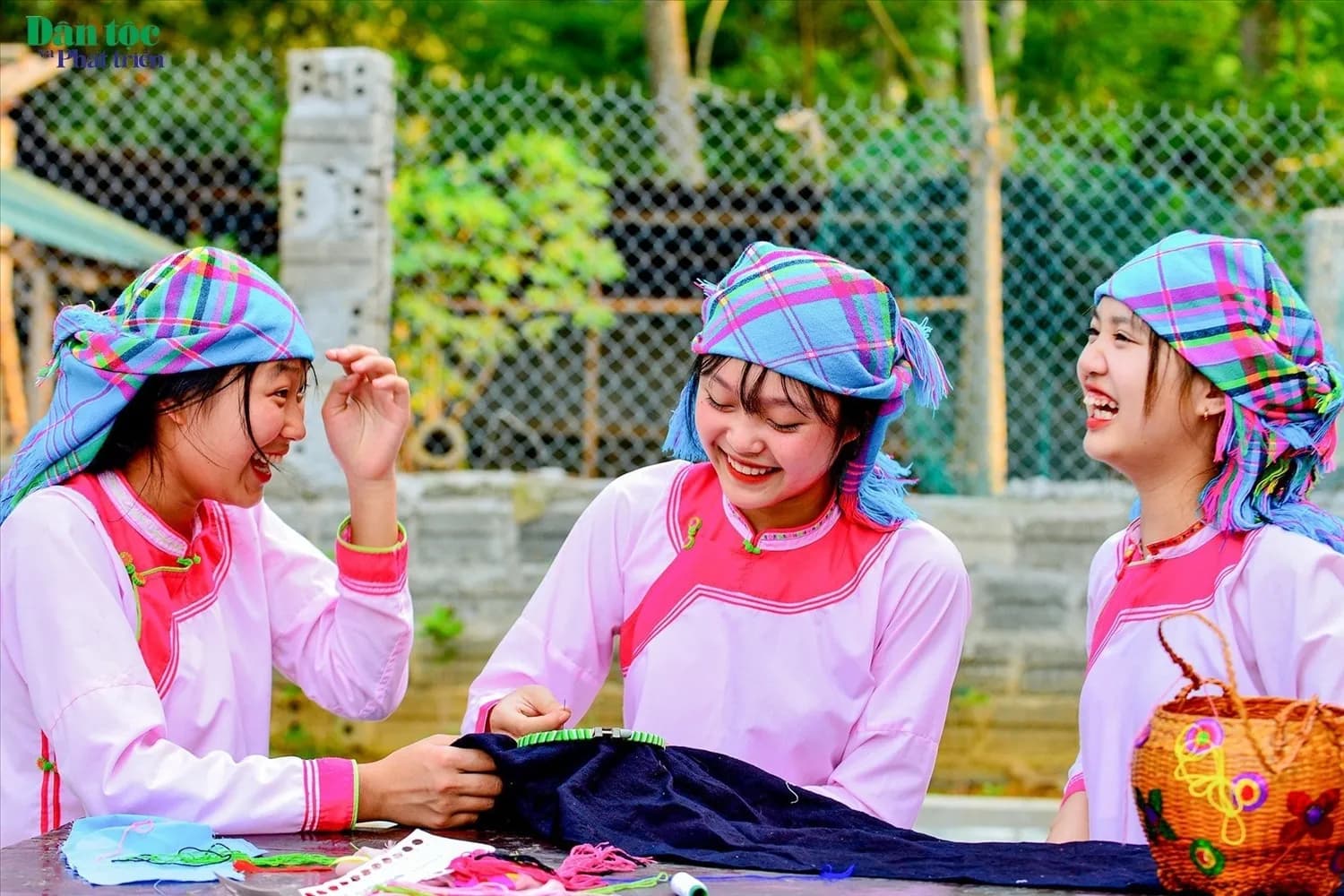
Vietnamese ethnic groups
Discover the unique beauty of the culture and life of the Giay ethnic group, from stilt house architecture to colorful traditional art.
The Giay people originated from China and migrated to Vietnam about 300 years ago. Let's find out information about the Giay ethnic group in Vietnam with iGuide.ai!
The Giay people originated from China and migrated to Vietnam about 300 years ago.
The Giay people live mainly in the provinces of Lao Cai, Ha Giang, Lai Chau and Yen Bai. According to the 2019 Census of 53 Ethnic Minorities, the Giay people have 67,858 people, including 34,624 males and 33,234 females.
The Giay language belongs to the Tay - Thai language group (Thai - Kadai language family).
The Giay people's houses today have two types: stilt houses and ground-floor houses. The Giay people in Ha Giang and Cao Bang often live in stilt houses, while the Giay people in Lao Cai live in ground-floor houses. The Giay people in Trinh Tuong, Bat Xat (Lao Cai) have a style of building houses with rammed earth walls. The traditional roofs of the Giay people are often thatched or dry straw. The house usually has three rooms: the middle room is the most important and sacred place, with the main door, usually for worshiping ancestors and receiving guests. The two rooms on both sides are bedrooms for family members, the room behind the altar is where the elderly sleep or store things. The traditional house of the Giay people always has an attic with an area equal to half the floor area of the house, above the fireplace there is a staircase leading up. This is where the family's agricultural products are stored.
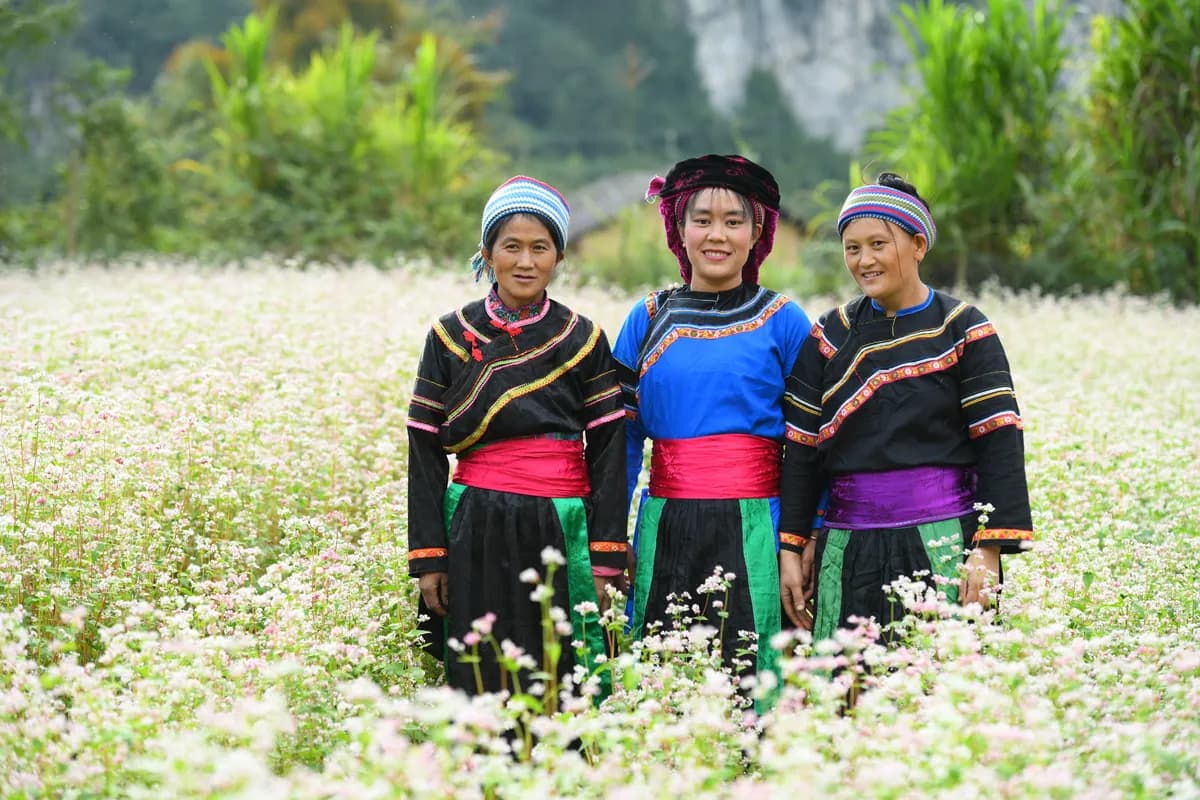
Traditional men's clothing is a long shirt that covers the knees, has slits at the armpits, and often has wide sleeves. They wear wide-legged pants, and their hair is usually tied in a bun or a turban. Recently, this traditional shirt has been improved, made shorter than before, and buttoned in the middle instead of the armpits as before.
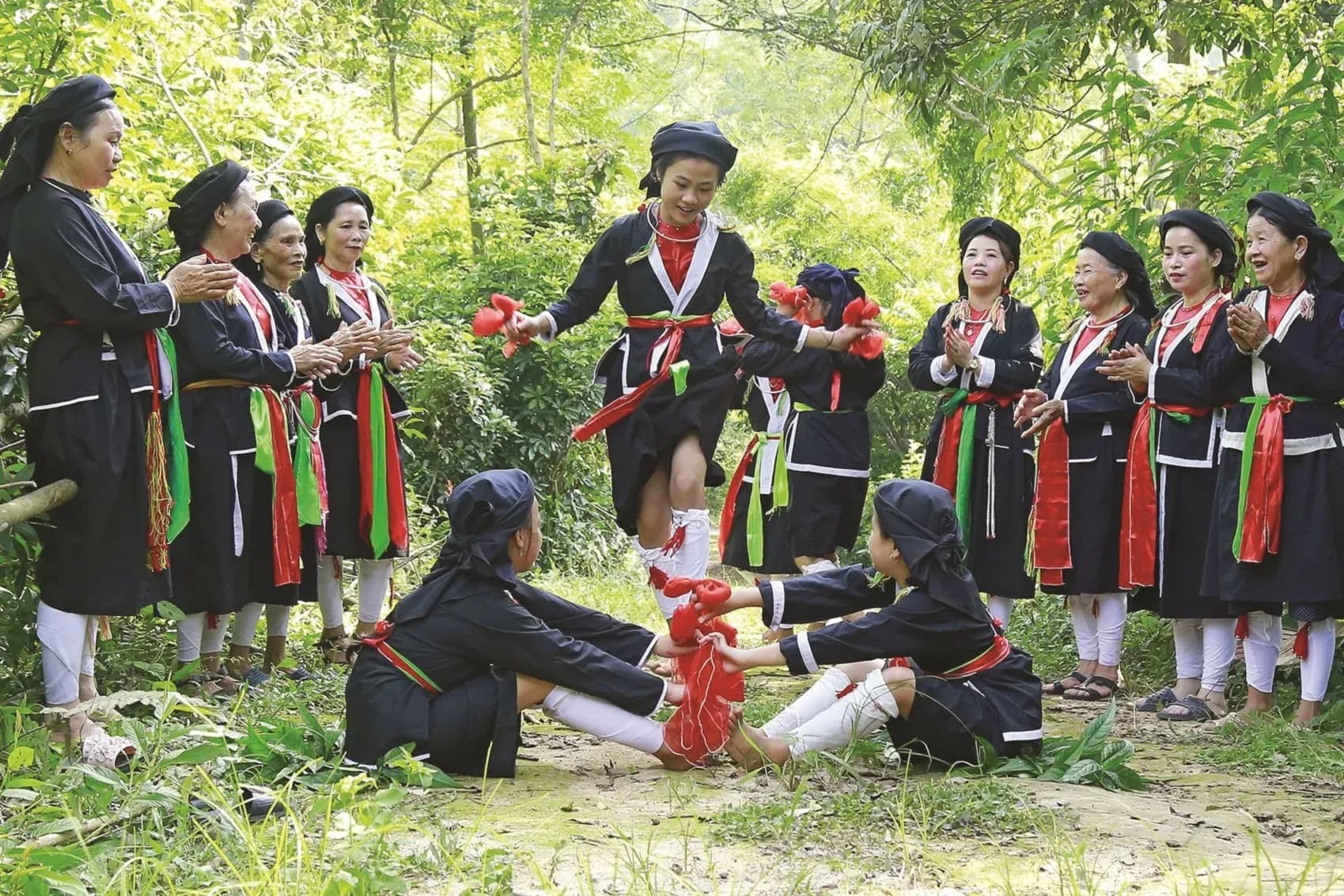
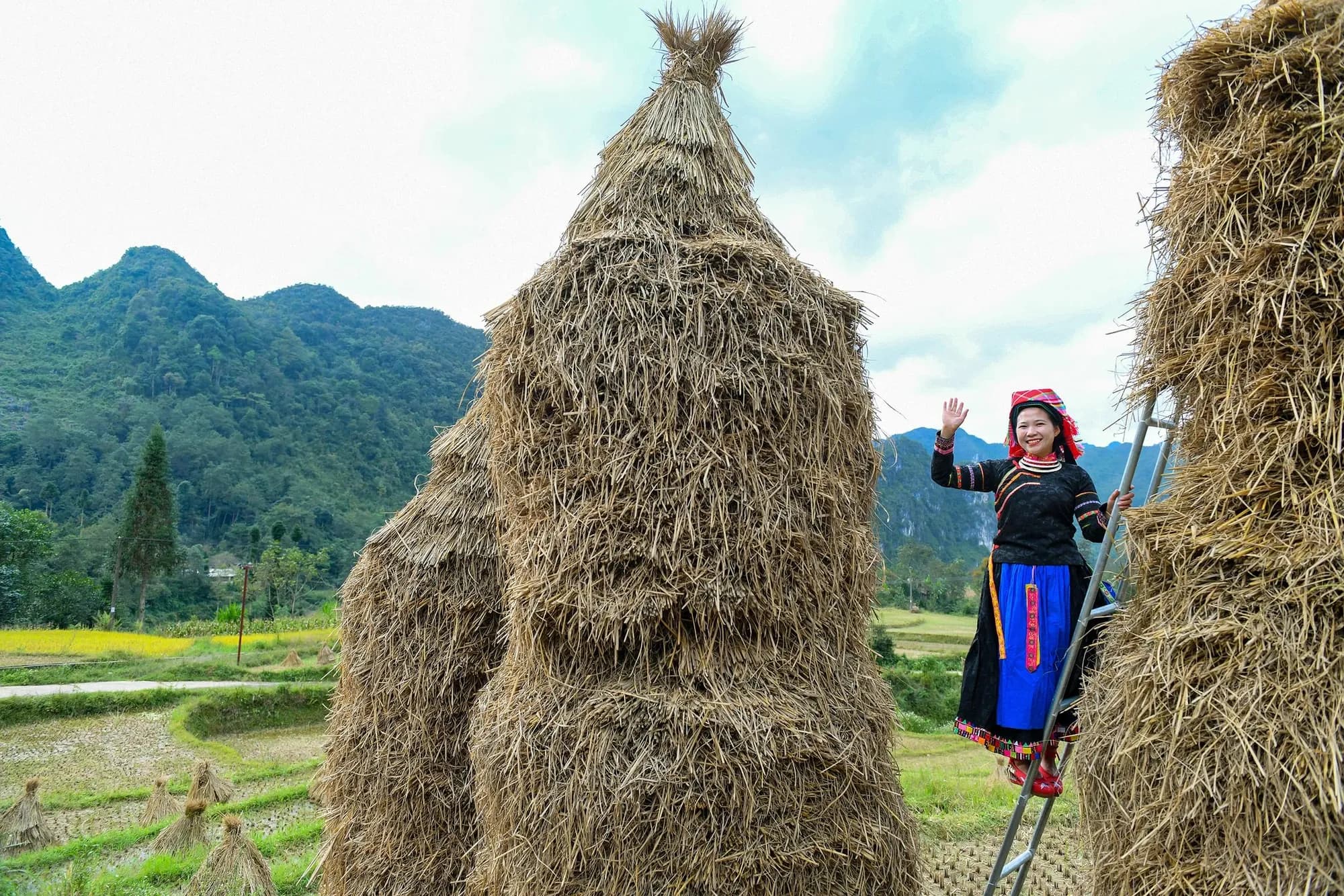
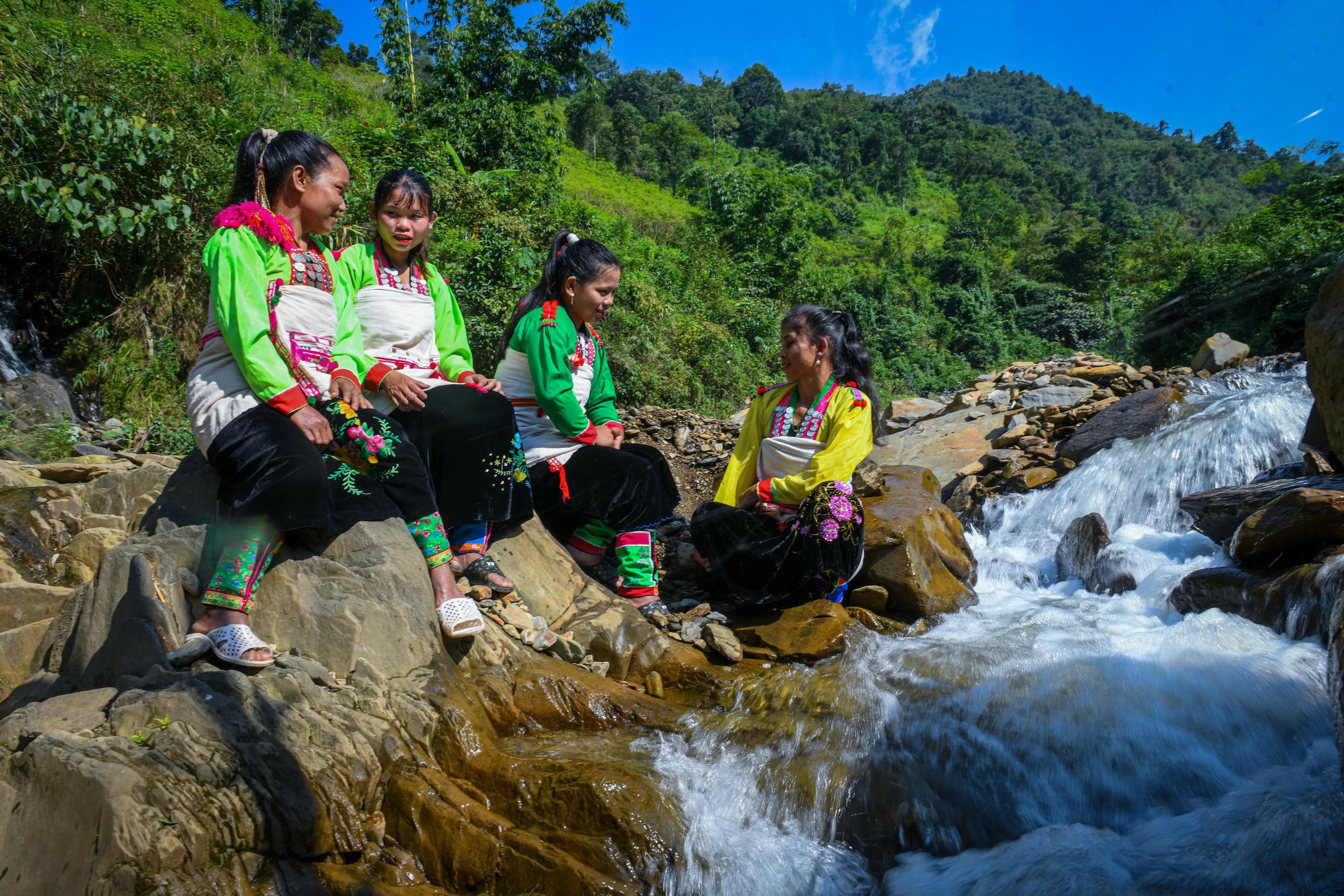
Giay women in different localities have different traditional costumes. Giay women in Ha Giang often wear flared skirts, longer than the knees, a long four-panel dress, long enough to cover the buttocks, with rows of fabric buttons on the armpits; wide sleeves. Giay women in Lao Cai and Lai Chau do not wear skirts but wear black satin pants, colorful short shirts, buttoned on the armpits. Women's pants are simply sewn, with two wide legs. The head scarf is usually a square scarf dyed indigo.
The Giay people mainly eat rice. The way of processing rice into rice of the Giay people is different from some other ethnic groups, that is, put the rice in a pan to boil, the rice is almost cooked, only a small core is not cooked, take it out and put it in a steamer to continue to cook the whole grain of rice. After taking all the rice in the pan, the rice water is like thin porridge to drink all day. The Giay people also process many unique types of cakes such as: humped banh chung, banh to he, banh bong, banh khao, banh troi, banh chay, corn cake...
Ancestor worship is a traditional belief in the Giay community. The Giay ancestral altar is usually placed in the most solemn position in the middle of the house.
On the altar, people often display three incense bowls: the largest bowl in the middle worships the local god, the two incense bowls on the sides worship all the deceased in the family. The Giay also worship the forest god and the village's local god.
Traces of primitive religion still exist in the spiritual life of the Giay people. The form of totem worship is still quite evident in this ethnic group. Each clan worships a different animal, and the worship ritual also follows the habits of that animal.
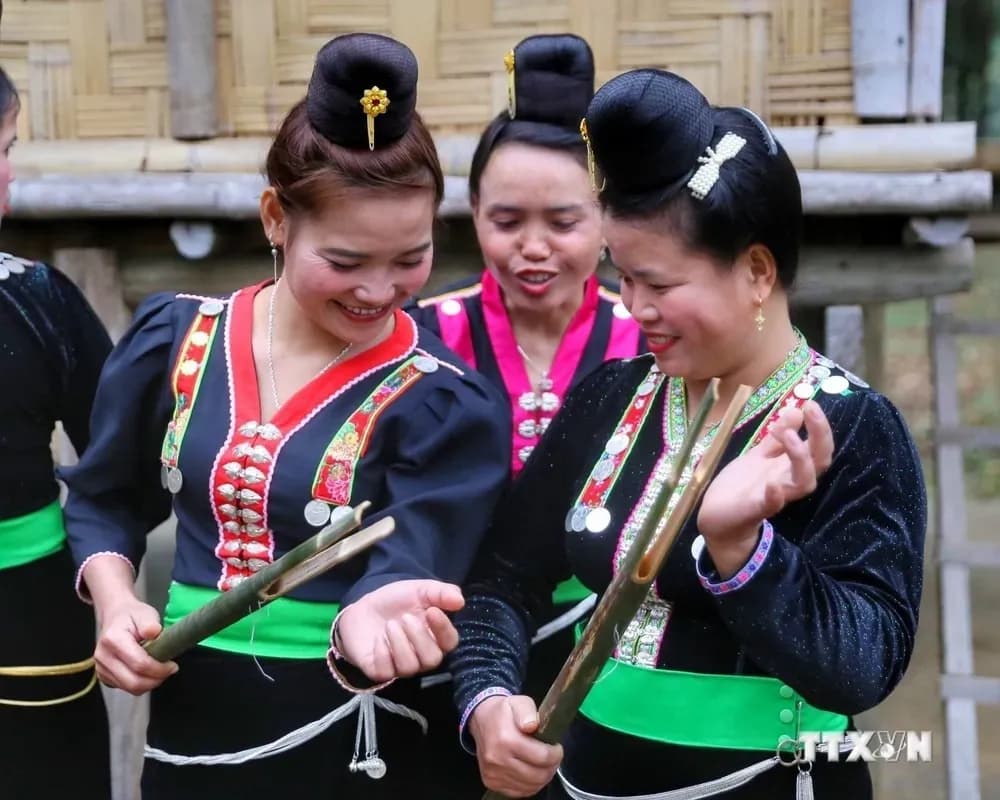
The Giay people have a trio of traditional musical instruments: drums, gongs and pi le, which are often used in festivals, weddings and funerals. The form of antiphonal singing is still sung in the Giay language by Giay artists in Lao Cai at weddings.
The Giay people have two traditional dances, the most popular of which are the lantern dance and the fan dance.
Regarding folk literature, the folk tales of the Giay ethnic group are still widely circulated in the community, often told in the form of poems or songs. The people also circulate folk songs and proverbs associated with the lives of workers, advising people on how to do business and consume reasonably.
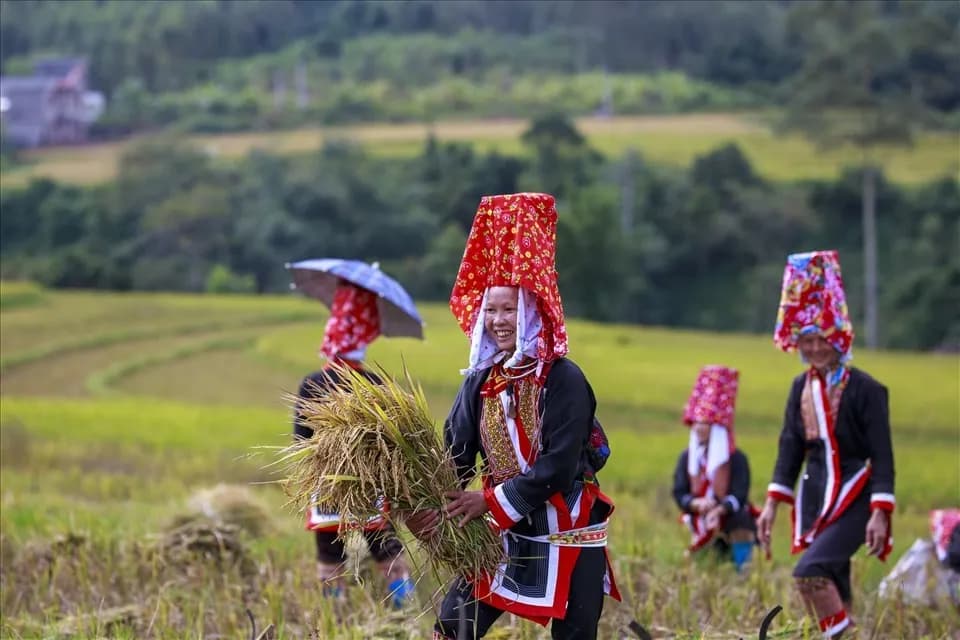
The Giay people have a lot of experience in wet rice cultivation. In addition to growing food crops, the Giay people in Lao Cai also grow industrial crops, notably cardamom and tea. The Giay people raise livestock such as buffalo, cows, goats, pigs and poultry. Aquaculture is also one of the popular livestock products of the Giay people. They mainly raise grass carp, common carp and tilapia.
In addition, the Giay people also actively develop forestry. Regarding handicrafts, men often weave household items such as baskets, trays, crates, chairs, slings... from rattan and bamboo materials. Making silver jewelry is also one of the handicrafts performed by men. The Giay people's sewing techniques are not complicated, they rarely use embroidery techniques on costumes but often use colored fabric techniques for decoration. People also develop some secondary occupations such as: carpentry, making tofu, brewing cassava wine and rice wine.
According to the 2019 Survey of 53 Ethnic Minorities, the rate of people aged 15 and over who can read and write is 80.1%; the general school attendance rate of children in primary school is 100.9%; in lower secondary school is 97.1%; in high school: 67.4%. The rate of Giay ethnic children over 5 years old who go to school is 99.67%.
Above is some interesting information about the Giay ethnic group in Vietnam. Let's plan to explore, meet and experience the culture of the Giay people with iGuide.ai in the near future!
Source:
- Ethnic groups in Vietnam (National Political Publishing House Truth)
- Basic characteristics of 54 ethnic minorities in 2019 (Committee on Ethnic Minorities and General Statistics Office)
- Website of the Ethnic Committee, Website of Nhan Dan Newspaper
- Survey results collect information on the socio-economic status of 54 ethnic groups in Vietnam)
Log in to leave a comment. Log in
Be the first to comment.
Curate
Sign in to curate
React to this story