Save
Share
Keep reading
authenticated by

Save
Share
Keep reading
Temples
Traveling to the source is always of interest to many people because they can both learn and admire, and remember the glorious time of their ancestors.
Phu Tho has become a preferred destination for many tourists at all times of the year. In addition to historical and cultural tourist attractions, spiritual tourist attractions are also chosen by tourists when coming to Phu Tho, Vietnam. In this article, iGuide will explore the famous Tam Giang Temple in this land with you!
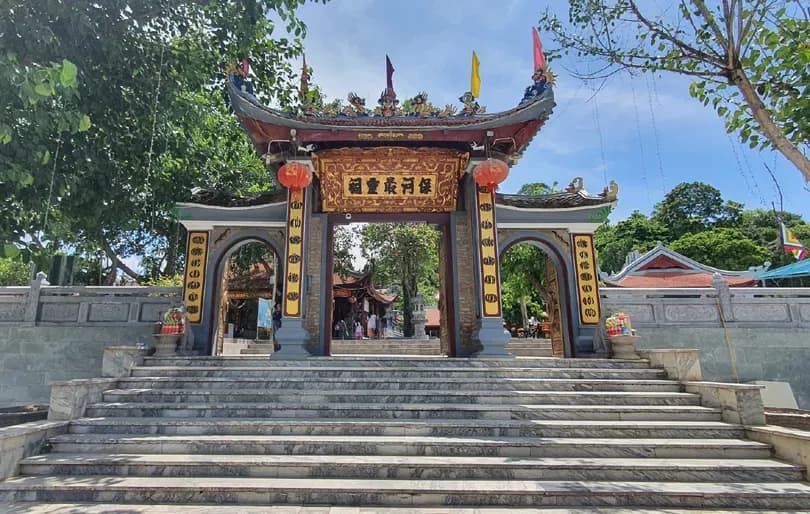
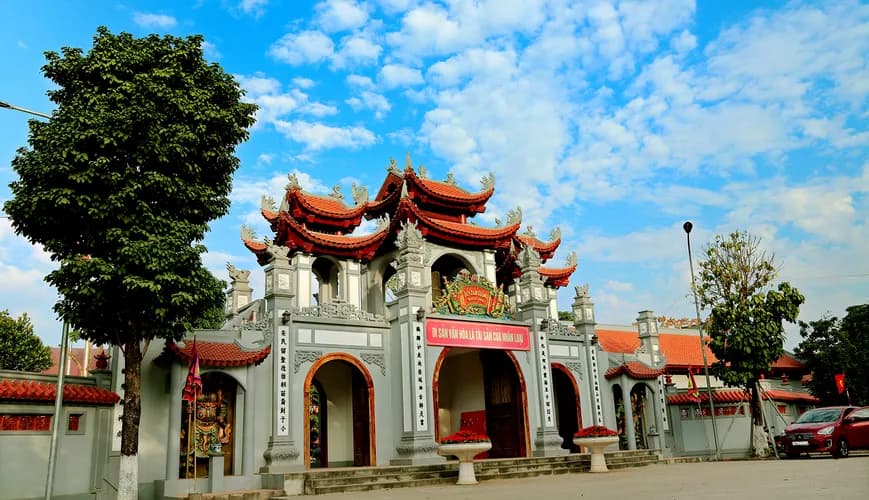
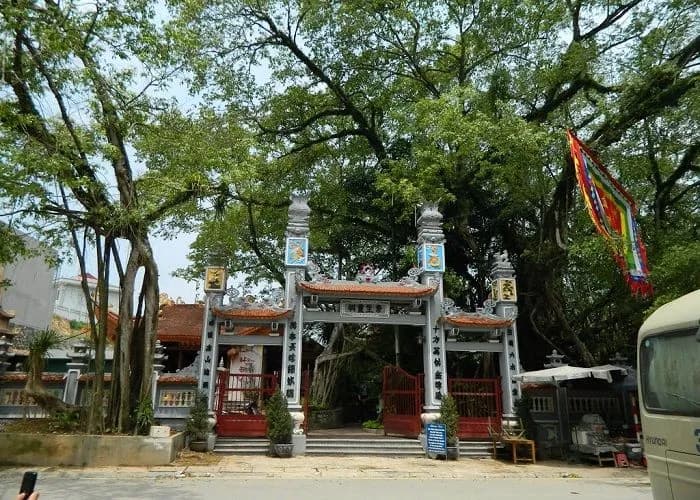
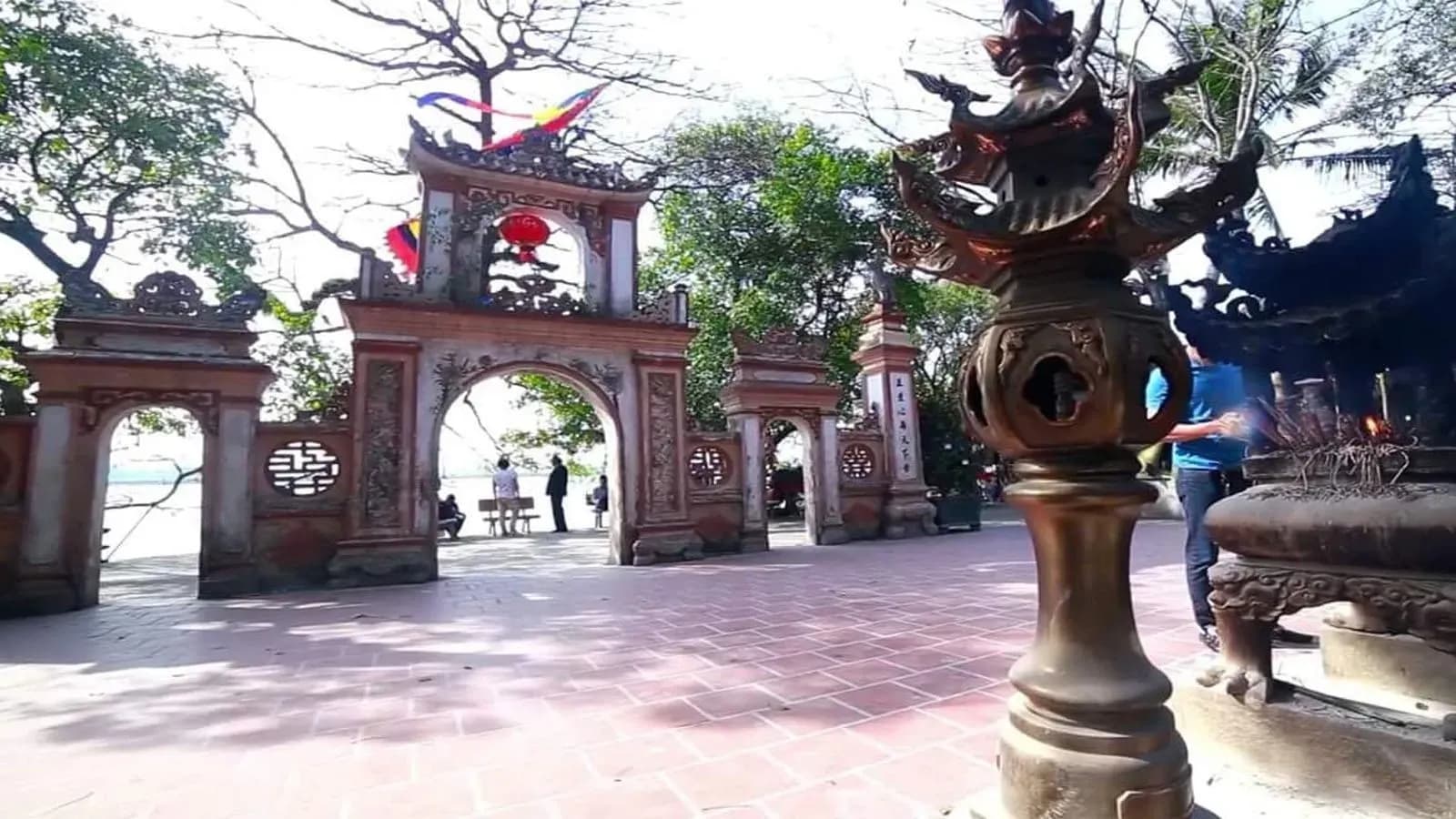
Tam Giang Temple is a temple located on the left bank of the river confluence area - where three rivers meet: the Red River, the Lo River and the Da River. This area has long been known as the Hac junction by local people.
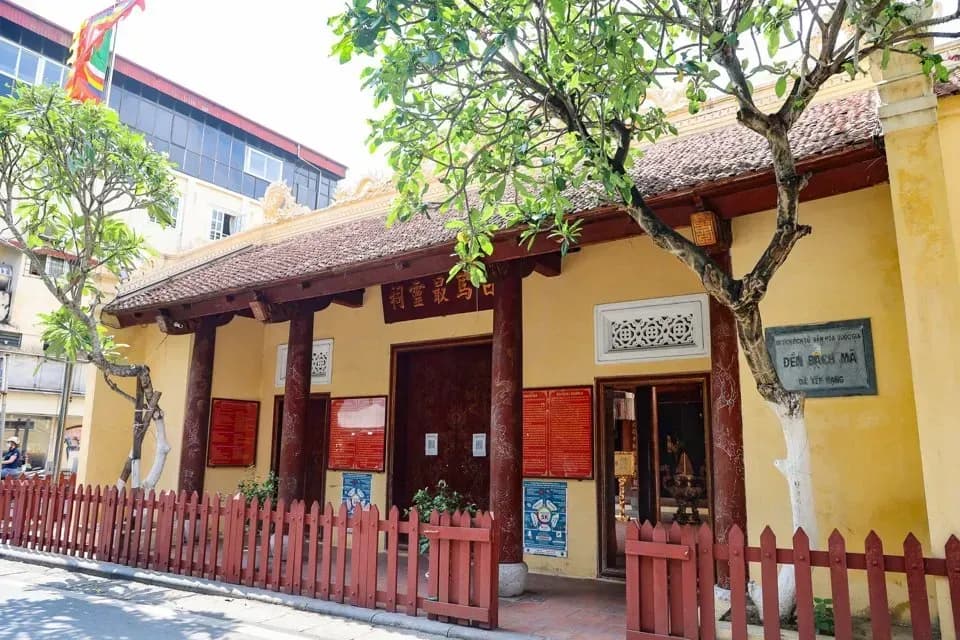
This is a complete and unified relic complex including: Tam Giang Temple, Mau Temple, Dai Bi Pagoda, footprints of Tho Lenh Cao Quan Bach Hac Dai Vuong, rowing dock, statue of Chieu Van Vuong Ta Thanh Thai Su Tran Nhat Duat and reliefs of 18 typical pagodas of Vietnamese Buddhism. Therefore, this is a destination that attracts many tourists from all over the world.
Thus, Bach Hac area is considered a land of cultural heritage, both tangible and intangible. Nowadays, in the renovation of our State, Bach Hac is changing to suit the tourism tastes of tourists. At the same time, cultural relics in the area are also preserved, maintained and built more spaciously. The national historical and cultural relic site of Tam Giang Temple, together with Dai Bi Pagoda and 5 other provincial cultural relic sites, have contributed to raising awareness and preserving traditional festivals and good cultural elements of the origin of the Vietnamese people.
According to historical records, Tam Giang Temple was originally a small Taoist temple called Thong Thanh Quan, which appeared in the Vinh Huy year (around 650 - 655). It was later converted into a temple and renovated many times over the years. Tam Giang Viet Tri Temple has now been conferred 19 titles through the feudal dynasties of Vietnam and in 2010 was recognized by the State as a National Historical and Cultural Relic.
After centuries of war, Tam Giang Temple has been restored and repaired by the people on a large scale, making the temple larger and more splendid than before. The main temple is built in the traditional Northern curved roof style, covered with fish-tail tiles and the overall construction is in the "T" architectural style, including two front and back halls. Special attention must be paid to the interior of the temple, all of which are meticulously carved with images of the four noble trees, pine, chrysanthemum, bamboo, and apricot, the four sacred animals, dragon, unicorn, turtle, and phoenix. The combination of red lacquer and gold tin enhances the sacred, beautiful and luxurious look.
Tam Giang Temple in Phu Tho worships 3 Saints, including: Saint Ca (Tho Lenh Cao Quan Bach Hac Dai Vuong), Saint Ba (Thanh Mau Duc Sinh Quach A Nuong) and Saint Hai (Chieu Van Vuong Ta Thanh Thai Su Tran Nhat Duat). Among them, Tho Lenh is the village god - the god of Bach Hac river in Phu Tho, he traveled the world to find precious medicine to cure the people. When he died, he was still effective in helping the people and generals fight against foreign invaders.
The temple also worships the Holy Lady Quach A Nuong, a talented female general of the Trung Sisters and Chieu Van Vuong Tran Nhat Duat, the 6th son of King Tran Thai Tong. He had the merit of subduing the lord of Da Giang religion in the Northwest, establishing a defense line in Bach Hac Viet Tri for 30 years. Tam Giang Temple has always been and is still an attractive tourist destination welcoming thousands of visitors every year.
At Tam Giang Temple, Phu Tho, there is still an ancient bronze bell named "Thong Thanh Quan Chung Ky" dating from the 11th year of Minh Mang's reign and the bell's inscriptions such as: Thac Ban bell "Phung Thai Thanh Tu" dating from the 17th year of Gia Long's reign and "Thong Thanh Quan" dating from the 8th year of Dai Khanh's reign.
According to local people, there used to be a giant footprint on the bank of the Lo River, many people thought it was from the Tho Lenh god, but over time the rock was gradually eroded by landslides and submerged by rising water, so there is not much evidence left. Currently, on both banks of the Lo River there are also giant footprints, but they are made of cement by people, imitating that legend. The National Historical and Cultural Relic Site of Tam Giang Temple will certainly be a destination not to be missed for tourists coming to Phu Tho.
Hopefully, through this article, you will have another attractive destination on the Vietnam tourist map. And what are you waiting for? Visit iGuide now to travel!
Thank you for choosing iguide.ai to accompany your interesting experience.
Log in to leave a comment. Log in
Be the first to comment.
React to this story
Curate
Sign in to curate
.webp&w=3840&q=75)