Save
Share
Keep reading
authenticated by

Save
Share
Keep reading
Temples
Located in Nghe An, Con Temple is an outstanding cultural heritage, where history, unique architecture and traditional festival customs blend.
When traveling to Nghe An, you should visit Con Nghe An Temple once. Coming here, visitors can not only offer incense and worship but also explore the highlights in the unique architectural style and the exciting and attractive festival activities.
Con Temple, English name is Chin Child Temple, also known as Con Nghe An Mau Temple, is located on Diec hill, near Lach Con estuary, in Phuong Can village, Quynh Phuong ward, Hoang Mai town, Nghe An province. This is one of the most famous and sacred historical and cultural relics in Nghe An, recognized as a National Historical and Cultural Relic in 1993.
Con Temple was established during the Tran Dynasty, and is a place to worship the Four Holy Mothers, including Queen Mother Duong Nguyet Qua, her wet nurse, and two princesses Trieu Nguyet Khieu and Trieu Nguyet Huong. According to legend, in the first year of Thieu Bao 1279, when the Song army was defeated in the Song - Nguyen battle, Queen Mother Duong Nguyet Qua and the goddesses jumped into the sea to commit suicide. Their bodies drifted to Con Gate, where they were buried and worshiped at the temple by the villagers.
Con Temple has undergone many consecrations and renovations by kings through the dynasties. In the 19th year of Hung Long, King Tran Anh Tong stopped at Con Temple and dreamed of a goddess helping him, thereby winning the battle. After that, the king conferred the title of Dai Can National Nam Hai Tu Vi Thanh Nuong and expanded the temple. In the first year of Hong Duc, 1470, King Le Thanh Tong also performed the consecration ceremony after winning the battle. In the 18th century, King Quang Trung bestowed the Con Temple with noble titles such as "Ham Hoang Quang Dai" and "Ham Chuong Tiet Liet".
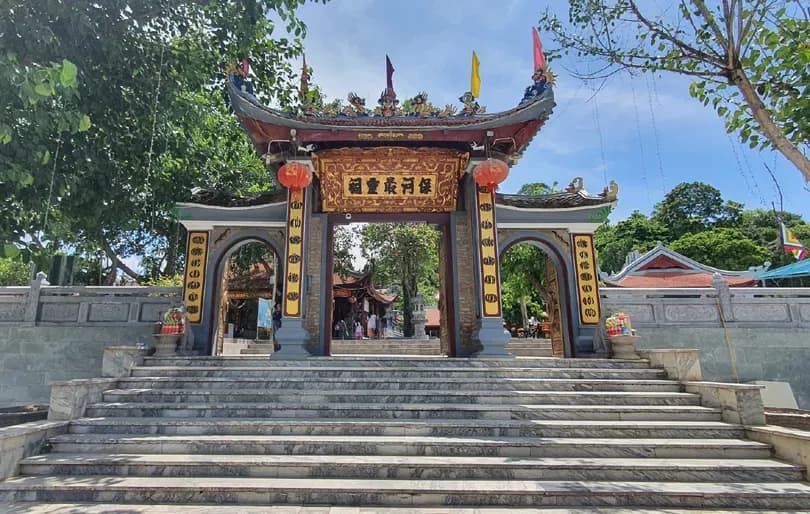
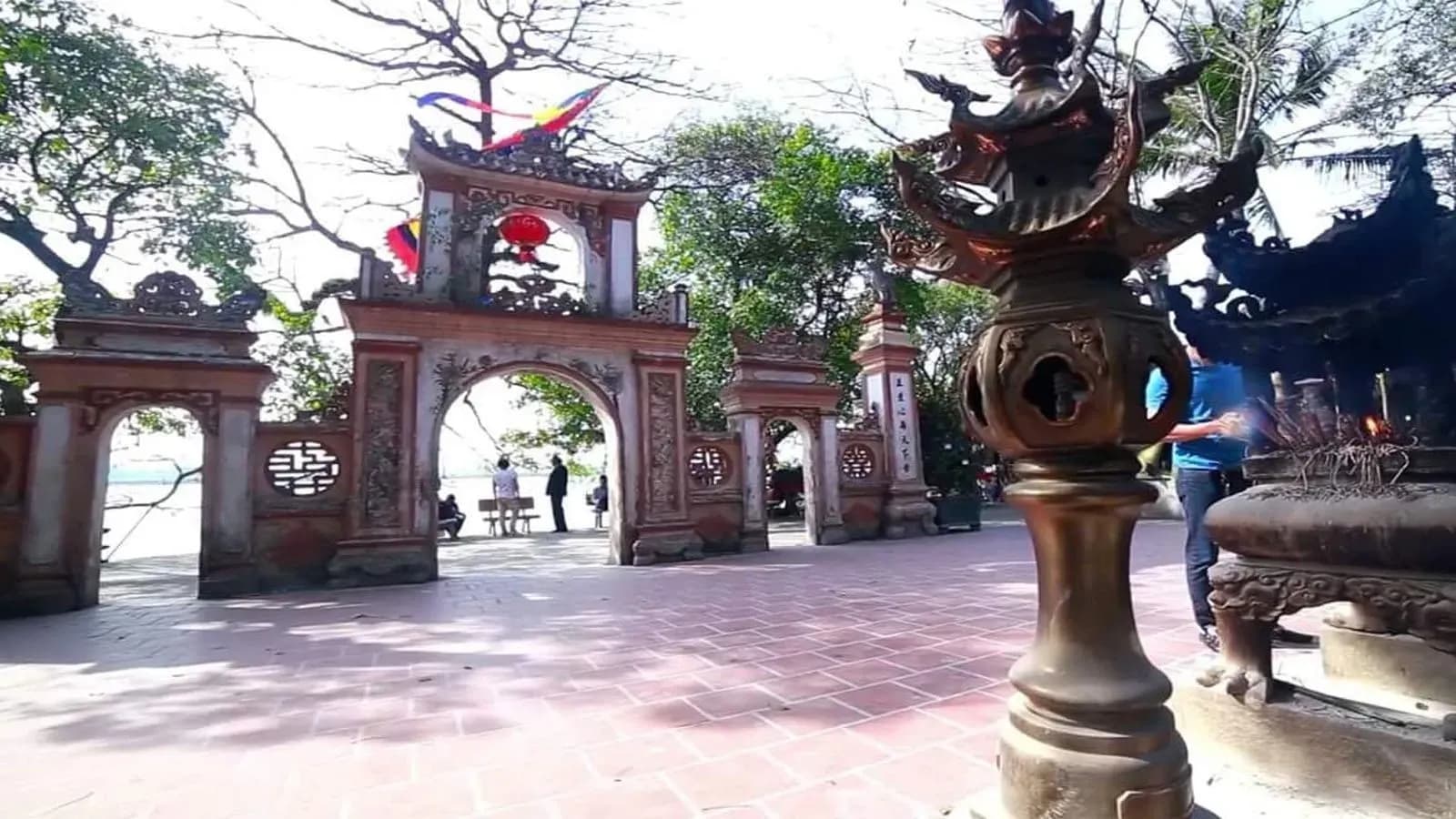
Con Temple has a unique architectural style from the late Le Dynasty to the early Nguyen Dynasty, located in a beautiful location with its back leaning against the mountain and its face facing the sea, like a majestic phoenix. Today, the temple still preserves many unique worship spaces such as the Main Hall, the Middle Hall, the Lower Hall, the Nghi Mon Hall and the Ca Vu Hall. The Nghi Mon Hall, with its Cong-shaped architecture consisting of 2 floors and 8 roofs, is the first highlight that welcomes visitors when entering the temple.
Con Temple still preserves 142 precious artifacts including pronouns, parallel sentences, royal decrees, sacrificial objects, two-sided stone steles, bronze bells cast in Canh Hung year 1752, along with 28 stone statues and many wooden statues from the Le Dynasty. All are valuable cultural heritages not only in terms of history but also in terms of art.
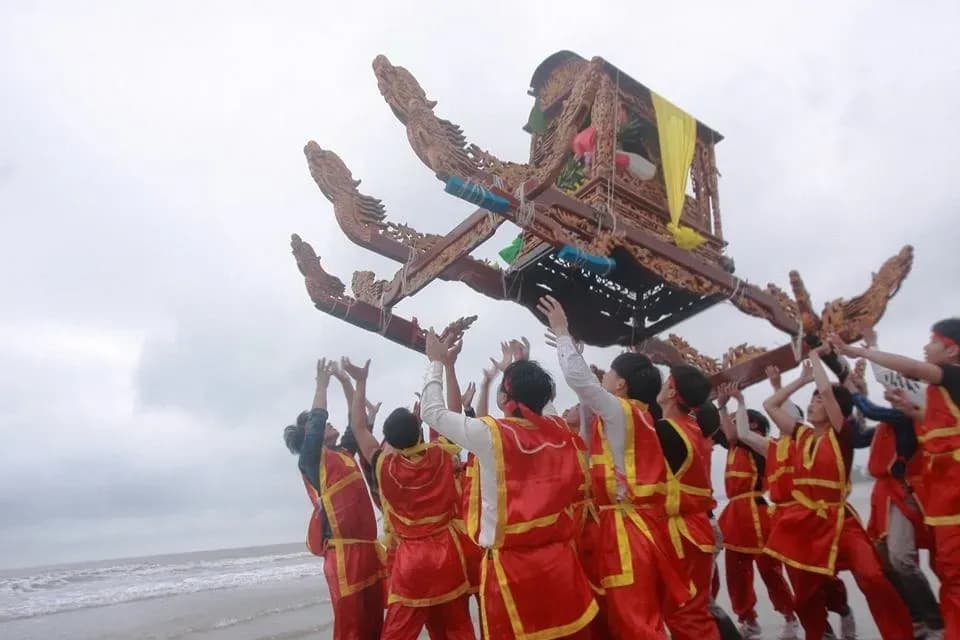
The Quynh Luu Con Temple Festival takes place from January 19 to 21 (lunar calendar) every year, with two main parts: the ceremony includes the opening ceremony, proclamation, opening the festival, praying for fish, congratulating, offering sacrifices and thanksgiving; the festival part has many exciting activities such as exhibitions, bird singing competitions, sports competitions, and traditional performances such as singing tuong, cheo, chau van.
With its unique architecture, rich history and interesting cultural activities, Con Temple is a destination that attracts tourists from all over the country. When coming to Nghe An, in addition to visiting Con Temple, visitors can combine visiting other famous places such as Cua Lo, Dien Thanh beach, Pu Mat National Park, Cua Hoi, and 7-storey waterfall.
Thank you for joining iGuide.ai on our journey to explore and experience Con Temple and unique cultural heritages in Nghe An!
Log in to leave a comment. Log in
Be the first to comment.
Curate
Sign in to curate
React to this story

.webp&w=3840&q=75)